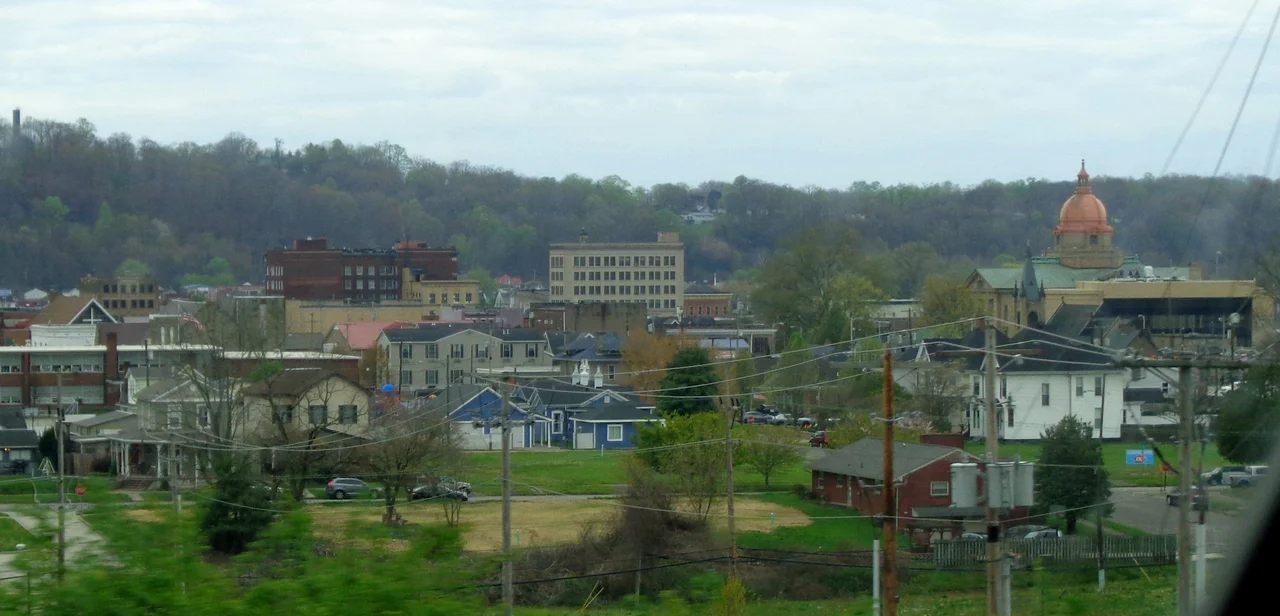

Ironton, Ohio
John Campbell was a pig iron manufacturer with a problem and a plan. The problem was getting his iron to markets that would pay for it. The plan was to build a city on the Ohio River where his furnaces could load directly onto barges. He founded Ironton in 1849 - a contraction of "iron town," exactly that direct - and within a decade his city was supplying iron to England, France, and Russia for the warships they were building. American iron from Ironton was used in the USS Monitor, the country's first ironclad. The same Ohio River wharves that loaded Campbell's iron also unloaded another kind of cargo: enslaved people crossing from Kentucky to freedom on the Underground Railroad. Campbell himself sheltered them in his house.
Forty Years of Iron
Between 1850 and 1890, Ironton was one of the world's leading producers of iron. The furnace landscape around the city - the Hanging Rock Iron Region that stretched south into Kentucky - had the right combination of ore, limestone for flux, and hardwood for charcoal. European navies bought Ironton iron because its quality was reliable. American shipbuilders used it for the ironclads that fought the Civil War. Pig iron poured out of the river furnaces and onto Ohio River barges, downriver to New Orleans, upriver to Pittsburgh, into every market that needed iron for railroads, machinery, and weapons. The city's accommodating attitude toward sin and vice associated with mine and ironworkers - according to the city's own honest historical recordkeeping - gave it the wide-open quality of all American frontier industrial towns.
Nannie Kelly Wright and the Underground Railroad
Ironton sits directly across the Ohio from Kentucky, which made it a destination for enslaved people seeking freedom in the North. John Campbell and other city leaders sheltered freedom seekers in their homes during the most dangerous portions of their journeys. The work was illegal under federal law - the Fugitive Slave Act of 1850 carried serious penalties for those who helped - but the network operated anyway, hidden in the gaps between official law and local conscience. Ironton also produced Nannie Kelly Wright, the only known female ironmaster in American history, who ran a furnace operation in an industry where women were almost completely excluded. The city's history holds both wealth built on iron and the moral effort to redirect that wealth toward justice.
The Tanks and the Thanksgiving Game
The Ironton Tanks formed in 1919 and ran as one of the first professional football teams in the United States until 1930. In 1920 they played a game the day after Thanksgiving against the Lombards, their crosstown rival, winning 26-0. In 1922 they beat the Huntington Boosters 12-0 on Thanksgiving Day itself. The Tanks kept playing on the holiday through their final 1930 season. Several Tanks players, including Glenn Presnell, moved on to the nearby Portsmouth Spartans, who continued the Thanksgiving tradition through 1933. When businessman G. A. Richards bought the Spartans and moved them to Detroit in 1934, renaming them the Lions, the players told him their best ticket sales had always come on Thanksgiving. Richards scheduled the first Detroit Thanksgiving game accordingly. The NFL's most enduring holiday tradition started, in a real and traceable way, on a football field in southern Ohio.
The Floods and the Decline
Two floods bracketed Ironton's industrial peak. The 1917 flood damaged the city seriously. The 1937 flood, coming during the Great Depression, devastated it. Industries that were already struggling with the national shift from iron to steel could not recover. The Norfolk and Western Railway station downtown, built in 1906, kept operating into the mid-twentieth century but could not single-handedly hold the economy together. By 2004, Alpha Portland Cement and Allied Signal - both major employers that had built in town to fill the iron gap - had also closed. The 2020 census counted 10,571 people, down more than thirty-five percent from the city's 1950 peak of 16,333. The story is one repeated through the Ohio River valley: industrial confidence, then catastrophic transition, then decades of trying to rebuild on a smaller scale.
The Oldest Memorial Day Parade
Founded in 1868, the Ironton-Lawrence County Memorial Day Parade is the oldest continuously running Memorial Day parade in the United States - older than the federal holiday itself, which was not officially named Memorial Day until much later. Every year since the end of the Civil War, with no interruption, Ironton has marched. The parade is bigger than any modern celebration the city could afford to launch from scratch; it survives because it never stopped. The Memorial Day Charity Fair, with carnival games and music, runs alongside the parade. The city that lost most of its industry kept its parade. From above, downtown Ironton's grid of older brick buildings shows the bones of its industrial-era prosperity, with the Ohio River curling along the southern edge and the Kentucky hills rising directly across.
From the Air
Located at 38.531 degrees north, 82.678 degrees west, in southernmost Ohio along the Ohio River, in the Huntington-Ashland metropolitan area. Recommended viewing altitude 4,500 to 6,500 feet AGL for clear views of the river and the surrounding hills. Nearest airport is Tri-State (KHTS) at Huntington, West Virginia, about 8 nautical miles southeast across the river. Ashland Regional (KDWU) is about 7 nautical miles east. The downtown grid is easy to spot on the north bank of the river, with the older industrial waterfront visible from above.
Nearby Stories
- Gen. Albert Gallatin Jenkins House 1.4 km away
- Point Pleasant 12 km away
- Serpent Mound: The 1,400-Foot Snake Nobody Can Explain 22 km away
- Salt Reservations 26 km away
- Yatesville Lake 27 km away
- Hobet Coal Mine 36 km away
- The Kentucky Meat Shower: When Flesh Fell From a Clear Sky 44 km away
- Ripley and the Underground Railroad 50 km away