
Isle of Man TT
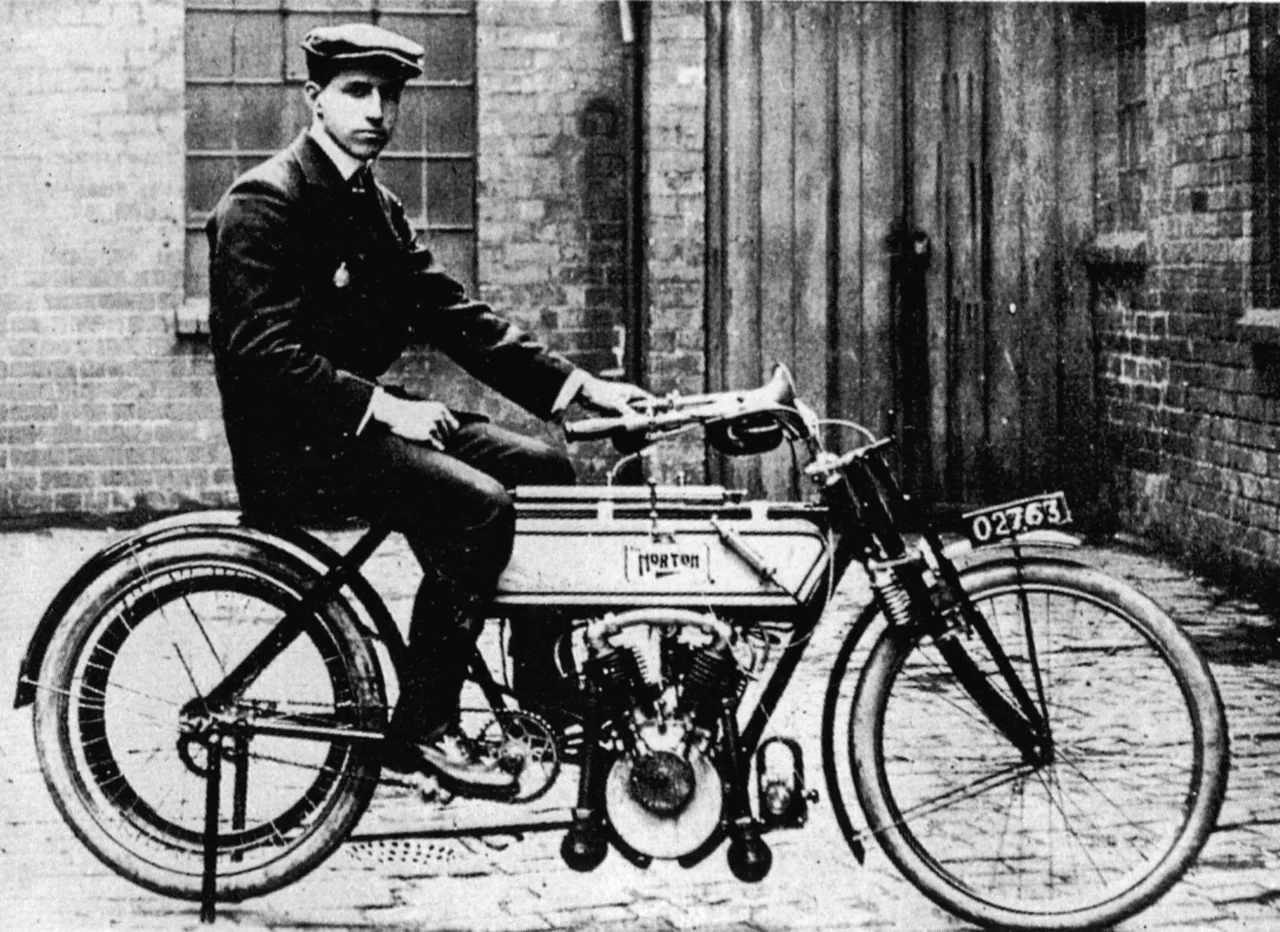
It started over dinner. On 17 January 1907, at the annual Auto-Cycle Club banquet in London, the editor of Motorcycle Magazine stood up and proposed a road race for touring motorcycles, to be held on a sympathetic little island that already allowed automobiles to race. The members agreed. A few months later, twenty-five entrants lined up on the St. John's Short Course on the Isle of Man. Only twelve finished. The Tourist Trophy was born, and for nearly 120 years it has summoned riders to a 37.73-mile circuit of public roads that, for two weeks each May and June, becomes the most demanding stage in motorcycle sport.
Why an Island
Mainland Britain had a problem and the Isle of Man had a solution. The Motor Car Act of 1903 imposed a 20-mph speed limit on every public road in the UK, which made motor racing functionally illegal. Julian Orde of the Automobile Car Club went to Tynwald, the Manx parliament, and asked for an exemption. Tynwald passed the Highways (Light Locomotive) Act, and from 1904 onward the island's roads could be legally closed for racing. The first attempt at a motorcycle event, in 1905, had to skirt the steep Snaefell mountain section because contemporary bikes couldn't climb it. By 1907 the touring trophy concept was settled: machines required saddles, pedals, mudguards, exhaust silencers, and a toolkit; classes were split between single-cylinder bikes (90 miles per gallon limit) and twins (75 mpg). It was, at its founding, as much an economy run as a race.
The Rise of the Mountain
By 1911 the bikes could finally take the mountain, and the race moved to the full 37.4-mile Snaefell Mountain Course. The early surfaces were unpaved and loose; many corners were undefined; the first 50-mph average lap arrived only in 1920. Then innovation accelerated. Jimmy Simpson became the first rider over 60, 70, and 80 mph average; the 80-mph lap fell in 1931, the 90-mph lap to Harold Daniell in 1938. The 1939 Senior was won by Georg Meier on a supercharged BMW twin, the first German machine to take the top prize. After the Second World War, with petrol of poorer quality, lap speeds initially fell back. They would not stay there long. From 1949 the TT became the British round of the new FIM Grand Prix World Championship, and the best riders in the world arrived to chase each other up the mountain.
Breaking with the Championship
The split came in stages. Through the 1960s and into the 1970s the course's danger became increasingly hard to reconcile with the growing professionalism of Grand Prix racing. After the 1972 TT, the dominant rider of his era - Giacomo Agostini, a 10-time TT winner and multiple world champion - announced he would never race on the island again. He called it too dangerous to be part of a world championship and said it was outrageous that professional riders were forced into the choice. Other riders, manufacturers, and national federations joined the boycott. After 1976 the FIM moved world championship status to a new British Grand Prix at Silverstone. The TT did not end. It reorganised. From 1977 it ran as the cornerstone of the new Formula TT championships, then from 1989 as the redeveloped Isle of Man TT Festival - a stand-alone event answerable to no one but itself.
A Cost That Doesn't Leave
Between 1907 and 2023, 156 competitors died in official practice or racing on the Snaefell Mountain Course, a number that rises to 269 when the Manx Grand Prix and the Clubman series of the late 1940s and 1950s are included. Six riders died in 1970. Six riders died in 2022. The 2007 Senior race took the lives of a competitor and two spectators near the 26th Milestone, and the inquest that followed reshaped how marshals are trained and selected. The 2018 collision between rider Steve Mercer and an official course car, returning at speed after a red flag, led to a complete overhaul of red-flag procedure: returning riders are now escorted by motorcycle marshals at the front and rear, and inspection cars carry GPS trackers monitored against speed limits. Each change was paid for by someone.
What Keeps It Running
More than 40,000 visitors come to the island every year for the fortnight, and the TT became part of the local economy and identity in a way no purpose-built circuit ever quite manages. The roads are the same ones that get the post to Ramsey and the children to school in Kirk Michael. The marshals are volunteers - thousands of them - who give up two weeks to stand at corners with flags and radios. Beryl Swain became the first woman to race a solo bike at the TT in 1962; she was then barred for sixteen years until Hilary Musson rode in 1978. The classes have changed: Superbike, Supersport, Superstock, Supertwin, Sidecar, with the Senior TT as the meeting's grand finale, traditionally allowing riders to choose any eligible machine they have qualified on. The riders depart at ten-second intervals because they are not racing each other directly. They are racing the course, the clock, and the long shadow cast by everyone who has ever attempted it.
From the Air
The TT unfolds on the closed Snaefell Mountain Course, centred on the Isle of Man at roughly 54.17 N, 4.48 W. Approach from the east passes Liverpool airspace; Ronaldsway (EGNS) is the only commercial airport, near Castletown at the southern tip. During TT fortnight expect significantly increased GA and ferry traffic to Douglas. Cruise around 3,000-5,000 feet AGL gives clean views of the triangular Douglas-Peel-Ramsey circuit and the broad shoulder of Snaefell (2,037 ft) at the island's centre. The island is small enough to overfly in minutes; the Snaefell summit is the only spot in the British Isles where you can see Wales, England, Scotland, and Ireland in one sweep on a clear day.
Nearby Stories
- St Bees Lighthouse 15 km away
- Celtic Array 22 km away
- Kirkmaiden 23 km away
- Isle of Whithorn 23 km away
- Seascale Lifeboat Station 31 km away
- German submarine U-1024 36 km away
- SS Georgetown Victory 40 km away
- Blackpool Illuminations 56 km away