
Kaiping
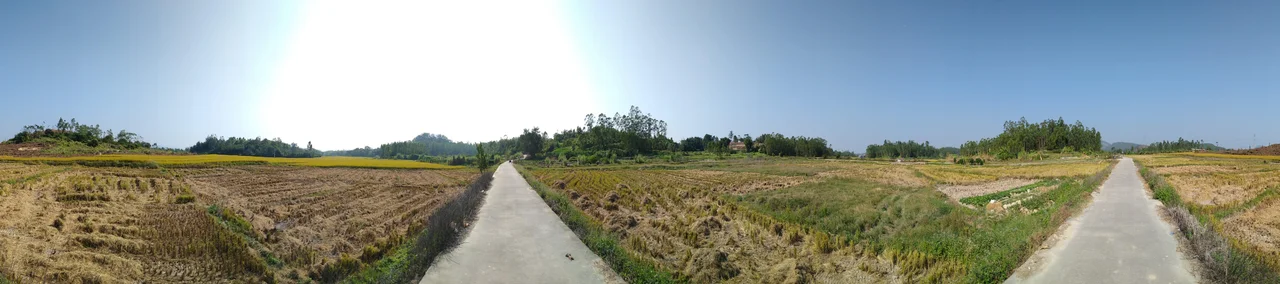
Someone flying over the Pearl River Delta expecting nothing but flat farmland and factory sprawl would be startled by Kaiping's countryside. Rising from the rice paddies, incongruous among the water buffalo and vegetable plots, stand hundreds of fortified towers — Baroque columns, Romanesque battlements, Moorish domes — fused with the stone and brick of south Chinese village architecture. They are called diaolou, and they tell a story about money crossing oceans and fear living at home. Kaiping was, for over a century, one of China's great emigration ports. Its people went to California and built railroads, to Australia and ran businesses, to Canada and founded banks. When the money came back as remittances, bandits noticed. The diaolou were the answer — part fortress, part family home, part monument to a life lived between two worlds.
Towers Between Two Worlds
The diaolou date mainly from the late nineteenth and early twentieth centuries, though some examples are older. Overseas Kaiping families commissioned them through letters and money wired from abroad: build us something strong, something that will keep the family safe when we are gone. The builders, working from photographs and architectural catalogues that made their way from Europe and North America, mixed styles without worrying about coherence. A tower in Zilicun might have a Roman arcade on one level, a Chinese-style roof on the next, and crenellated battlements at the top. The result is a vernacular architecture found nowhere else on earth. Approximately 1,800 diaolou remain standing in Kaiping. UNESCO designated four village groups — Zilicun, Sanmenli, Majianglong, and Jinjiangli — as a World Heritage Site in 2007, recognizing the diaolou as evidence of "the significant role of émigré Kaiping people in the development of several countries in South Asia, Australasia, and North America." Standing inside one of the restored towers, with its original furniture still in place, you feel the particular loneliness of a family that was never entirely in one place.
The Villages the Cities Left Behind
Kaiping today is a city of about 700,000 people, administered by the prefecture of Jiangmen and sitting on the Tanjiang River about 140 kilometers southwest of Guangzhou. The urban center is a fairly ordinary modern Chinese city — a high-speed rail station opened in 2018 connects it to Guangzhou in under two hours. But step outside the city and the landscape shifts. China's rapid urbanization has pulled the younger generations toward Shenzhen and Guangzhou and Shanghai, leaving many of Kaiping's villages with only a few older residents tending the rice fields. You pass abandoned farmhouses, half-reclaimed by vegetation. You pass nearly empty villages where the only sound is a television in a distant room. The diaolou stand in the middle of it, unlocked from above and below, belonging to a moment that has passed. The government has begun restoring the most visited sites; tourism brings in visitors from across China and from the overseas Kaiping diaspora, descendants coming back to see the towers their great-grandparents built.
Clay Pot Rice and Country Roads
Kaiping dialect is close enough to Taishanese to be nearly mutually intelligible, and quite distinct from standard Cantonese — another marker of the region's particular identity. The local specialty is clay pot rice: bāozǎifàn, cooked in a covered earthenware pot with meat and vegetables, the sauce-soaked bottom layer scraped out last and eaten slowly. In the countryside, the best way to move between the diaolou clusters is by bicycle. The roads are flat, the entrances to some smaller villages are too narrow for cars, and going slowly means you see the things that pass at speed: a fish pond beside a diaolou, an old man harvesting greens at the edge of a field, a tower door standing open with no one inside. The Kaiping Cultural Tourism Trail of the Hometown of Overseas Chinese — that is its full official name — connects some of the village paths on foot. The name is a mouthful, but it gets the point right: this is not just architecture. It is the geography of a particular kind of longing.
Chow Yun-Fat and the Film That Used the Towers
The diaolou achieved a different kind of fame in 2010 when the film "Let the Bullets Fly" — directed by Jiang Wen and starring Chow Yun-Fat and Ge You — became China's highest-grossing domestic film at that time. Much of it was shot in the Kaiping countryside, and the towers provided exactly what the film needed: a landscape that felt simultaneously Chinese and foreign, rooted in history but visually unlike anything in mainstream Chinese cinema. The film drew a new generation of Chinese tourists to Kaiping, many of whom had never heard of the place before. Some came for the diaolou; others came because Chow Yun-Fat had walked among them. Either way, the towers kept their audience.
From the Air
Kaiping sits at 22.38°N, 112.69°E in the Pearl River Delta, about 140 km southwest of Guangzhou. From the air, the diaolou are most visible over the flat agricultural plain west and south of Kaiping city — look for the clusters of village buildings with the distinctive taller towers rising above them. At 3,000–5,000 feet the rice paddy grid and village layout become clear. The nearest significant airports are Guangzhou Baiyun International (ZGGG), roughly 140 km northeast, and Zhuhai Jinwan Airport (ZGSD), about 90 km southeast. The Pearl River Delta haze can reduce visibility significantly; clearest conditions are in autumn and winter.
Nearby Stories
- Shunde 16 km away
- Jiangmen Underground Neutrino Observatory 18 km away
- Zhongshan 20 km away
- China International Aviation & Aerospace Exhibition 24 km away
- Mount Xiqiao 41 km away
- Temple of the Five Lords 302 km away
- Cua Ong Temple 517 km away
- Erhai Lake 1260 km away