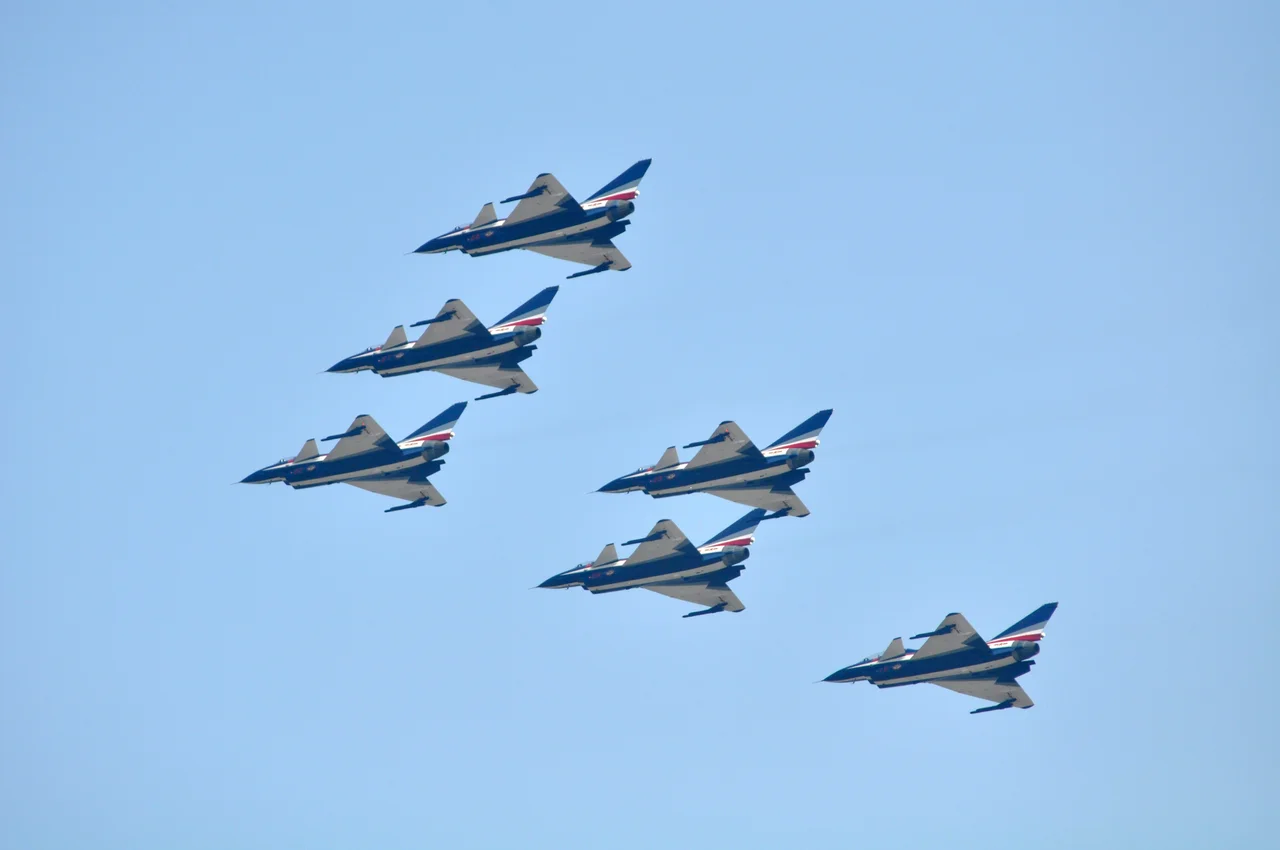

China International Aviation & Aerospace Exhibition
In November 2008, COMAC sold 25 regional jets to a GE subsidiary on the floor of an airshow in Zhuhai, and somewhere nearby the Chengdu J-10 was making its first public appearance before a crowd. Both deals — one commercial, one military — happened at the same event. That compression of commerce and capability is the Zhuhai Airshow's defining characteristic. Since its first edition in November 1996, the China International Aviation & Aerospace Exhibition has grown into the largest airshow in China and one of the most closely watched aerospace gatherings anywhere, drawing delegations from dozens of countries and generating headlines in equal measure for what flies and what gets signed.
From Cobras to Stealth: Three Decades in the Air
The inaugural 1996 show ran from November 5 to 10 and featured a Su-27 performing Pugachev's Cobra — the dramatic nose-pitch maneuver that announced Russian air superiority fighter technology to the world — alongside Il-78 aerial refueling demonstrations and British aerobatic teams. The show has been biennial ever since, held each November in even-numbered years — 1998, 2000, 2002, and so on — with the 2020 edition postponed to 2021 due to the COVID-19 pandemic before returning to its even-year schedule in 2022. By the 2000 edition, a Kamov Ka-50 attack helicopter and Sukhoi Su-30MK were on display. The 2004 show marked the appearance of Yang Liwei, China's first astronaut, lending the event an explicitly space-faring dimension. With each passing edition, the domestic hardware has grown more sophisticated: the JH-7A and J-10 debuted at the 2008 show, the Shenyang FC-31 stealth fighter appeared in 2010, and the J-20S twin-seat stealth variant made headlines in 2022. The progression reads as a timeline of Chinese aerospace ambition, measured in two-year increments.
Where Business Meets the Flight Line
The 2008 show generated some $4 billion in signed deals during six days — a figure that underscored what the Zhuhai Airshow had become: not just a display, but a marketplace. Over 30 countries and 600 aviation companies participated in the 2006 edition, with the first three days reserved for corporate access and the remainder opened to the public. The pattern has continued: a trade show for the industry, then a spectacle for the crowd. At the 2022 show, the fourteenth edition, Embraer's E195-E2 debuted for the Chinese market as the E190-E2 received Chinese aviation authority certification — a commercial transaction embedded inside a military display. CASIC showed an integrated anti-UAV system. China unveiled an export version of the YJ-21 hypersonic missile. Aerobatic teams from Russia, including the Russian Knights, performed alongside China's August First team. The dual identity of the show — arms fair and air carnival — has never been more visible.
The Aerobatic Thread
Whatever the geopolitical temperature between nations, the aerobatic teams have kept coming. Britain's Golden Dream team appeared at the first three editions. Russia's Knights were regulars from 1998 onward, and at the 2024 show, prototypes of the Su-57 made what observers called an unprecedented public appearance, offering close access to Russia's fifth-generation fighter in a way that had never happened before. The Indian Air Force's Surya Kiran team performed in 2008. France's Patrouille de France has flown the show's skies. Indonesia and Thailand have sent their air forces. Canada's Northern Lights team flew in 1998 using Extra 300L aircraft before eventually becoming Lortie Aviation. The August First team — China's PLAAF display unit, named for the founding date of the People's Liberation Army — is the constant, the host nation's signature in the sky, flying formations overhead as the deals get signed below.
Zhuhai's Transformation
The airshow takes place at the Zhuhai Jinwan Airport area, and the city has grown around it in part because of it. Zhuhai sits at the western edge of the Pearl River Delta, across a narrow stretch of water from Macau, and the show has become a reliable engine of international attention every two years. What was once a secondary city in Guangdong now hosts an event that aerospace journalists, defense analysts, and military attaches treat as a primary source of intelligence on Chinese aerospace development. The show's location — near Hong Kong, Macau, and the manufacturing corridors of the PRD — gives it a geographic logic. It is close enough to the world's aviation manufacturing chains to be commercially relevant, and close enough to China's southern coastline to underscore the military context with no further explanation required.
From the Air
The Zhuhai Airshow venue is centered at approximately 22.01°N, 113.38°E, near Zhuhai Jinwan Airport (ZGSD/Zhuhai Sanzao Airport, ICAO: ZGSD). Approaching from the south at 3,000–5,000 feet, the wide runways and exhibition halls of the Zhuhai airshow complex are visible along the western edge of the Pearl River Delta. Macau International Airport (VMMC) lies about 25 km to the east-northeast. The Pearl River mouth spreads broadly to the north and east, with Hong Kong International Airport (VHHH) visible on clear days roughly 60 km to the northeast across the water.
Nearby Stories
- The Brothers Islands, Hong Kong 6.3 km away
- Tai A Chau 11 km away
- Kaiping 18 km away
- Cuiheng 21 km away
- Taishan City 22 km away
- Battle of Nanpeng Island 73 km away
- Temple of the Five Lords 372 km away
- Mavulis Island 836 km away