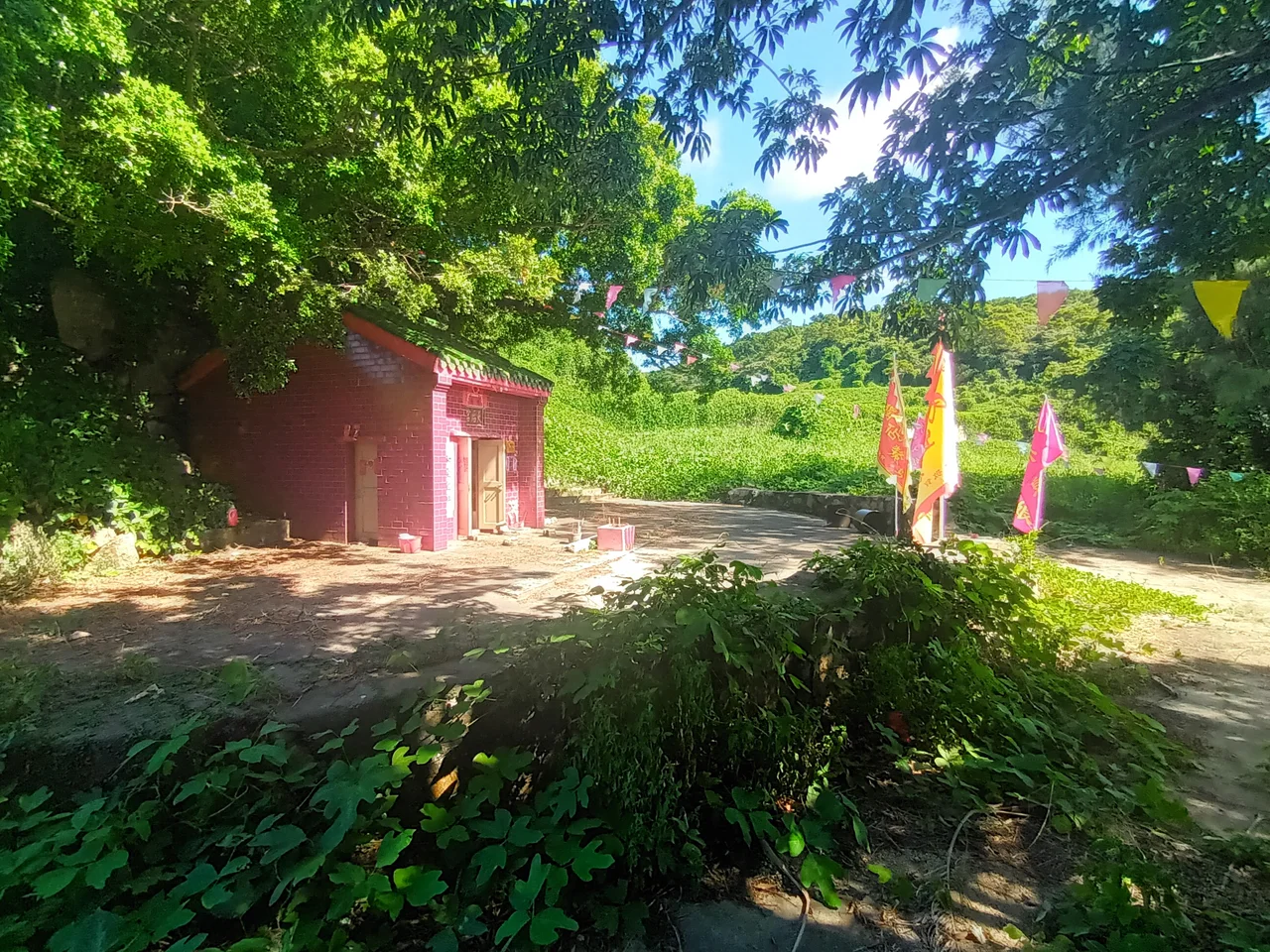

Tai A Chau
In 1937, Walter Schofield — then a Cadet Officer in the Hong Kong Civil Service — stopped at Tai A Chau and recorded a detail that tells you everything about the island as it once was: "There is a shrimp paste factory here which exports to Europe and America." A tiny island 4.5 kilometres south of Lantau, home to two small villages named Ha Tsuen and Sheung Tsuen, exporting fermented shrimp to distant continents. Tai A Chau was alive in a way that islands of 1.2 square kilometres rarely manage to be. Then came the 1980s, and an entirely different chapter — one that would leave two helicopter pads and a small jetty as the only modern traces remaining today.
The Island Before
The Soko Islands form a small archipelago in the southwestern corner of Hong Kong's territorial waters, and Tai A Chau is by far the largest of them, covering 1.2 square kilometres. Its hills rise between 85 and 154 metres — modest summits, but enough to give the island presence from the sea. The coastline is steep and rocky, offering limited anchorage but dramatic edges. The two villages on the western and southern sides maintained community life for generations, connected to Hong Kong by the rhythms of the fishing trade and, apparently, by a surprisingly export-oriented shrimp paste business. The island also hosts a temple dedicated to Tin Hau, the sea goddess venerated across coastal southern China, along with seven earth shrines scattered across its terrain. These survive. The villages do not.
A Camp at the Edge of the Territory
The villagers left in the 1980s when a detention camp for Vietnamese refugees was constructed on the island. Beginning in the late 1970s and accelerating through the 1980s, hundreds of thousands of people fled Vietnam by sea — on boats, through storms, across waters patrolled by pirates — and sought refuge wherever they could land. Hong Kong became one of the primary destinations. The territory eventually housed tens of thousands of Vietnamese people in a network of closed detention centres across multiple islands and facilities. Tai A Chau was among them. The people confined there had survived extraordinary journeys to reach Hong Kong waters. Many had lost family members at sea. In the closed camps, they waited — sometimes for years — while resettlement applications moved slowly through international bureaucracies. The detention system drew persistent criticism from human rights organisations for its conditions and its use of confinement rather than open reception.
September 1996: Ten Days of Ferries
The Tai A Chau facility closed by government announcement on 10 June 1996. The actual departure of the remaining residents took ten consecutive days, from 16 to 25 September 1996. Each day followed the same choreography: one ferry carrying luggage, two ferries carrying approximately 550 Vietnamese men, women, and children, departing the island for HMS Tamar naval base at Stonecutters Island. From there, the people were transferred to Whitehead Detention Centre in Wu Kai Sha — a facility that had become notorious for overcrowding and difficult conditions — before many eventually resettled in the United States under the Resettlement Opportunity for Vietnamese Returnees Scheme. The precision of those numbers — 550 per day, ten days, one jetty — captures the bureaucratic orderliness of a process that was, for the individuals moving through it, anything but orderly. These were people rebuilding lives, piece by piece, with destinations and futures still uncertain.
What Remains
Today Tai A Chau is uninhabited. The two helicopter pads and the jetty from the detention centre era are the most visible man-made features left. The Tin Hau temple stands, as does the cluster of earth shrines. The island sits roughly 2 kilometres north of the Hong Kong territorial boundary — far enough from the city that it receives few visitors, close enough that it never quite escapes the city's gravitational pull. There have been proposals over the years to site various industrial facilities nearby, including a liquefied natural gas terminal; environmental impact studies have documented the island's cultural heritage resources in some detail. For now, the island waits. Rocky, quiet, with its temple and its shrines facing the sea — which has brought, over the years, fishermen, refugees, and auditors from the civil service, and has returned them all to silence.
From the Air
Tai A Chau sits at 22.1614°N, 113.9083°E, in the Soko Islands group approximately 4.5 km south of Lantau Island's southern coast. From Hong Kong International Airport (VHHH, 22.31°N, 113.92°E), the island lies roughly 18 km to the south-southeast. At 2,500 feet AGL, the Soko Islands are visible as a loose cluster south of Lantau. Tai A Chau is the largest island in the group. The island's highest point is only 154 metres, presenting no terrain obstacle; however, pilots operating in the area should note the proximity to the Hong Kong–China maritime boundary approximately 2 km to the south. Nearest ICAO airport: VHHH.
Nearby Stories
- Lok Ma Chau Loop 2.3 km away
- Portas do Cerco 2.3 km away
- Kweilin Incident 17 km away
- Wanshan Archipelago Campaign 34 km away
- Nanxiong Formation 115 km away
- Battle of Nanpeng Island 148 km away
- Heyuan 169 km away
- Cape Maobitou 632 km away