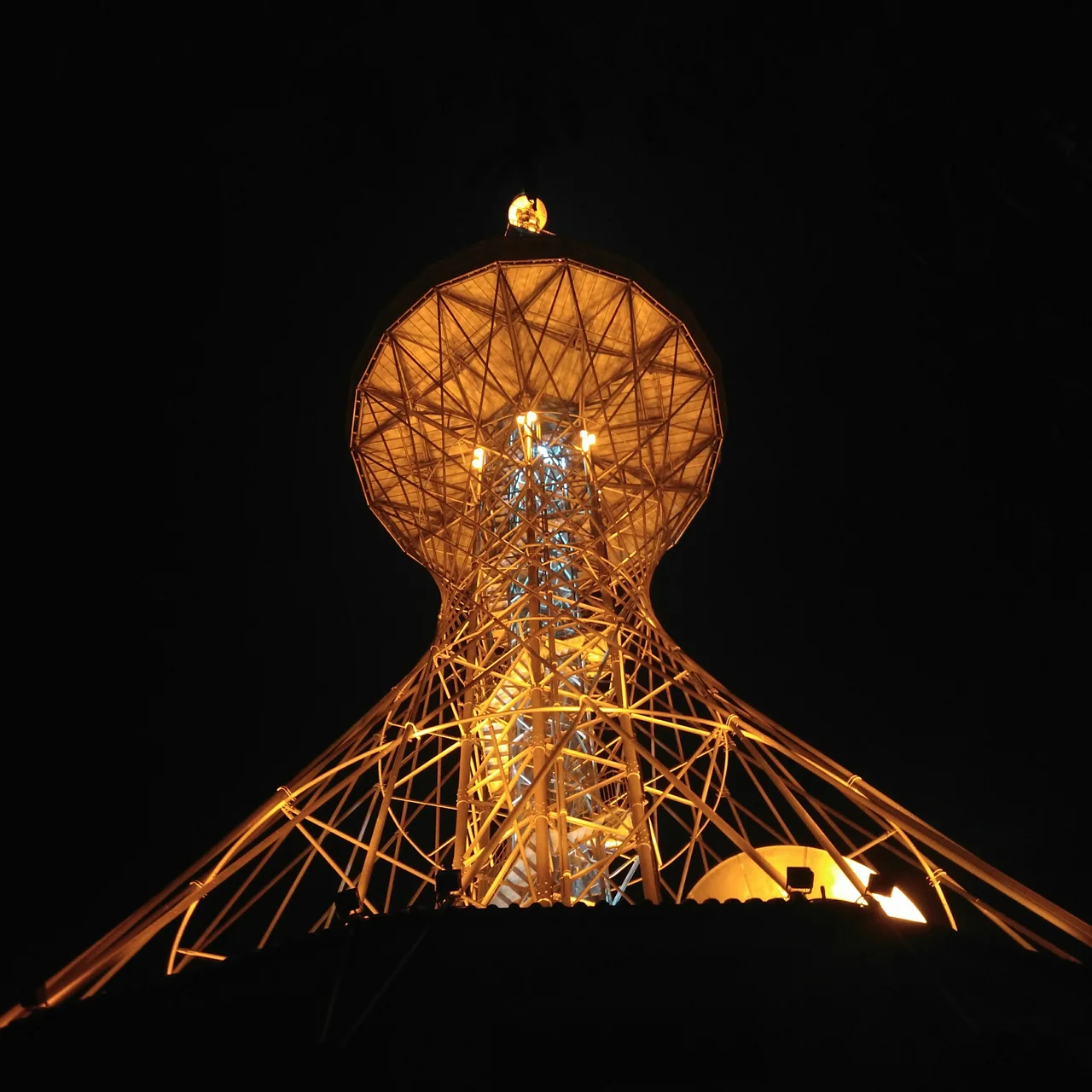

Heyuan
The nickname given to Heyuan by its own municipal government is not subtle: "the home of dinosaurs." It was earned. Since the 1990s, more than 17,000 dinosaur eggs have been unearthed in and around this northern Guangdong city — a number that places it among the most prolific dinosaur-egg sites on the planet. But Heyuan is not a city that lives only in deep time. The Dong River moves through it, the Hakka people have shaped its culture for centuries, and the aromas of stuffed tofu and slow-braised duck drift from kitchens that have barely changed in generations.
Dynasties in Layers
Heyuan's history reaches back to the Qin Dynasty, when the region formed part of the Nanhai Commandery — the administrative structure China's first unified empire imposed on its newly conquered southern territories. The Han Dynasty formalized the area as a county, a status it would hold through successive regimes: the Southern Han, the Southern Song, Yuan, Ming, and Qing. Each dynasty left its mark, but none more durably than the Qing's twilight years, when peasant uprisings swept through the region as the old imperial order buckled under pressure from within and without. After the 1912 Xinhai Revolution ended the dynastic system, Heyuan became part of the modern province of Guangdong. Formal prefecture-level city status arrived in 1988, launching a period of rapid urbanization that has transformed the riverine market town into a mid-sized city while leaving much of its cultural character intact.
The Hakka Heartland
To understand Heyuan, you have to understand the Hakka. This distinctive Han subgroup — whose name translates roughly as "guest people" — migrated southward from northern China over many centuries, retaining their own dialect, their own cuisine, and their own architectural traditions even as they settled deep in Cantonese-speaking territory. In Heyuan, Hakka and Cantonese coexist as the city's primary languages, with local dialect variations like Dongyuan and Heping adding further texture. The Hakka influence is most tangible at the table: the classic stuffed tofu (客家酿豆腐), in which fresh bean curd is packed with seasoned minced meat and steamed until it glistens, is practically a cultural emblem. Bamboo rice steamed inside sealed tubes, braised duck marinated in a dark soy-based sauce, rice wine with a faintly sweet finish — these are dishes that carry history in their flavors.
Home of Dinosaurs
Long before the Qin Dynasty administrators arrived, the land around Heyuan was a very different kind of place. During the Late Cretaceous period, roughly 66 to 70 million years ago, the region was a broad river floodplain where oviraptorid dinosaurs nested in large numbers. The sedimentary layers that formed from those ancient landscapes — the Nanxiong Formation and related geological units — have since been exposed by erosion, and they have proven extraordinarily rich. The Heyuan Dinosaur Museum, established in the city, holds one of the largest collections of dinosaur eggs in the world, and new specimens continue to emerge from construction sites, riverbeds, and excavated hillsides. The fossils are not abstract scientific specimens here; they are a source of genuine local pride, displayed on city signage and woven into the municipal identity in a way that few Chinese cities have matched.
The Dong River and the Land
Water defines Heyuan's geography in practical as well as aesthetic terms. The Dong River — Dongjiang — flows through the city and has historically served as both a trade route and an agricultural lifeline. Heyuan's farmers built their livelihoods on this river valley: the Longchuan county lotus root, celebrated regionally as the "King of Lotus Roots" for its tender texture, grows in the river's margin wetlands. Pomelos from the area carry a distinctive aroma that has made them a sought-after export across Guangdong. Heyuan beef, from cattle raised on the surrounding hills and river meadows, appears in the city's most beloved dish, beef congee — thinly sliced meat cooked gently into a porridge that is simultaneously substantial and delicate. The Dong River's proximity also opened possibilities for water transport, connecting Heyuan southward to the Pearl River Delta and the ports beyond.
Getting There and Getting Around
Heyuan sits in the northeastern corner of Guangdong, roughly 130 kilometers northeast of Guangzhou, connected by a web of expressways including the G35 Jiguang and G76 Fuqing routes. The Jinggang high-speed railway line passes through the city, and Heyuan East Railway Station links the city to the broader national rail network under the Guangzhou Railway Group. Urban buses serve the city's interior, while the Dong River system still accommodates some freight and tourism traffic. The infrastructure is modern and expanding; for a city of its size, Heyuan moves efficiently. Visitors coming to see the dinosaur eggs, to walk the river frontage, or simply to eat their way through Hakka cuisine will find the practicalities manageable and the welcome genuine.
From the Air
Heyuan lies at approximately 23.75°N, 114.69°E in the Dong River valley of northeastern Guangdong. The city is visible from cruising altitude as a mid-sized urban cluster in a landscape of green ridges and river meanders. The nearest major airport is ZGGG (Guangzhou Baiyun International Airport), approximately 130 km to the southwest. Flying eastbound along the Dong River valley at 8,000–12,000 feet, the transition from densely urbanized Pearl River Delta to the more sparsely settled northern highlands is clearly visible, with Heyuan marking the last significant city before the Jiangxi border highlands. Morning haze is common in this part of Guangdong; the river valley tends to collect low cloud into late morning.
Nearby Stories
- Nanxiong Formation 13 km away
- Mount Luofu 39 km away
- Dongguan 100 km away
- Penghu Air Raids 429 km away
- Penghu Great Bridge 431 km away
- Taiwan Strait 474 km away
- Taichung Power Plant 578 km away
- Pingdingshan Museum 1082 km away