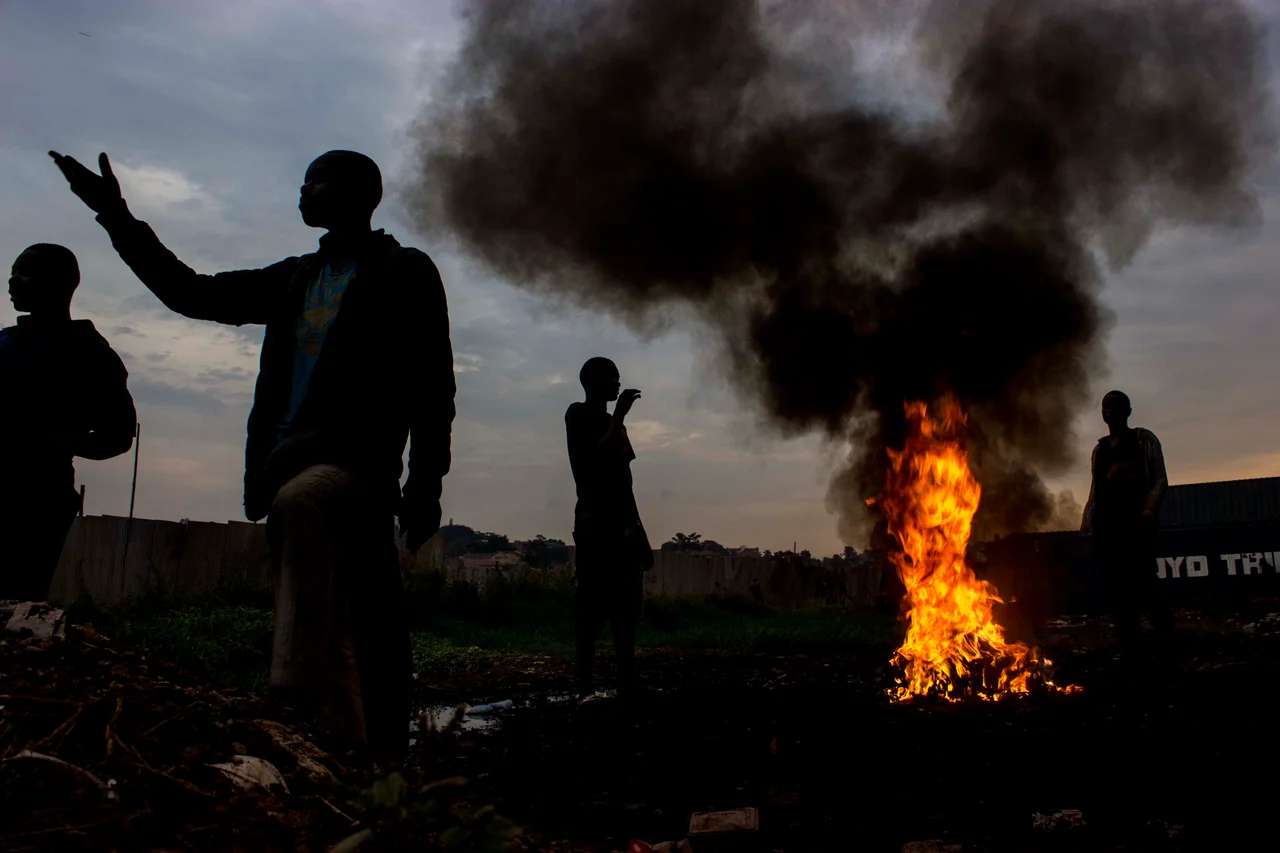

Kampala
Before it was a capital, it was a hunting ground. The hill where Kampala began belonged to the Kabaka of Buganda, who kept it stocked with antelope - among them the impala, grazing the grass above what is now a city of millions. When British officials were granted the hill in the 1890s, they called it the Hill of the Impala. Local people translated the phrase into Luganda, shortened it, and reshaped it on their tongues until it became a single word: Kampala. The antelope are long gone. The name they gave is the one a nation now answers to.
A City on Seven Hills
Kampala likes to call itself the city of seven hills, and the hills are not decoration - they are the story. Mengo Hill held the Kibuga, the capital of the Buganda kingdom, when the British arrived. Old Kampala Hill carried Fort Lugard, the first colonial seat of power. On Namirembe Hill and Lubaga Hill rose rival cathedrals - Anglican and Catholic - echoes of the religious wars that tore through Buganda between 1888 and 1892, when Protestant, Catholic, and Muslim factions fought for the kingdom's soul. Kibuli Hill answered with its great mosque. Nakasero became the seat of business and government. The city long ago outgrew its original seven, spilling across many more, but to read its hills is to read its history layer by layer.
The Music of the Streets
Down in the valleys between the hills, Kampala moves to its own rhythm, much of it on two wheels. The boda-boda - a motorcycle taxi that will carry you almost anywhere - is the fastest way through the city's notorious traffic and, by universal agreement, the most dangerous. The name itself is a small history lesson: at old border crossings, bicycle taxis once ferried travelers across the no-man's-land between checkpoints, calling out "border to border," which Ugandan ears smoothed into boda-boda. Where the motorcycles thin out, the minibuses take over - the matatu, packed tight, weaving from suburb to center, a place where strangers strike up conversations and fellow passengers will scold a driver who tries to overcharge you.
What Kampala Tastes Like
Hunger in Kampala has a signature dish, and it is a pun. The Rolex - not the watch - is a chapati rolled around an omelette with tomato and cabbage, cooked at roadside stalls for pocket change, and Ugandans will argue its merits with the seriousness others reserve for fine dining. Beyond it stretches a deeper table: matoke, the steamed and mashed green banana that anchors a Ganda meal, especially under a rich groundnut sauce; charcoal-roasted maize sold by the cob; fish and chicken with chips in the little spots locals call pork joints. Decades of Indian settlement layered curry houses and masala dosas over the local fare, while the markets - some of the largest in the region - pile high with the produce of a country where almost anything grows.
The Lake at the Edge
Kampala sits in the south of Uganda, on the northern shore of Lake Victoria - the vast inland sea that feeds the Nile and stretches past the horizon toward Kenya and Tanzania. The lake shaped the city's fortunes and still defines its edge, though its beaches carry a quiet warning: the still waters of Africa's Great Lakes can harbor schistosomiasis, and swimmers learn caution. The capital makes a natural gateway. An hour east lies Jinja, where the Nile begins and whitewater rafters test the rapids. A few hours west and south wait the national parks - Murchison Falls, Queen Elizabeth, the gorilla forests of Bwindi - that draw travelers from across the world.
Kindness in the Crowd
Visitors to Kampala tend to remember the same thing first, ahead of the traffic and the red dust and the pulsing nightlife of Kabalagala: the people. Ugandans have a reputation, well earned, for being warm and approachable, quick to help a lost traveler find a matatu or correct a fare. Kampala is a working capital with a working capital's frictions - jammed roads, hard air, a frank acknowledgment that money and crime exist as they do in any big city. But it carries those frictions lightly, an equatorial city of green hills and good humor, named for antelope and ruled by kindness as much as anything else.
From the Air
Kampala spreads across the hills of south-central Uganda at 0.314 N, 32.581 E, just north of Lake Victoria and almost exactly on the Equator, at an elevation of around 3,900 feet. From the air the city is unmistakable: a cluster of green hills, each often crowned by a landmark - cathedrals on Namirembe and Lubaga, a mosque on Kibuli - with the immense sheet of Lake Victoria filling the southern horizon. The gateway airport is Entebbe International (ICAO: HUEN, IATA: EBB), about 35-40 km southwest on the lakeshore; arriving flights to the capital land there. Kampala's equatorial climate gives it two rainy seasons and no true dry month, with the heaviest rain around April; mornings generally offer the clearest light before afternoon clouds build.
Nearby Stories
- White Nile 24 km away
- Ssese Islands 57 km away
- Ntusi 89 km away
- Battle of Kabamba 94 km away
- Nyero Rock Paintings 98 km away
- Bunyoro 134 km away
- Migingo Island 140 km away
- Budongo Forest 172 km away