
Kasubi Tombs
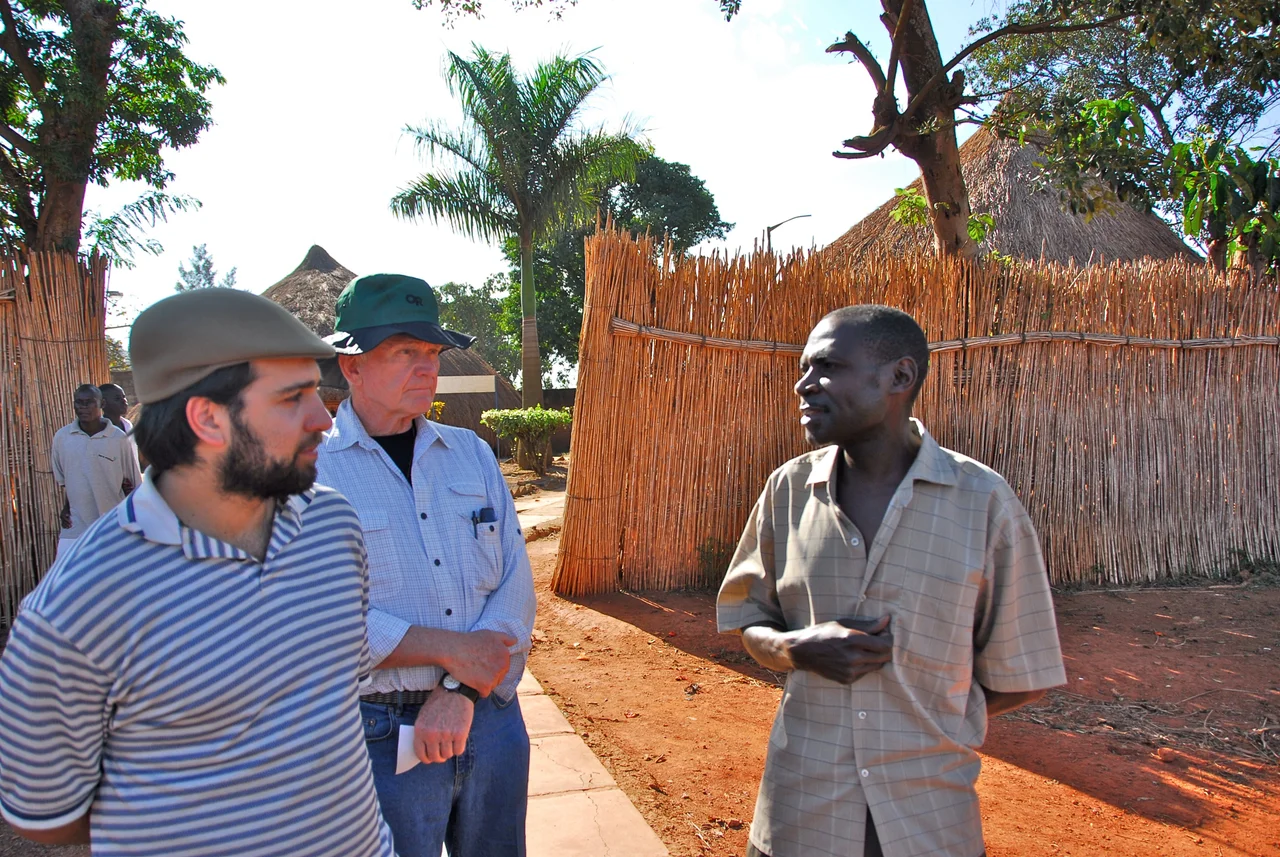
Step out of the equatorial sun and into the Muzibu-Azaala-Mpanga, and the first thing that reaches you is the hush. The great circular hall rises more than seven meters overhead, its dome woven from spear grass and reeds laid over a frame of poles, the floor spread with mats of palm. Behind a curtain of barkcloth lies a threshold the public cannot cross - the place the Baganda call the forest, where the spirits of their kings are said to dwell. This is not a ruin or a museum piece. It is a living shrine, tended for generations, on a hill on the edge of Kampala.
A Palace That Became a Resting Place
The story begins in 1882, when Kabaka Mutesa I built a palace on this hilltop, replacing one his father had raised decades earlier. When Mutesa died in 1884, the palace did not pass to his heir. Instead it became something no Buganda palace had been before. By long tradition, each kabaka was buried apart, in a tomb of his own, while his jawbone - believed to hold the spirit - was kept in a separate shrine. At Kasubi that custom broke. Four successive kings would be laid to rest under the same roof: Mutesa I, his son Mwanga II, Mwanga's son Daudi Chwa II, and Mutesa II, who died in 1969. To gather four monarchs in one house made Kasubi the spiritual heart of the kingdom.
Architecture Without a Nail
The Muzibu-Azaala-Mpanga is among the largest thatched structures on the continent, and its making is an art passed down rather than written. No nails hold it together. The vast dome rests on a forest of wooden rings and poles, bound with fibers and crowned with grass cut and laid by specialist clans, each with its inherited duty. Inside, rows of barkcloth - beaten from the bark of the mutuba fig, a craft UNESCO recognizes as a masterpiece of human heritage - screen the sacred ground. When the experts of the wider world came to measure it, they reached for superlatives. When the Baganda look at it, they see the work of their grandparents and the obligation of their grandchildren.
The Fire
On the evening of 16 March 2010, flames took hold of the great dome. Within hours the Muzibu-Azaala-Mpanga had burned to the ground. No clear cause was ever established, and many suspected arson. The loss struck the kingdom like a death. The next day the Kabaka, Ronald Muwenda Mutebi II, and Uganda's president, Yoweri Museveni, came to the smoking site, and so did crowds of ordinary Baganda, some to grieve, some to dig through the ash for anything that might be saved. Grief curdled into anger; protests broke out in Kampala, and lives were lost in the clashes that followed. Yet according to caretakers, the innermost sanctum had been shielded, and the remains of the kings endured. The site was placed on UNESCO's List of World Heritage in Danger.
Rebuilt by Hand
What followed was less a restoration than a reaffirmation. With support from UNESCO and funding from Japan, the Buganda Kingdom set about rebuilding the dome by the same techniques that raised the original - the same clans, the same grasses, the same refusal of shortcuts. Young Ugandans worked alongside the elders who still held the knowledge, ensuring it would pass to another generation. The reconstruction took years. In 2023 the rebuilt Muzibu-Azaala-Mpanga was completed, and Kasubi was removed from the danger list. The kings rest under a new roof woven the old way.
Where the Spirits Dwell
To visit Kasubi today is to be reminded that heritage is not a thing finished and locked away, but a relationship that each generation renews. Descendants of the royal wives still live on the grounds and care for the shrine. Rituals continue. The barkcloth still screens the forest from curious eyes. The site sits just a few kilometers northwest of central Kampala, on Kasubi Hill, an easy journey from the city's traffic into a quieter, older order of time - a place a kingdom nearly lost, and chose to make again.
From the Air
The Kasubi Tombs occupy a hilltop at 0.329 N, 32.553 E, on the northwestern side of Kampala at roughly 3,900 feet of elevation. From the air, the distinctive conical thatched dome of the Muzibu-Azaala-Mpanga and its surrounding compound stand out against the dense green of one of Kampala's hills. The nearest airport is Entebbe International (ICAO: HUEN, IATA: EBB), about 40 km to the south on Lake Victoria. Kampala's equatorial climate means frequent afternoon cloud build-up and showers; clear morning light gives the best view of the tombs and the patchwork of hills the city is built upon.
Nearby Stories
- White Nile 24 km away
- Ssese Islands 57 km away
- Ntusi 89 km away
- Battle of Kabamba 94 km away
- Nyero Rock Paintings 98 km away
- Bunyoro 134 km away
- Migingo Island 140 km away
- Budongo Forest 172 km away