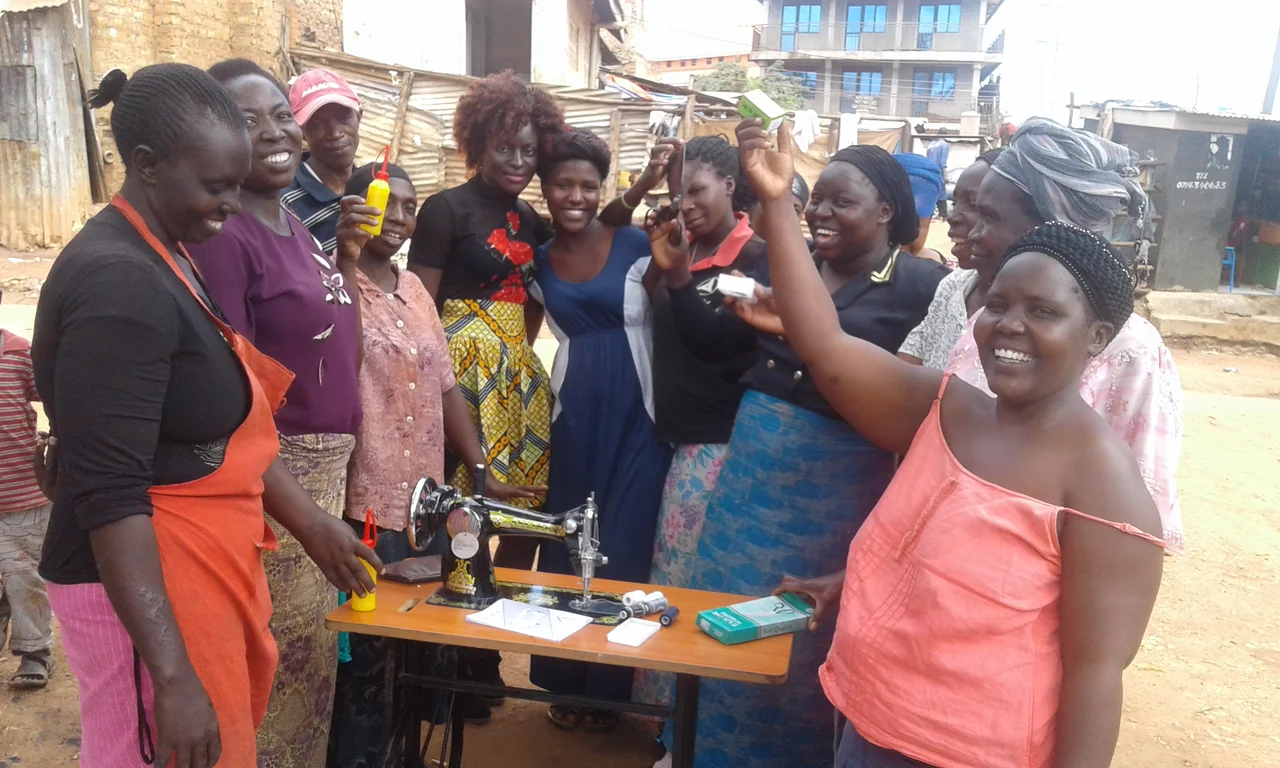

Katwe
The sound arrives before the sight: the ring of hammers on metal, dozens of them, overlapping into a kind of music. Walk the streets of Katwe, a few kilometers south of downtown Kampala, and you pass open-fronted workshops where men shape sheet steel into pots, stoves, truck parts, and machines you would swear came from a factory. Some of them did not. They were built here, by hand, by people who could not afford the original and so made their own. The Baganda have a phrase for these improvised creations: Magezi ga Baganda - the wisdom of the Baganda.
The Wisdom of the Baganda
When Uganda won independence from Britain in 1962, Katwe was already a center of ingenuity. Artisans here repaired the imported goods of a colonial economy - radios, refrigerators, cars, televisions - and the cleverest among them went further, fabricating copies of parts that were too costly or too scarce to buy. That instinct never faded; it sharpened. By 2007, an estimated three thousand metalworkers and craftspeople were at work across more than eight hundred small enterprises packed into the neighborhood. The artisans began collaborating with the Faculty of Technology at Makerere University, Uganda's leading school, bridging street-level invention and formal engineering. Katwe is, in its way, one of the country's most productive places.
A Place That Bets on People
Katwe has long drawn the people the banks would not. Uganda's cautious lenders deemed them too risky - the food vendors, the wholesalers, the herbalists, the owners of one-truck transport outfits starting with nothing. So they started anyway. One, a herbalist named Namutebi who ran a transport business, had little formal schooling and by her early thirties was reportedly worth seven figures in dollars. Hers is not the typical story, and it would be dishonest to pretend otherwise: unemployment is high, and crime has been a real and persistent problem that local leaders have struggled to solve. But the neighborhood has also been changing. Since around 2007, pharmaceutical firms, banks, and a multi-story shopping mall have risen on Katwe's main streets, a working district remaking itself one building at a time.
The Girl Who Sold Maize
In 2005, a hungry nine-year-old followed her brother to a dusty veranda where a man was teaching children to play chess in exchange for a bowl of porridge. Her name was Phiona Mutesi. She had dropped out of school because her family could no longer pay the fees, and she sold maize in the market to help them survive. She could not read. But she could see the board. The coach, Robert Katende - a former footballer who ran the program through a Christian sports ministry - watched her learn to think several moves ahead, and recognized something rare.
Queen of Katwe
Mutesi rose fast. In 2007 she became Uganda's national junior champion, a title she would hold three years running. She traveled abroad to compete - Sudan, then far beyond - a girl from Katwe sitting across the board from the world. In 2012, at the Chess Olympiad in Istanbul, she earned the title of Woman Candidate Master. Her story became a book by the journalist Tim Crothers, then a 2016 Disney film directed by Mira Nair, with Lupita Nyong'o as her mother Harriet and David Oyelowo as Katende. The movie carried Katwe's name around the globe. Mutesi later studied at university in the United States, and Katende's chess academy went on teaching children in the neighborhood where it began.
More Than a Headline
It would be easy to flatten Katwe into a single word - slum - and many accounts have. But the place resists the label. It is a market and a workshop and a churchyard and a school, a neighborhood where a herbalist becomes a millionaire and a maize-seller becomes a champion, where the hammering never quite stops. Bordered by Nakasero, Nsambya, Makindye, Ndeeba, and the old royal hill of Mengo, Katwe sits close enough to feel central Kampala's pull and far enough to keep its own character: a community that makes things, and makes its own way.
From the Air
Katwe lies at 0.300 N, 32.577 E, in Kampala's Makindye Division, about 3 km south of the central business district, at roughly 3,900 feet of elevation. From the air it reads as a dense, low-rise urban quarter woven into the southern slopes and valleys of Kampala's famous hills, threaded by old railway alignments. The nearest airport is Entebbe International (ICAO: HUEN, IATA: EBB), about 40 km south on Lake Victoria. Kampala's equatorial weather brings heavy afternoon rains, especially from February to June; clearer morning light best reveals the city's hill-and-valley grain and the green rim of the great lake to the south.
Nearby Stories
- White Nile 24 km away
- Ssese Islands 57 km away
- Ntusi 89 km away
- Battle of Kabamba 94 km away
- Nyero Rock Paintings 98 km away
- Bunyoro 134 km away
- Migingo Island 140 km away
- Budongo Forest 172 km away