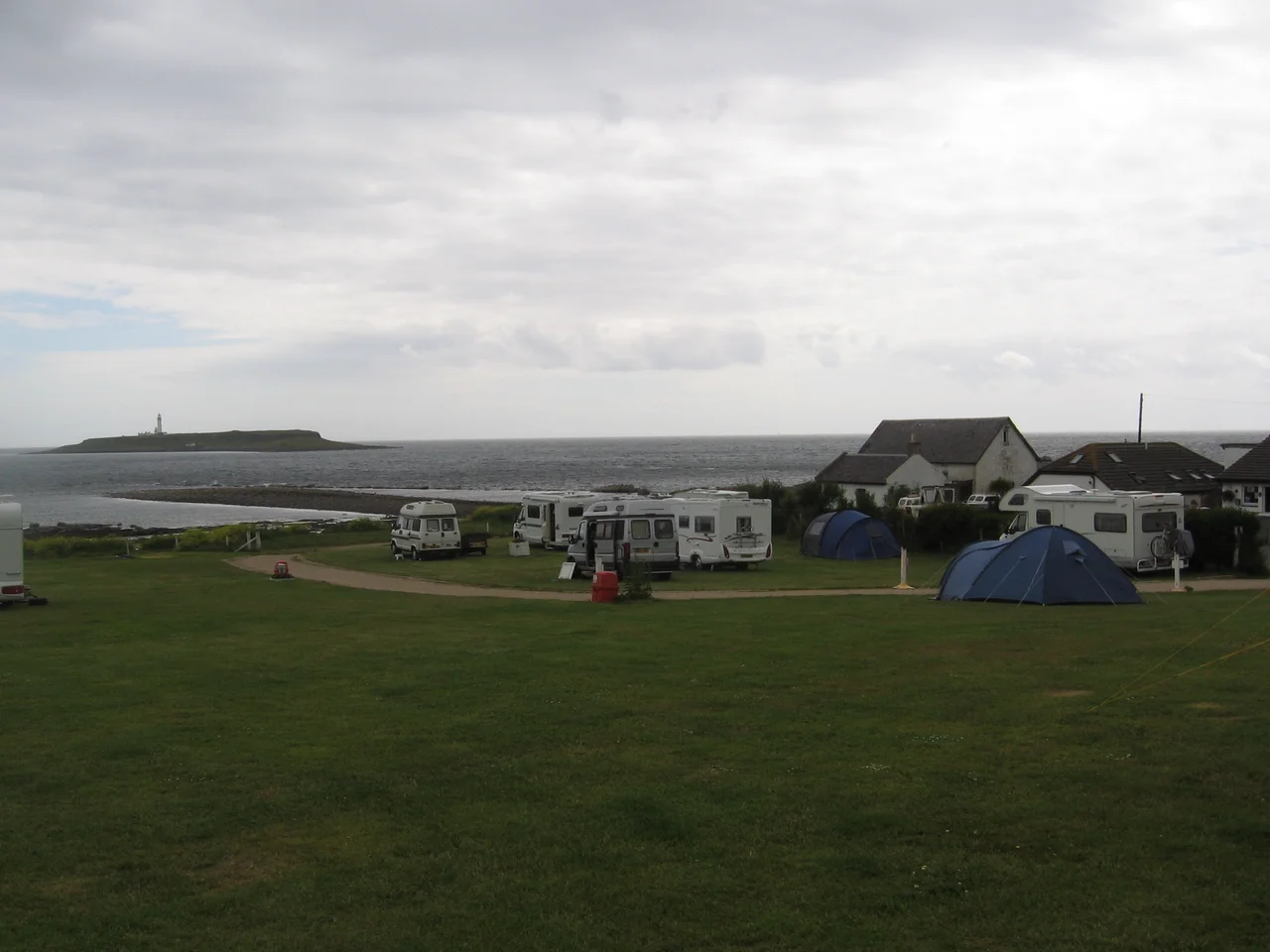

Kildonan Lifeboat Station
An anonymous English lady from Berkshire wrote a cheque for one thousand pounds in 1870 and asked, in return, only one thing: that the new lifeboat be named Hope. That boat went to a stretch of beach on the south-east corner of the Isle of Arran, in a village called Kildonan, where the Firth of Clyde funnels Atlantic weather past Pladda Lighthouse and toward the open sea. For the next thirty-one years, Hope and the boats that followed her launched into that water whenever a sail flew the wrong way. Kildonan Lifeboat Station was small, remote, and entirely dependent on the generosity of strangers. It still managed to bring sailors home.
A Donation From Berkshire
The RNLI's logic in the late 1860s was straightforward. Vessels of every kind, from passenger steamers to trading sloops, threaded the narrow waters around Arran on their way in and out of the Clyde. When the weather turned, the south-east coast of the island was a dangerous place to be caught. A boathouse went up on the beach at Kildonan for the not-inconsiderable sum of two hundred and one pounds, and a thirty-two-foot self-righting pulling-and-sailing lifeboat, with ten oars and a rig of canvas, arrived from the south. The London and North Western Railway carried it part of the way; the Glasgow and South Western Railway carried the rest for free. A steamship towed her from Ardrossan over to Lamlash on the island, and on 6 and 7 May 1870 the new crew put her through her paces. They were pleased.
The Names of the Boats
The boat went through three names in three decades, and each name carried a story. Hope, paid for by the unnamed Englishwoman, was the first. In 1877, the late Mrs Emily Dewar of Vogrie - of the famous Dewar's whisky family - bequeathed five hundred pounds to the RNLI. The money was sent to Kildonan, and around 1880 the boat became Emily Dewar. A decade later, when a slightly larger thirty-four-foot replacement was needed, the donor was Miss Pringle Kidd of Edinburgh, who gave seven hundred pounds with enough left over for a new launch carriage and repairs to the boathouse. Her brother, David Kidd, had been a wholesale stationer in Fleet Street and, of all things, the inventor of the modern gummed envelope. On 26 August 1890, the new boat was named David and Elizabeth Kidd, Brother and Sister, after her late siblings.
Calls Into the Dark
The launches Kildonan's crews remembered came at strange hours and in bad weather. At eleven o'clock on the night of 13 July 1879, Hope went out to the pilot smack Marion, which had lost her jib and gone aground on Carlin Rock. Two men came home in the lifeboat. On 6 October 1885, the barque Rimac was spotted flying "I am sinking" - she had only just left Glasgow, bound for Valparaiso in Chile with a crew of seventeen, when she collided with the ship North. Emily Dewar launched just after six in the evening, the lifeboatmen boarded, and with a tugboat's help they brought the vessel to Lamlash and beached her. The lifeboat stayed until low water and came home at seven the next morning. Two years later, on 7 December 1887, Emily Dewar pulled seven men off the leaking barque Falco of Stockholm, deliberately run ashore on Carline Rocks.
The Quiet Years
By the 1890s, the calls were tapering off. More vessels carried engines; fewer wallowed under sail in heavy weather. Navigational aids had improved. In its 1902 annual report, the RNLI noted plainly that three stations had been closed within the year because changes in local requirements had made them unnecessary. Kildonan was one of them. The boathouse on the beach, the carriages, the painted boats with their gifted names - all came to rest. A new station eventually rose at Lamlash, where it operates today with a modern Atlantic 85 inshore lifeboat. The work continues; only the place has moved.
From the Air
Kildonan sits at 55.44 degrees north, 5.11 degrees west, on the south-east coast of the Isle of Arran in the Firth of Clyde. Pladda Lighthouse stands offshore just to the south. From cruising altitude in clear weather, the small island of Pladda and Arran's coastline make easy landmarks. Glasgow Prestwick (EGPK) lies roughly 25 nautical miles north-east on the Ayrshire mainland; the Isle of Man's Ronaldsway (EGNS) lies about 100 nautical miles to the south.
Nearby Stories
- RAF Machrihanish 4.6 km away
- 1948 KLM Constellation Air Disaster 6.9 km away
- Ballantrae Lifeboat Station 12 km away
- Great Cumbrae 12 km away
- Battle of Glen Trool 13 km away
- Paisley Abbey 17 km away
- Jura Distillery 24 km away
- Cushendall 30 km away