.png)
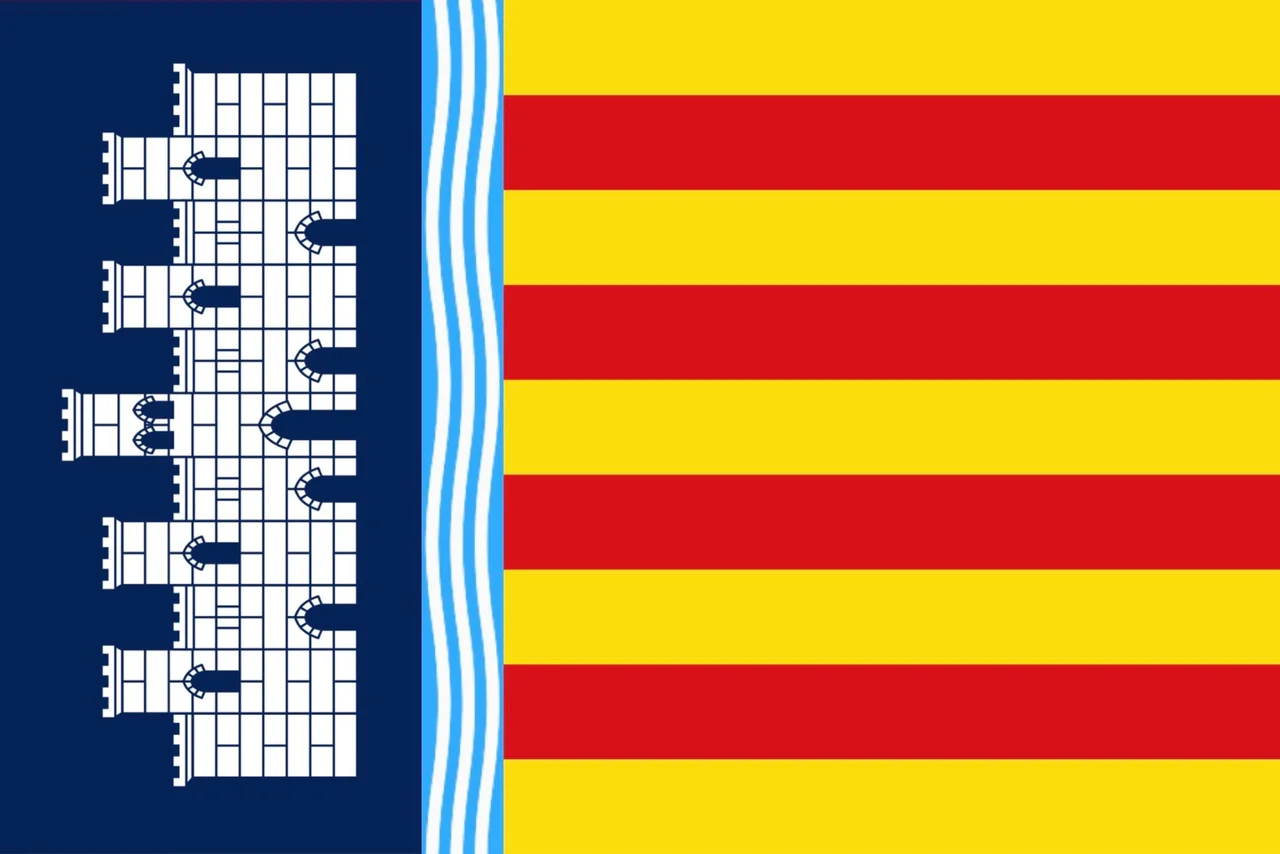
Kingdom of Majorca
Few kingdoms were built so awkwardly. When James I of Aragon died in 1276, he divided the lands he had spent a lifetime conquering and handed his younger son a realm assembled from pieces that did not touch — the Balearic Islands in the western Mediterranean, and a scattering of counties and lordships along the coast of southern France, hundreds of miles away. This was the Kingdom of Majorca: a state with no shared border, no parliament to bind it, and two powerful neighbors who each believed it should be theirs. What is remarkable is not that it fell, but that it lasted as long as it did.
A Conqueror's Bequest
The kingdom's founder earned his epithet the hard way. James I of Aragon wrested Mallorca and its sister islands from the Almohad Caliphate, a feat that won him the name James the Conqueror and folded the Balearics into the Crown of Aragon. When he died, he split his inheritance among his surviving sons: Peter, the eldest, took the mainland as Peter III of Aragon, remembered as Peter the Great, while the younger James received the islands and reigned as James II of Majorca. On paper it was a tidy division. In practice James I had created a fragile Mediterranean enclave, wedged between two rivals forever at odds — the Capetian kings of France and the Crown of Aragon — and no amount of careful maneuvering, not even a failed attempt to marry his son into the House of Savoy, could make its position secure.
Vassal and Overlord
The trouble was baked in from the start. After 1279 Peter III decreed that the King of Majorca must hold his crown as a vassal of Aragon, and the demand set brother against brother. James II tried at first to steer an independent course, but his kingdom was thin — no parliament, no unifying institutions, always short of the machinery a state needs — and independence proved impossible to hold. That same year he submitted, recognizing the Aragonese king as his overlord under the Treaty of Perpignan. Later, when James II threw in his lot with Pope Martin IV and the French against Aragon, the reprisal was swift: Alfonso, son of the Aragonese king, invaded and seized Mallorca in 1286. Only a decade later did the Treaty of Anagni hand the islands back.
Debt and Its Price
Money, more than armies, undid the little kingdom. When James II died in 1324, his son Sancho inherited a strained treasury, and an invasion of Sardinia drove it deeper into debt. In 1325, to settle the question of who would follow him, Sancho named the kings of Aragon as his heirs — a decision that steadied the succession but did nothing for the accounts. War with the Republic of Genoa between 1329 and 1336 cost the kingdom overseas markets it could not afford to lose. To cover the shortfall the crown turned, as medieval rulers so often did, to its Jewish community, levying special taxes and fines on people with little power to refuse. Even so, the debts kept mounting, and the strain would help pull the kingdom apart.
The Last King
By 1341 Peter IV of Aragon had decided the arrangement had run its course, and he broke off relations as a prelude to war. In May 1343 he invaded the Balearics; the following year he took the mainland counties of Roussillon and Cerdanya, leaving James III of Majorca with only his French possessions. James sold even those and, in 1349, gambled everything on winning his islands back by force. He was defeated and killed at the Battle of Llucmajor on 25 October 1349. With his death the Kingdom of Majorca lost its independence for good, surviving thereafter only in personal union with the Crown of Aragon — the same islands, under the same distant king.
Four Hundred Years of Afterlife
Yet the kingdom did not simply vanish. For nearly four centuries it persisted as a distinct realm within the Crown of Aragon, keeping its own viceroy and political identity even as it shared a monarch. Its position, though, never grew any safer. Caught among the Hundred Years' War, the long struggle against the Marinids of North Africa that drew in Castile and Aragon alike, and Genoese schemes to turn the Balearics into a satellite, a small kingdom bound by vassalage to both France and Aragon could never simply stand aside. The end came with the War of the Spanish Succession. The Crown of Aragon backed the losing claimant, the Archduke Charles, and when Philip V triumphed he abolished the old kingdom outright, sweeping it away with the Nueva Planta decrees of 1715.
From the Air
Anchored near 39.65°N, 3.01°E in the interior of Mallorca, this story spans the whole former kingdom — Mallorca, Menorca, Ibiza and Formentera, laid out across the western Mediterranean. From 20,000–30,000 feet on a clear day the archipelago reads as a chain of stepping-stones: Ibiza and Formentera to the southwest, Mallorca's mass at the center with the Bay of Alcúdia biting into its north coast, and Menorca low on the northeastern horizon. Palma's airport (LEPA) serves Mallorca; Menorca (LEMH) lies about 40 km across open sea to the northeast. The stable, clear air of a Mediterranean high can hold several islands of the old realm in view at once.
Nearby Stories
- Andratx 7.9 km away
- Miquel Capllonch Rotger 8 km away
- Hypogeum of Torre del Ram 28 km away
- Ciutadella 49 km away
- Illa de Tagomago 80 km away
- Cala de Sant Vicent 125 km away
- Cau Ferrat Museum 158 km away
- Shipwreck of Dellys 276 km away