
Cau Ferrat Museum
Santiago Rusiñol was supposed to make cotton. Born in 1861 into a prosperous Catalan textile family, he was expected by his grandfather and godfather to carry on the mills. Instead he picked up a brush, and in doing so helped invent an entire chapter of Catalan culture. On a stretch of Sitges seafront, above the sand of Sant Sebastià beach, he built the house that became the reliquary of that life: the Cau Ferrat, the iron den, a home and studio so crammed with paintings, wrought iron, glass and ceramics that visitors still struggle to take it all in.
The Mecca of Modernisme
Rusiñol first came to Sitges in the autumn of 1891 and never really left it. To him, art was not a trade but a calling close to religion, a doctrine he called Total Art. He set out to turn a small fishing town into its temple. Between 1892 and 1899 he staged the Festes Modernistes, exuberant gatherings of painters, poets and musicians. He built the Cau Ferrat as their headquarters. In 1898 he unveiled a monument to El Greco, a painter then out of fashion whom Rusiñol had made his patron saint. Together, these acts made Sitges the acknowledged Mecca of Modernisme and cast Rusiñol as its high priest, a movement that hoped to remake society through beauty.
A House Bought from God
The house itself came with an odd history. Its previous owner, dead for decades, had willed it to Our Lord God, intending the rent to pay for masses for her soul, so the sale in 1893 required special authorization from the church court of the Barcelona diocese. Rusiñol paid a thousand pesetas for the fisherman's cottage and two thousand more to knock it down and start again. His architect, Francesc Rogent, salvaged the great Gothic windows from Sitges's old castle, then being demolished to make room for a new town hall, and set them into the new facade. When it opened, Rusiñol timed the celebration to coincide with the arrival of two El Greco canvases he had bought in Paris, carrying them through the town in something close to a procession.
The Iron Den
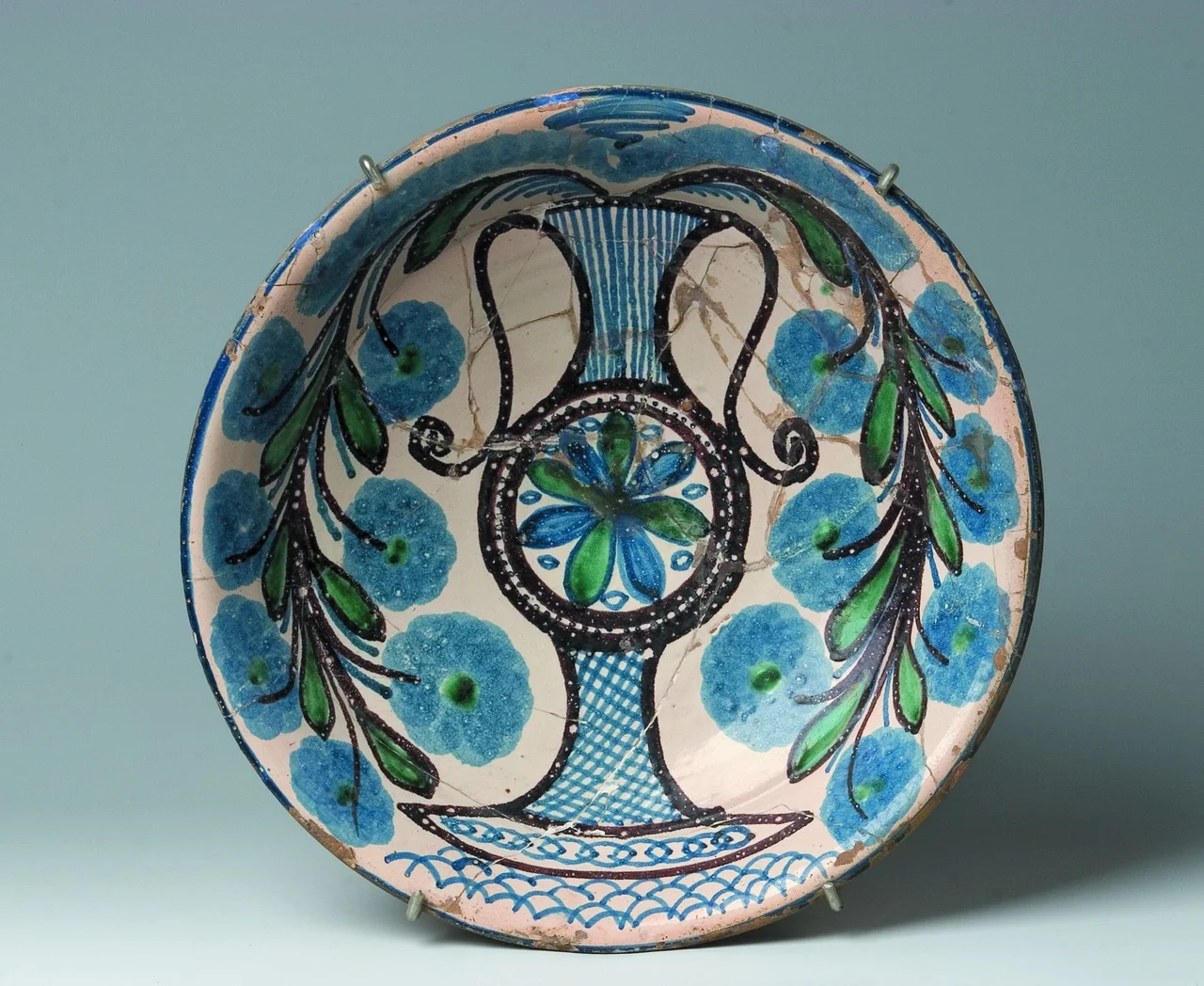
The name gives the place away. Cau Ferrat means the iron den, and Rusiñol's reputation as a collector of wrought iron ran ahead of his fame as a painter. Working with a small circle of fellow obsessives, he helped rescue ironwork from being dismissed as a minor craft and made it a subject of serious study. That revaluation rippled outward into the great Modernista architecture of the age, into the wrought-iron flourishes of Gaudí, Puig i Cadafalch and Domènech i Montaner. The very name Cau Ferrat had followed him from Barcelona, where he had shared a studio of the same title with his friend the sculptor Enric Clarasó before moving it all to the sea. Iron was only the beginning. Rusiñol also gathered nearly four hundred pieces of glass and more than two hundred ceramics spanning the fourteenth to the nineteenth centuries, drawn from potteries across Valencia, Aragon, Castile and beyond, and hung and stacked in a deliberate horror vacui that leaves scarcely a bare surface anywhere.
The Bohemians and the Bequest
For a decade the Cau Ferrat was the favourite haunt of the century's end, and the list of guests reads like a roll call of the era. The poet Joan Maragall came, and the novelists Emilia Pardo Bazán and Benito Pérez Galdós; so did the composers Enrique Granados and Manuel de Falla and the Belgian violinist Eugène Ysaÿe. The walls still hold work by Rusiñol's friends and peers, among them Ramon Casas, Isidre Nonell and a young Pablo Picasso. When Rusiñol died in 1931, he left the house and everything in it to the people of Sitges, on the single condition that it become a public museum. It opened as one on 16 April 1933, keeping the promise the artist had made on his very first night in town, that he wanted to take a souvenir of the place away with him forever.
From the Air
The Cau Ferrat stands on the Sitges seafront at 41.2351 N, 1.8127 E, at the edge of the old town where the church of Sant Bartomeu i Santa Tecla juts toward the Mediterranean. From 2,000-3,500 ft AGL the whitewashed church on its small headland is the obvious landmark, with the museum and Sant Sebastià beach immediately beside it. Barcelona-El Prat (LEBL) lies about 30 km up the coast to the northeast; Sabadell (LELL) is inland to the north and Girona (LEGE) farther along the Costa Brava. Bright coastal visibility is the norm along this shoreline.
Nearby Stories
- Terrassa Witch Trials 11 km away
- Josep Maria Jujol 12 km away
- Cervera 23 km away
- Vandellòs I nuclear incident 45 km away
- El Celler de Can Roca 64 km away
- Battle of Ebro River 94 km away
- Fageda d'en Jordà 103 km away
- Sa Calobra 126 km away