
Cervera
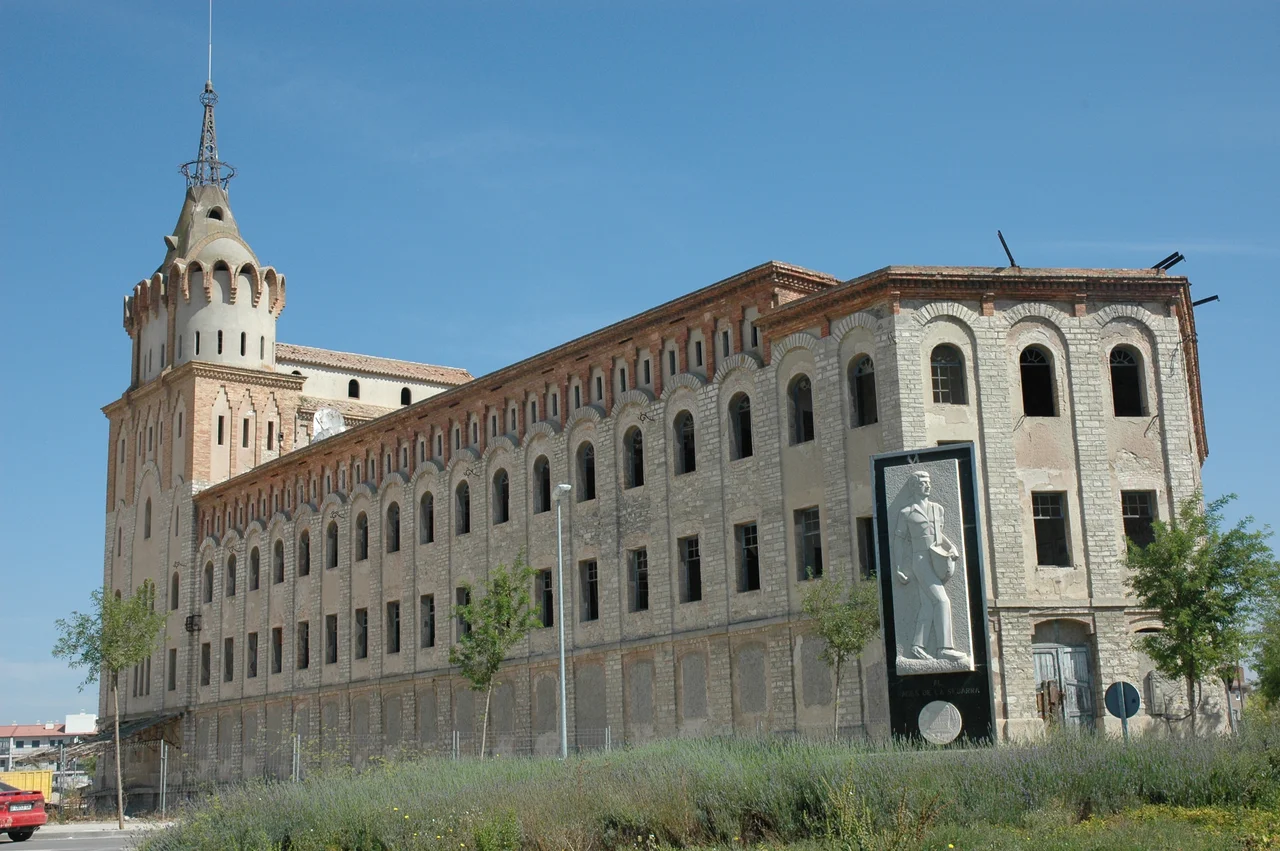
In 1717, Philip V punished Catalonia by handing a favor to Cervera. Having crushed the region's support for his Habsburg rival in the War of the Spanish Succession, the victorious Bourbon king shut down all six of Catalonia's universities at once, and rebuilt a single one here, in the loyal little town that had backed him. For more than a century, anyone in Catalonia who wanted a university degree had to come to Cervera and nowhere else. The vast 18th-century university building still dominates the town, a monument to a reward and a punishment delivered in the same royal stroke. It is not even the strangest thing to have happened in these streets.
The Marriage That Made a Country
Two and a half centuries before the university, Cervera hosted a moment that reshaped the map of Europe. In 1469, a parliament met in the town at which Ferdinand, heir to Aragon and later called the Catholic, accepted the terms of his marriage to Isabella of Castile. That union of two crowns would set in motion the making of a single Spanish monarchy. This was not the first time the town had sat at the center of power; the Catalan Courts had already convened here in 1359. For a modest place perched on a ridge in the Segarra, Cervera has an oversized habit of appearing at the hinge points of history, where dynasties and constitutions were argued into being.
Witches' Alley
Cervera also keeps a darker, older character, and you can walk straight into it. The Carrero de les Bruixes, the Alley of the Witches, preserves the tight medieval structure of the town, and it gives its name and spirit to the Aquelarre, the festival held on the last weekend of August since 1978. For those nights the streets fill with fire, devils, bonfires, music, and a theatrical brand of the occult, a self-aware carnival of witchcraft that has become the town's signature. It is a very old town playing with a very old fear. Cervera has long lived close to legend; the nearby Sio valley, studded with castles, was once frontier land facing the Moors, and the memory of that edge lingers in its stones.
A Town That Performs Its Faith
Ritual runs deep here, and much of it is old enough to stagger the imagination. Cervera has staged its Passion play since 1447, a tradition so central that the town built the Gran Teatre de la Passio, seating 1,700, to house it. It has celebrated Corpus Christi since 1337, with the spoken dance of the Ball de Diables and carpets of flowers laid across the pavements. On the feast of Saint Magi, miraculous water is still carried in from a mountain sanctuary on mules dressed with boxwood. Winter brings the Festa Major del Santissim Misteri, and in January the Procession of the Puro, a secular march in which men once walked with lit cigars, marking a bygone political victory. These are not revivals staged for visitors; they are unbroken habits of a community.
Eleven Monuments and a Round Church
Eleven of Cervera's monuments carry Catalonia's highest heritage protection, and they span a thousand years. There is an 11th-century castle, a walled enclosure raised in the 14th century by order of Peter III the Ceremonious, and the parish church of Santa Maria. Most singular is Sant Pere el Gros, a small Romanesque hermitage from the 11th century and one of the very few round churches in Catalonia, the sole survivor of a monastic complex once tied to the great monastery of Ripoll. The Casa Duran i Sanpere, a bourgeois mansion, now holds the regional museum with its rooms preserved intact. Other monuments fill in the centuries between: the Convent of Sant Agusti, from the 14th and 15th centuries, still wearing its medieval face, and the Hospital de Berenguer de Castelltort, founded at the close of the 14th century by a local merchant. The Paeria, the town hall, rose across the 17th and 18th centuries. When the university finally closed in 1835, the town did not fall quiet; it simply went on living among its monuments, as it does today, a place of some 9,000 people carrying a thousand years on its ridge. From the Placa del Fossar, a viewpoint opens over the whole rolling region of the Segarra, and the town stands as a stage on the Catalan Way of Saint James.
From the Air
Cervera sits at 41.666 N, 1.271 E, on a ridge in the Segarra region of eastern Lleida province, midway between Lleida and Barcelona. From 3,000-5,000 feet AGL the linear hilltop old town is unmistakable, its silhouette crowned by the long 18th-century university building and the church of Santa Maria, set above dry cereal country and gentle hills. Nearest airport is Lleida-Alguaire (LEDA) to the west; Barcelona-El Prat (LEBL) lies east and Reus (LERS) to the south. The open Segarra uplands give broad sightlines, with the Montsec ridge visible to the north-northwest in clear air.
Nearby Stories
- Roca dels Moros 2.2 km away
- Codorniu Winery 6.5 km away
- Cave of Saint Ignatius 6.8 km away
- Battle of Almenar (1082) 13 km away
- Patum de Berga 13 km away
- Montblanc 13 km away
- Tremp Formation 17 km away
- Battle of Graus 36 km away