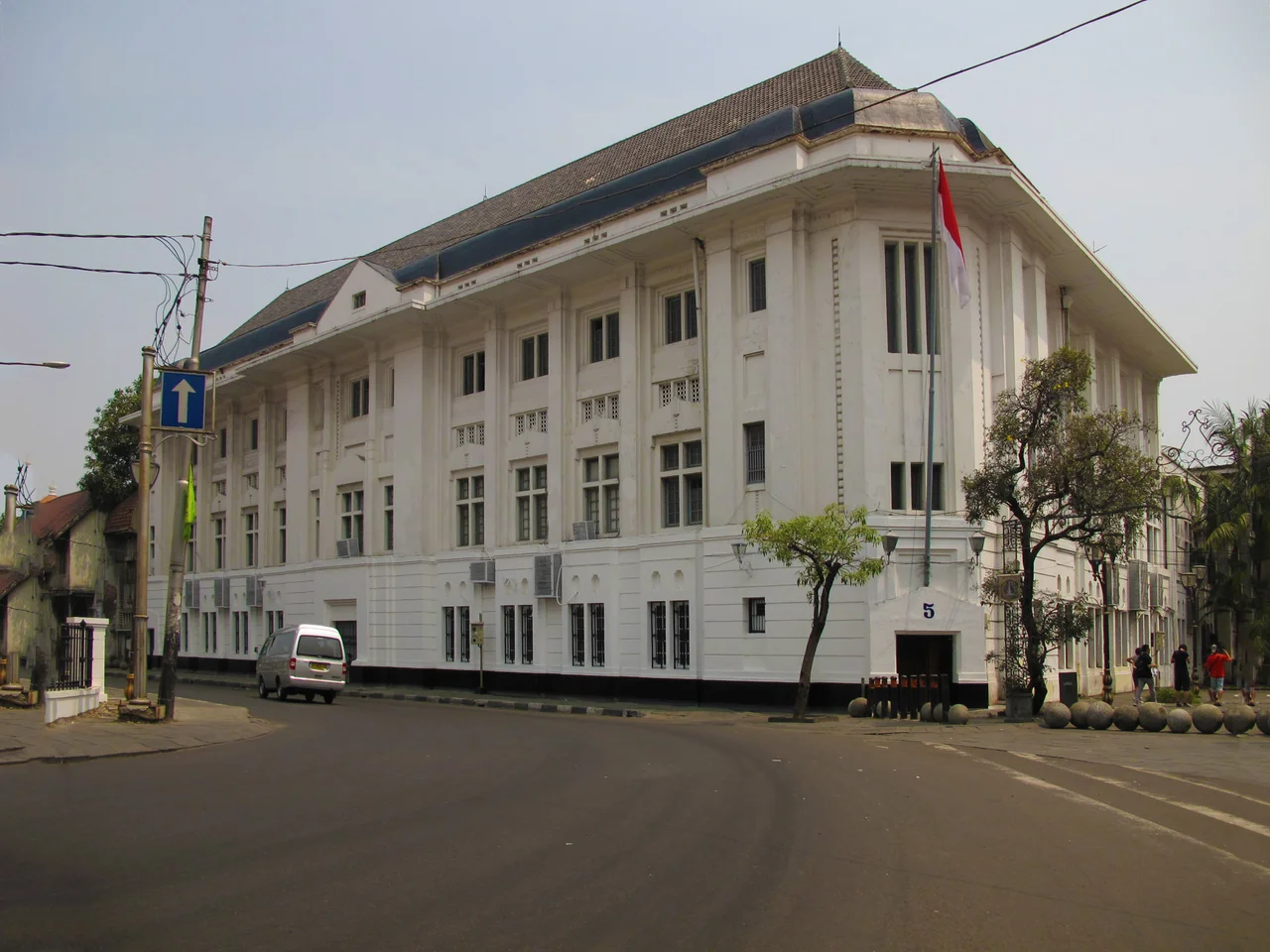

Kota Tua Jakarta
European sailors in the sixteenth century called it the Jewel of Asia, and for a while the name fit. The walled city of Batavia - founded by the Dutch East India Company on the ruins of a Javanese port - became the command center of the global spice trade, its canals lined with warehouses packed with nutmeg, cloves, and pepper destined for Amsterdam. Fortunes were extracted here on an industrial scale. Then malaria came, and the wealthy moved south, and the jewel was left to rot. By the twentieth century, Kota Tua - Jakarta Old Town - was an architectural ghost, its Dutch facades crumbling, its canals filled in, its grandest buildings standing empty. That it survives at all is remarkable. That it is being restored is something close to improbable.
A Port Conquered Twice
Before the Dutch arrived, this stretch of coast belonged to Sunda Kelapa, a harbor town under the Hindu Pajajaran kingdom. In 1526, Fatahillah, a military commander sent by the Sultanate of Demak, conquered the port and renamed it Jayakarta - "victorious deed." The name did not stick for long. In 1619, the Dutch East India Company under Jan Pieterszoon Coen seized the settlement, burned much of it, and rebuilt it as Batavia - a walled colonial city modeled on Dutch urban planning, complete with canals, gabled rooftops, and a castle called Kasteel Batavia at its heart. The VOC made Batavia its Asian headquarters, and for the next two centuries the city served as the administrative and commercial hub from which the Dutch controlled the spice trade across the Indonesian archipelago. The 1.3-square-kilometer area that is now Kota Tua spans parts of modern North Jakarta and West Jakarta, including the largely Chinese downtown district of Glodok.
The Canals That Killed the City
Batavia's Dutch-style canals, designed to evoke Amsterdam, were ultimately its undoing. In the warm, humid climate of tropical Java, the sluggish waterways became breeding grounds for mosquitoes. Malaria and other tropical diseases swept through the settlement repeatedly, and the outbreaks of 1835 and 1870 proved devastating enough to drive the remaining wealthy residents south toward the higher, airier neighborhood of Weltevreden. Governor General Daendels had already moved the city's military and administrative functions to Weltevreden in 1808, and in a decision that still stings for preservationists, he ordered Kasteel Batavia and much of the old city wall torn down so the stone could be reused for new government buildings. By the late nineteenth century, the walled city that had once coordinated a global trading empire was a near-empty shell. Its commercial importance revived briefly with the opening of Tanjung Priok harbor and the rubber boom, but the old town never regained its former status.
Emptied Again
Independence brought a second abandonment. After Indonesia's sovereignty was recognized in 1949, the business and banking districts that had resettled in Kota during the early twentieth century migrated south again, this time to Thamrin and Kebayoran Baru. The colonial banks that had lined Kali Besar closed or relocated. By the 1980s, Kota's financial district had vanished entirely. In 1972, Governor Ali Sadikin issued a decree designating the area as a heritage site, but the protection existed mostly on paper. Buildings continued to decay. Some were torn down for redevelopment despite their heritage status - the Hotel Omni Batavia was constructed over an old warehouse that should have been preserved. Pollution accelerated the deterioration of the surviving structures. For decades, Kota Tua was a place Jakartans drove through on the way to somewhere else, its Dutch facades visible in peripheral vision but rarely a destination.
Slow Resurrection
The restoration began in earnest in December 2004, when Jakarta Old Town-Kotaku and the city government signed the first concrete revitalization plan. Work started in 2005, and Taman Fatahillah - the central square anchored by the old Stadhuis, now the Jakarta History Museum - was revitalized in 2006. The Netherlands, in an unusual act of former colonial stewardship, contributed to the restoration effort in 2014. By August of that year, sixteen buildings had been restored, including the 1929 Kota Post Office, which was converted into a contemporary art museum. Streets surrounding Fatahillah Square were closed to vehicles. Sidewalks were widened, bicycle lanes added, and scattered street vendors relocated to designated areas. The revitalization was completed in October 2022, and the ambitious Jakarta Old Town Revitalization project now aims to place Kota Tua on the UNESCO World Heritage list - a bid to secure international recognition for a district that spent most of the last two centuries being forgotten.
What Remains, What Returns
Walking through Kota Tua today is an exercise in reading layers. The Stadhuis on Fatahillah Square dates to 1707, its white colonial facade overlooking a plaza where street performers and selfie-takers have replaced the VOC administrators who once governed from inside. Nearby, the Kota Intan Bridge - Indonesia's oldest, built in 1628 - still spans the Kali Besar canal, its bascule mechanism long frozen. The old Chartered Bank building stands roofless and deteriorating, its wooden interior exposed to the elements, a reminder that restoration has not reached everything. But the trajectory has shifted. Museums, cafes, and galleries have opened in restored buildings. Weekend crowds fill the square. The JOTR project continues its work, building by building. Four centuries after Coen burned Jayakarta and built his walled trading post, the city is still deciding what to do with what he left behind.
From the Air
Located at 6.13S, 106.81E in the northern part of central Jakarta, Kota Tua occupies a 1.3 sq km area identifiable from the air by its colonial-era street grid, which contrasts sharply with the denser informal urban fabric surrounding it. The old harbor of Sunda Kelapa lies immediately to the north. Fatahillah Square and the Stadhuis are the most prominent landmarks within the district. Nearest major airport is Soekarno-Hatta International (WIII), approximately 25 km northwest. Halim Perdanakusuma Airport (WIHH) is about 15 km southeast.
Nearby Stories
- The Scholar's Mosque 2.2 km away
- The Golden Domes of Depok 10 km away
- Rawagede Massacre 22 km away
- Lion Air Flight 610 47 km away
- Battle of Kalijati 53 km away
- Ujung Kulon National Park 104 km away
- Way Kambas National Park 107 km away
- Battle of the Java Sea 427 km away