
Lion Air Flight 610
The aircraft was less than three months old. Boeing had delivered the 737 MAX 8, registration PK-LQP, to Lion Air on August 13, 2018, and by late October it had logged roughly 800 hours in service. On the morning of October 29, it departed Soekarno-Hatta International Airport in Jakarta bound for Pangkal Pinang with 181 passengers and 8 crew. Thirteen minutes later, it struck the Java Sea at high speed. Workers on a nearby offshore oil platform watched it go in at a steep nose-down angle. There were no survivors. What investigators would eventually uncover was not just the cause of a single crash but a systemic failure of design, disclosure, and oversight that would ground every 737 MAX on Earth.
A System Nobody Mentioned
The Boeing 737 MAX introduced larger CFM LEAP engines with a higher bypass ratio than previous 737 models. Because the new engines had bigger nacelles, they had to be mounted further forward and higher on the wing, which altered the aircraft's handling characteristics. Boeing's solution was a software system called the Maneuvering Characteristics Augmentation System, or MCAS, which would automatically push the nose down if sensors detected the aircraft approaching an unsafe angle of attack. There was one critical problem: Boeing intentionally omitted MCAS from the flight-crew operations manual. Pilots converting from older 737 models received no training on the system. When Aviation Week reviewed the manual in November 2018, MCAS was not mentioned. The Wall Street Journal later reported that Boeing had decided against disclosing the system to cockpit crews, citing concerns about giving pilots too much information.
Thirteen Minutes
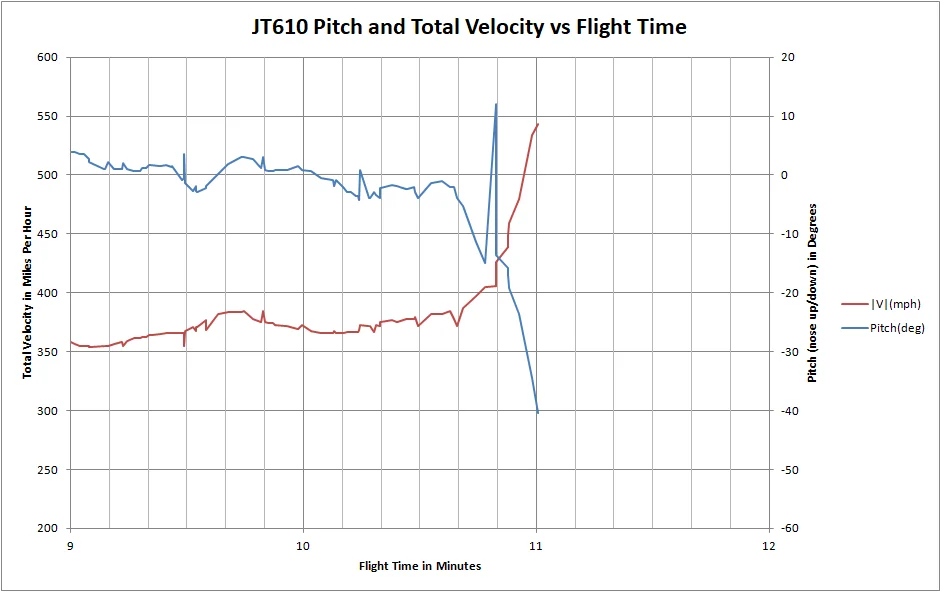
Flight 610 took off at 6:20 a.m. local time, climbing westward before turning northeast toward Pangkal Pinang. Within three minutes, the captain radioed air traffic control requesting permission to return to Jakarta, reporting flight-control problems. The aircraft's altitude began fluctuating erratically. A faulty angle-of-attack sensor, miscalibrated by the Florida-based repair company Xtra Aerospace and never tested by Lion Air's maintenance crews before reinstallation, fed false data to MCAS. The system responded by repeatedly forcing the nose down. The day before, on the same aircraft flying from Denpasar to Jakarta, the identical problem had occurred, and passengers described the flight as a roller-coaster ride. On that flight, an off-duty 737 MAX pilot riding in the cockpit told the crew to cut electrical power to the stabilizer trim motors, a standard checklist procedure that neutralized MCAS. The aircraft landed safely. But on the morning of October 29, no such guidance was available. At 6:33 a.m., contact was lost. The aircraft struck the water with such force that the strongest structural components were obliterated.
Searching the Java Sea
Indonesia's National Search and Rescue Agency, Basarnas, deployed 150 personnel with boats and helicopters within hours. By November 4, the operation had grown to nearly 1,400 people, including 175 divers, supported by 69 ships, five helicopters, and thirty ambulances. Conditions were brutal: poor underwater visibility and strong currents scattered wreckage and remains across a wide area. The flight data recorder was recovered on November 1, its memory unit torn from its housing by the impact. Despite the damage, investigators extracted data covering 19 flights and 69 hours. The cockpit voice recorder proved far more elusive. Lion Air ultimately paid $2.8 million for a second search effort using the offshore supply vessel MPV Everest, and the CVR was eventually found buried under thick mud on the seabed. Of the 189 people aboard, 125 were identified through DNA analysis. Sixty-four were never recovered. A volunteer rescue diver died during the search on November 2, likely from decompression sickness.
The People on Board
The 189 who died were not statistics. Among them were 20 employees of Indonesia's Ministry of Finance, whose minister, Sri Mulyani, rushed to the search-and-rescue headquarters in Jakarta for information. Posthumous awards were issued to those 20 employees, and scholarships granted to their children. Three judges from Indonesia's High Court and National Court were aboard, along with three public prosecutors, six members of the Bangka Belitung Regional Council, and three officers of the Indonesian National Police. Captain Bhavye Suneja, an Indian national who had trained in California and accumulated over 6,000 flight hours including 5,176 on the 737, was 31 years old. President Joko Widodo visited recovery efforts at the Port of Tanjung Priok the day after the crash. Families would later report that Lion Air pressured them into signing away their legal rights in exchange for minimal compensation.
A Reckoning That Came Too Late
The NTSC released its final report on October 25, 2019, listing nine contributing factors that spanned Boeing's design decisions, the FAA's certification process, Xtra Aerospace's faulty sensor calibration, and Lion Air's maintenance lapses. The FAA revoked Xtra Aerospace's repair certification, effectively shutting the company down. But the reckoning extended far beyond one crash. Five months after Flight 610, on March 10, 2019, an Ethiopian Airlines 737 MAX 8 crashed under nearly identical circumstances, killing all 157 aboard. Every 737 MAX in the world was grounded for 21 months. Internal Boeing messages, released in January 2020, revealed employees mocking Lion Air and belittling the airline for requesting additional simulator training. Boeing CEO Dennis Muilenburg's public statements emphasized partnership and safety even as the company fought to deflect blame. The attorney hired to represent some victims' families, Thomas Girardi, was later found to have misappropriated more than $3 million in funds meant for the families of the dead. He was disbarred. The crash site lies in the Java Sea northeast of Jakarta, unremarkable water over an unremarkable seabed, holding the remains of 64 people who were never brought home.
From the Air
The crash site lies at approximately 5.77S, 107.12E in the Java Sea, northeast of Jakarta and off the coast of Karawang Regency, West Java. The departure airport was Soekarno-Hatta International (WIII). The intended destination was Depati Amir Airport (WIPK) in Pangkal Pinang on Bangka Island. From the air, the crash location is open water with no distinguishing surface features. Nearby offshore oil platforms were the first witnesses to the impact. Halim Perdanakusuma Airport (WIIH) is the secondary Jakarta airport. The Java Sea in this area is relatively shallow, which aided recovery operations.
Nearby Stories
- Port of Tanjung Priok 23 km away
- The Crossing at Silebu 39 km away
- The Galloping Ghost of the Java Coast 45 km away
- Battle of Kalijati 62 km away
- Way Kambas National Park 102 km away
- Battle of Tjiater Pass 117 km away
- 1933 Sumatra Earthquake 248 km away
- Battle of the Java Sea 382 km away