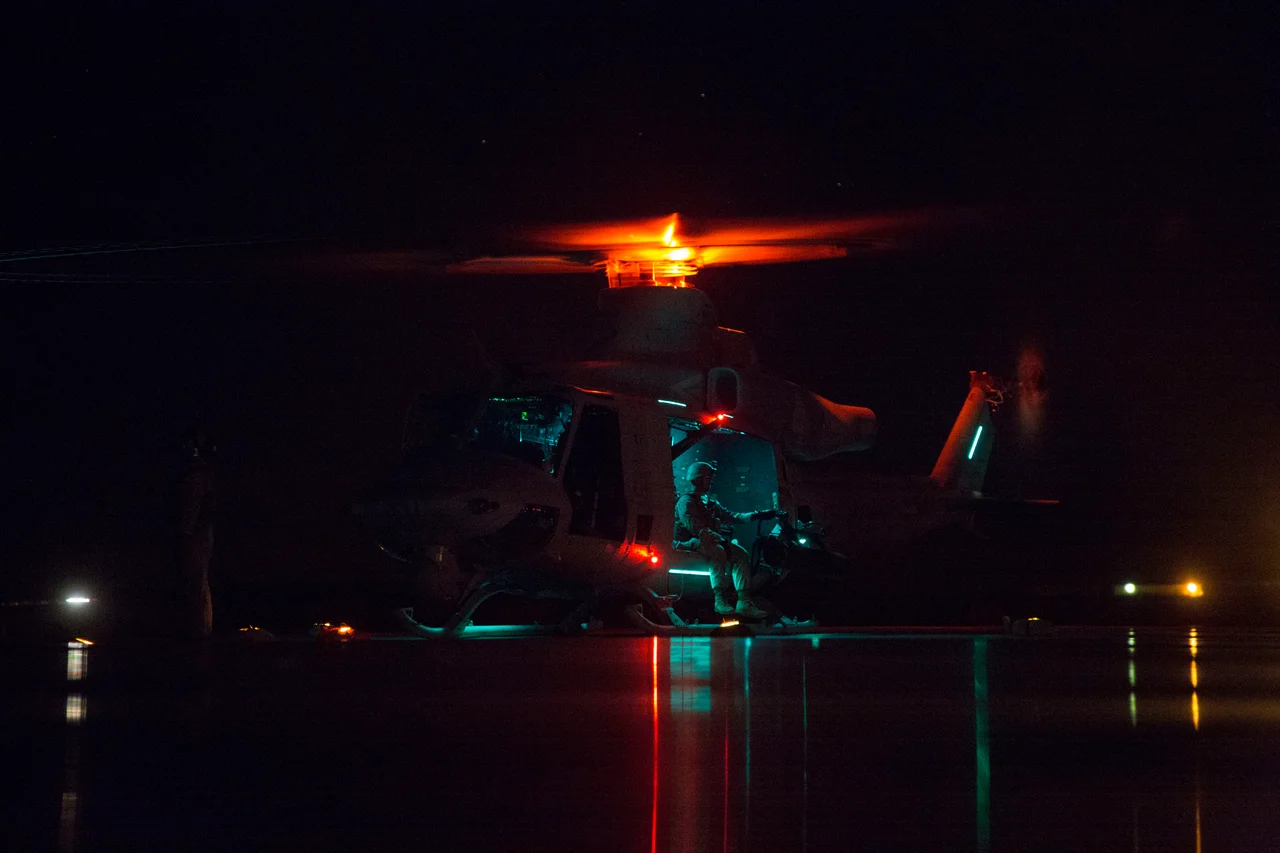

Laguna Army Air Field
Laguna Army Air Field has a control tower, two runways, and Class D airspace — the standard infrastructure of a working military airport. What makes it unusual is the aircraft it hosts. The MQ-9 Reaper, the large armed unmanned aircraft used for surveillance and strike missions, completed a 48.2-hour continuous flight here that set an endurance record. Then Laguna became the location where the FAA granted its first certification for an unmanned aircraft to fly in civilian airspace. The future of military aviation was tested in the Arizona desert.
Auxiliary Field Becomes Proving Ground
Laguna Army Air Field was built during World War II as an auxiliary airfield for the Yuma Army Air Field, part of the network of military aviation facilities that the war effort created across the Arizona and California desert. The Yuma area's flying weather — abundant sunshine, reliable visibility, minimal weather disruptions — made it a natural location for aviation training and testing.
After the war, the field continued to serve military purposes within the Yuma Proving Ground, the large Army test and evaluation facility that occupies desert land east of Yuma. The Proving Ground tests a wide range of military equipment — vehicles, weapons systems, electronics — in the harsh desert environment that reveals stress and failure modes that temperate conditions might not expose. Laguna's airfield serves the aerial component of that testing mission.
The field has two paved runways: Runway 18/36 at 6,118 feet and Runway 6/24 at 6,000 feet. An active ATC tower controls Class D airspace. The infrastructure is current and operational, not the remnant of a wartime build that outlasted its original purpose.
The Reaper's Record
The General Atomics MQ-9 Reaper is the large armed unmanned aerial vehicle that became the primary platform for American drone strike operations in Afghanistan, Pakistan, Iraq, and elsewhere. It flies at altitude for extended periods — surveillance, strike, reconnaissance — without requiring a crew aboard the aircraft. The ability to keep it airborne for extended periods is operationally significant: longer endurance means more time on station, more surveillance coverage, fewer transitions between aircraft.
At Laguna Army Air Field, an MQ-9 Reaper completed a continuous flight lasting 48.2 hours — a record at the time and a demonstration of the aircraft's endurance capability. The flat desert terrain and consistent flying conditions of the Yuma area made Laguna a suitable location for an extended-duration test: predictable weather, minimal airspace conflicts, and the infrastructure to support a long mission from the ground control station.
The First FAA Certification
The endurance record was significant in its own right, but the more consequential achievement at Laguna came with regulatory history. The MQ-9 Reaper became the first unmanned aircraft to receive FAA type certification for operation in the National Airspace System — the civilian airspace over the United States that commercial and private aviation uses.
This certification was not a formality. Unmanned aircraft operating in the same airspace as piloted aircraft pose a different set of challenges from traditional aviation safety regulations, which were built around the assumption that a pilot aboard the aircraft could see and respond to hazards. The FAA certification for the MQ-9 required demonstrating that the unmanned system met safety standards comparable to those required of piloted aircraft — a regulatory milestone that opened the door for unmanned aircraft in civilian airspace more broadly.
Laguna Army Air Field was the location where this was demonstrated and certified, which places a desert military test airfield at the origin point of what became a major regulatory and technological development in American aviation.
A Quiet Field with Consequential Work
Laguna Army Air Field does not appear in commercial aviation databases. It is not a destination that civilian passengers use. Its work — testing military equipment, supporting Proving Ground operations, hosting the unmanned aviation programs that have shaped the past two decades of American military operations — happens largely out of public view.
The Yuma Proving Ground that surrounds it is a large restricted area of desert east of Yuma, its boundaries marked by signs and enforced by military authority. From the air, pilots transiting the area can see the runways of Laguna and the surrounding test ranges, but access to the airspace requires coordination with military authorities. The proving ground's work, and the work of the airfield that serves it, continues in the Arizona desert under conditions of practiced obscurity.
From the Air
Located at approximately 32.58°N, 114.40°W within Yuma Proving Ground, east of Yuma, Arizona. The airfield is within restricted military airspace; civilian pilots must stay clear and consult sectional charts and NOTAMs for current restrictions. The runways are visible from altitude but the area is not accessible to non-military traffic without prior coordination. Nearest public airport: Yuma International Airport (KNYL), approximately 20 miles to the northwest.
Nearby Stories
- Arizona State Prison Complex – Yuma 20 km away
- Holtville, California 39 km away
- Chocolate Mountain Aerial Gunnery Range 45 km away
- Battle of Stanwix Station 51 km away
- Laguna Salada 68 km away
- Slab City: The Last Free Place in America 97 km away
- Gillespie Dam Bridge 108 km away
- 2000 Marana V-22 Crash 253 km away