
Great Laxey Mine
It weighs 118 kilograms. The composite cubo-octahedron of galena - lead sulphide, PbS - measures 25 centimetres on each side, an almost perfect cube of metallic grey crystal. It is the largest sulphide crystal ever recorded, by volume and by mass, and it sits on permanent display in the geology gallery of the Natural History Museum in London. It came out of the Great Laxey Mine on the Isle of Man, a working that descended more than 2,200 feet through three shafts - the Welsh Shaft, the 's Shaft, and the Engine Shaft - into the hillside above Laxey village. That crystal is what the mine is best known for now. For a hundred and forty years, the mine was known for something else: lead, silver, and the lives of the men who went down to find them.
Deep Roots
The Isle of Man has been a mineral province for a very long time. Copper was mined at Bradda Head as far back as the 13th century, when Harald, King of Mann from 1237 to 1248, granted a charter under which the monks of Furness Abbey held working rights. Later that century the Earl of Buchan received a licence from King Edward I to dig for lead on the Calf of Man. When the island was granted to Sir John Stanley by King Henry IV in 1406, 'mines of lead and iron' were specifically included in the gift. By 1700 the Dhyrnane Mine at Maughold was shipping nearly 230 tons of copper ore. Workings opened at Laxey by 1782, originally as an enterprise from Cumberland rather than from the island itself. No one has pinned down the exact starting date.
Boom
Both the Laxey and Foxdale mines closed in 1819 and reopened within four years. A Westmorland man secured the Laxey lease from George Murray, 6th Duke of Atholl. Both mines then boomed, and the success at Laxey triggered largely futile metal-searching expeditions all over the island. By 1833 more than 200 men worked the Laxey shafts. The lead ore was the main prize, but the mine also yielded zinc, silver, copper pyrites, and hematite iron in significant quantities. The silver content was unusually rich - 180 ounces (5.5 kg) per ton of ore - and the shares followed. Stock that traded for £34 in the late 1820s was changing hands for between £1,500 and £2,000 by 1833. As part of their wages, miners were allowed to keep the copper ore they extracted, which by mid-century sold for £23 14s 6d per ton; a copper-lead mixture sold for £7 per ton and was used to glaze cheap earthenware.
The Wheel and the Water
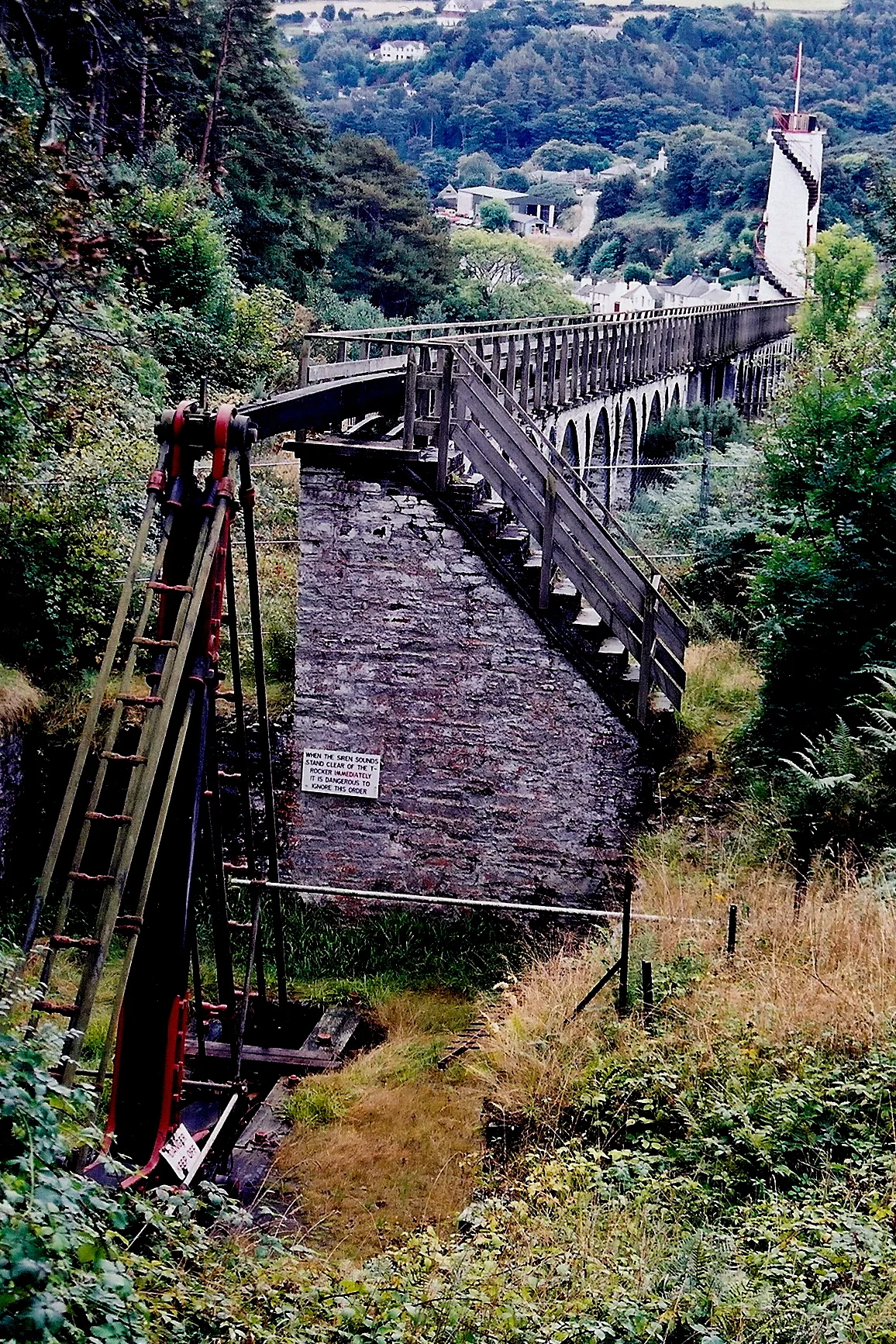
The deeper the mine went, the more water it took on. There is no coal on the Isle of Man, so steam pumping was impractical. The solution was the Laxey Wheel, named Lady Isabella after the wife of Lieutenant Governor Sir Charles Hope. Built in 1854, the wheel could lift 250 imperial gallons of water per minute from a depth of 1,500 feet below ground - and its rotation drove a long pump rod across the hillside via the T-rocker mechanism. From 1823 the underground workings were also served by the Great Laxey Mine Railway, a narrow-gauge line that hauled ore from the adits down to the washing floors. At its peak, the mine employed over 600 miners. Laxey was widely considered one of the richest ore mines in the British Isles, and specimens of its ore - displayed today in the Manx Museum - bear visible witness to that judgement when set beside ore from Foxdale.
The Fire and the Flood
On Saturday 19 March 1904, fire broke out in the Welsh Shaft about ten fathoms below the surface. The mine's ventilation system worked; all men were evacuated in under thirty minutes and the fire was extinguished without fatalities. The incident carried particular weight because a similar fire at the nearby Great Snaefell Mine in 1897 had killed twenty miners. 1904 brought a second tragedy: on 10 December, scaffolding around a covered sump at the 190-fathom level collapsed, and four men fell to their deaths. Their names were Henry Lewis Gelling, age 18; John Thomas Quayle, age 40; John Thomas Gawne, age 41; and Robert Wade, age 26. By then the mine was already in trouble. A rich lead vein discovered in 1901 broke into a vast body of underground water, and the pumps could not keep up. By early 1902 the workings were flooded to 1,000 feet, the water still rising six inches a day. The shafts were so narrow and crooked - some only four feet across, angled fifteen degrees from vertical - that purpose-built pumping machinery had to be designed before recovery could begin.
Closure and Memory
The mine never fully recovered. By the 1900s the global lead price was falling and the cost of keeping the mine dry was rising. Many of the miners had already left, emigrating to South Africa, Australia, and the United States to find work in newer fields. Rumours of closure began circulating in May 1929; the underground operation ended that year, and the spoil heaps were worked over for residual ore until 1934, when all activity ceased. In the late 1930s, mine spoil from Laxey and Foxdale was hauled to the north of the island and used as fill in the construction of RAF Jurby and RAF Andreas airfields. The 1965 Manx government purchase of the wheel and site began the modern preservation era. Today, visitors to Laxey Wheel can read displays about the mine and walk a short distance into the adit - the horizontal entry by which the miners once descended into the hillside, looking for the bright vein of galena that history would eventually display in a London glass case.
From the Air
Located at 54.24 N, 4.41 W in the parish of Lonan on the east coast of the Isle of Man, just inland from Laxey village. The mine workings descended below the Glen Mooar valley west of the Laxey Wheel. Ronaldsway (EGNS) is about 13 nautical miles to the south. Snaefell summit (2,037 ft) is roughly 3 nautical miles to the northwest. Recommended viewing altitude 2,000-3,000 feet AGL gives a clear view of the wheel, the surrounding mineral railway routes, and the Glen Mooar valley. The Manx Electric Railway runs along the coast nearby.
Nearby Stories
- St Bees Lighthouse 15 km away
- Celtic Array 22 km away
- Kirkmaiden 23 km away
- Isle of Whithorn 23 km away
- Seascale Lifeboat Station 31 km away
- German submarine U-1024 36 km away
- SS Georgetown Victory 40 km away
- Blackpool Illuminations 56 km away