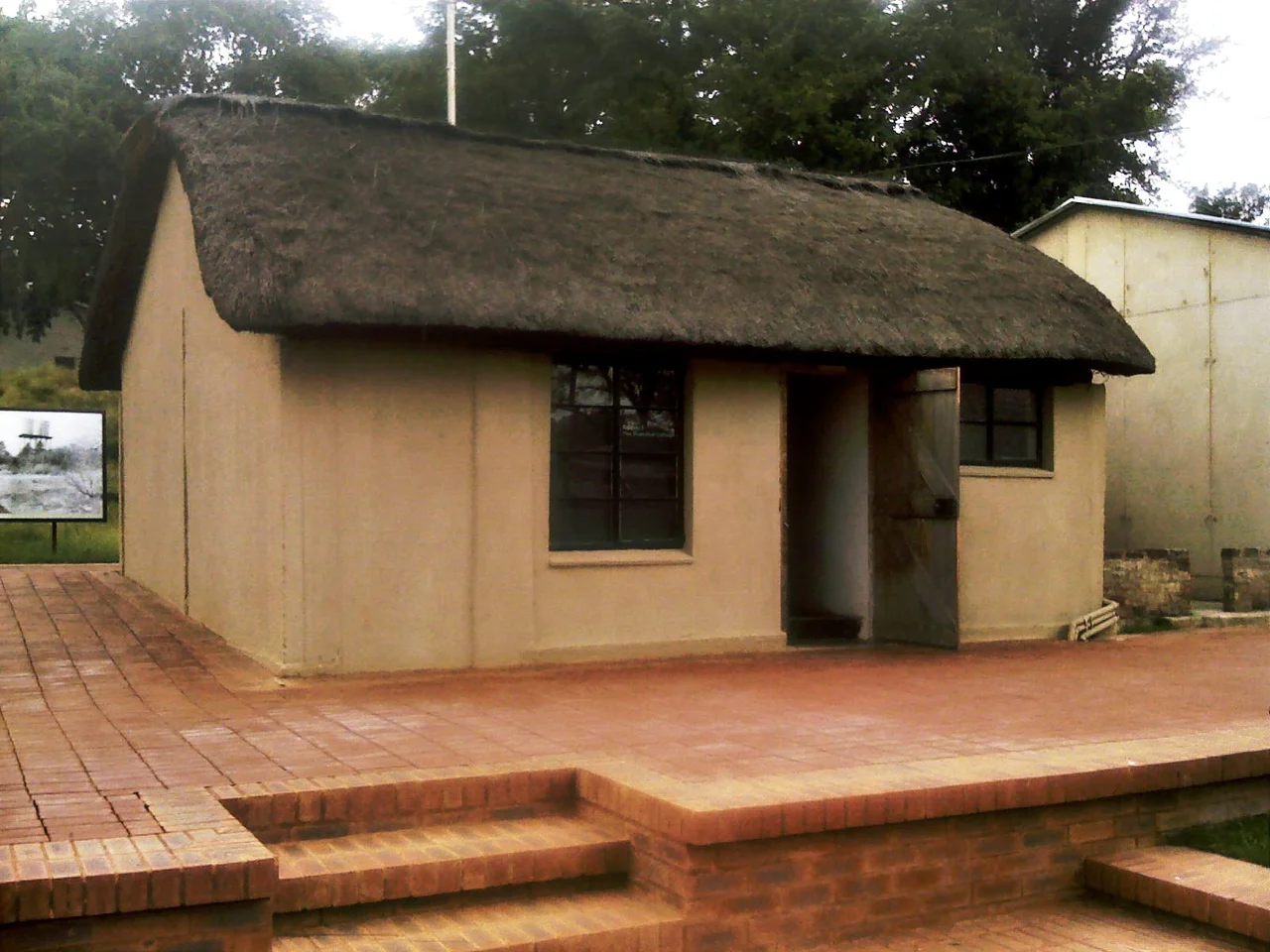

Liliesleaf Farm
On the afternoon of 11 July 1963, a dry-cleaning van rolled up the drive of a farm in Rivonia, north of Johannesburg, and security police spilled out of the back. Inside the thatched outbuildings they found the men who were running South Africa's armed resistance to apartheid, along with the documents that would convict them. The farm was called Liliesleaf, and for two years it had been the best-kept secret of the liberation movement: a place where a white family's presence masked the comings and goings of the country's most wanted Black revolutionaries. The raid that ended its cover would change the course of the nation.
A Hideout in Plain Sight
In 1961 the property was quietly purchased by Arthur Goldreich and Harold Wolpe, using funds from the underground South African Communist Party. The cover story was simple and effective. Goldreich, a white South African, moved in with his wife Hazel and their two sons, looking for all the world like a prosperous family settling into a rural smallholding in an area reserved for whites. No one watching expected what was really happening. Black anti-apartheid leaders came and went under the protection of that ordinary domestic facade, and the farm became the underground nerve centre of a movement that the state was determined to crush. In a country built on the policing of where Black people could be, Liliesleaf worked precisely because the law assumed they could not be here.
The Headquarters of the Spear
Liliesleaf was acquired at a hinge moment in the struggle. The liberation movement was turning from passive resistance toward armed struggle, and a new organisation, uMkhonto we Sizwe, the Spear of the Nation, had just been formed as the ANC's military wing. The farm soon became its headquarters. The list of those who met here in secret reads like a directory of the anti-apartheid leadership: Walter Sisulu, Govan Mbeki, Ahmed Kathrada, Raymond Mhlaba, Denis Goldberg, Andrew Mlangeni, Elias Motsoaledi, alongside Joe Slovo, Ruth First, Lionel Bernstein, and others. It was from Liliesleaf that the movement drafted Operation Mayibuye, a contested plan for a campaign of sabotage and guerrilla warfare against the apartheid state.
The Raid and the Trial
When the police struck on 11 July 1963, they arrested 19 people and seized a trove of incriminating papers. Nelson Mandela was not among those taken that day; he was already in prison, serving a sentence for leaving the country illegally. But the documents found at the farm tied him directly to the underground, and so he was brought from his cell to stand trial with the others. The proceedings, which ran from October 1963 to June 1964, became known as the Rivonia Trial, named for the suburb where the farm stood. Facing the possibility of execution, the accused chose to turn the dock into a platform. Mandela's statement from it, ending with the words that he was prepared to die for the ideal of a free and democratic society, became one of the defining speeches of the twentieth century. Eight of the men, Mandela among them, were sentenced to life imprisonment.
What the Farm Holds Now
After apartheid fell, the farm that had nearly destroyed the movement's leadership was restored as a museum and declared a national heritage site in 2016. Its exhibits hold objects that carry enormous weight: an original copy of the Freedom Charter, Mandela's arrest warrant, Oliver Tambo's pen gun. For years it stood as one of the country's most important sites of memory, a place to understand how close the struggle came to being decapitated in a single afternoon. The museum closed in September 2021 amid funding disputes and the pressures of the pandemic, with reopening repeatedly promised. Empty or open, the farm remains what it became on that July day in 1963: the spot where the long road to a democratic South Africa took its most dangerous turn.
From the Air
Liliesleaf Farm sits in Rivonia, in the northern suburbs of Johannesburg near Sandton, at 26.044 degrees south, 28.054 degrees east, on George Avenue. Once an isolated rural smallholding, it is now surrounded by affluent suburban development, so it does not read as a distinct landmark from altitude; use the Sandton tower cluster about 7 km to the south as the navigational anchor, with a recommended viewing altitude of 1,500 to 2,500 feet AGL over the Rivonia residential grid. The nearest major airport is OR Tambo International (FAOR), about 25 km to the southeast; Grand Central Airport (FAGC) lies roughly 10 km to the north in Midrand, and Lanseria International (FALA) is about 25 km to the west-northwest. Johannesburg's Highveld elevation of roughly 1,750 metres elevates density altitude; expect afternoon thunderstorms in summer (November to March) and clear, often hazy mornings in the dry winter season.
Nearby Stories
- Pelindaba 4.6 km away
- TauTona Mine 6.3 km away
- Zonderwater POW camp 18 km away
- Kweneng' Ruins 25 km away
- Battle of Bronkhorstspruit 40 km away
- Royal Bafokeng Nation 41 km away
- Secunda CTL 72 km away
- Sun City 91 km away