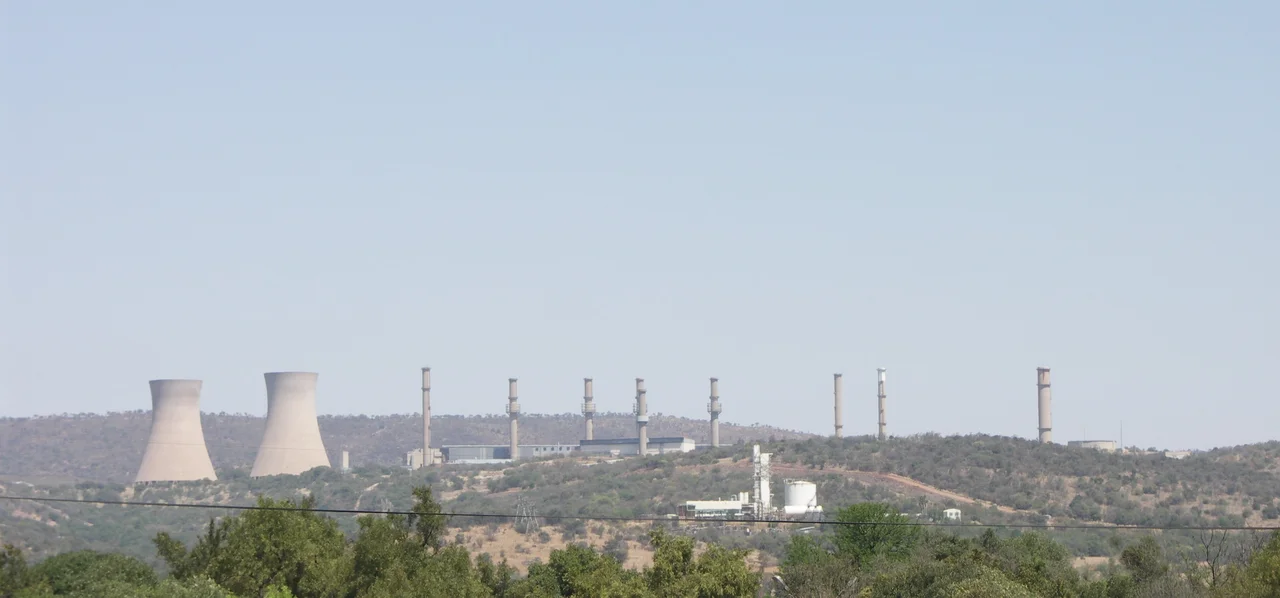

Pelindaba
The name is a warning. Pelindaba comes from a Zulu phrase meaning the end of the story, or the conclusion - and the men who chose it for South Africa's nuclear research centre meant it. Whatever was decided here was final, sealed, not to be discussed. On a former farm about 33 kilometres west of Pretoria, screened behind the hills near the Hartbeespoort Dam, the apartheid government built one of the twentieth century's most closely guarded secrets: a programme to design and construct atomic bombs. What makes Pelindaba extraordinary is not only that South Africa succeeded. It is that, in the end, the country chose to undo what it had done.
The Atom for Peace, Officially
It began, on paper, as an act of science. In 1965 the SAFARI-1 research reactor - supplied by the United States and fuelled with American enriched uranium - was inaugurated at Pelindaba, dedicated, in the language of the day, to harnessing the versatile power of the atom for maximum peaceful advantage. But the peaceful framing was always shadowed by doubt. As early as 1965, outside observers speculated South Africa could build an atomic weapon within a year or two. In 1970 the government announced a pilot plant to enrich uranium, with Prime Minister John Vorster insisting the sole objective was peaceful energy. The details of the enrichment method were locked away as state secrets - and for good reason, because a country that can enrich uranium for a reactor can, with the same machines, enrich it for a bomb.
The Secret in the Hills
Behind the official statements, the work was real. At the neighbouring facility called Valindaba - whose name pointedly means do not talk about it - South Africa enriched uranium for weapons from 1975 until 1990. By the late 1980s the programme had assembled six complete nuclear bombs, with a seventh under construction. The government never confirmed any of it at the time; ministers spoke only in careful hints, reserving, as one finance minister put it in 1977, the right to use the country's nuclear potential for purposes other than peaceful. A nation already isolated by apartheid had quietly joined the smallest and most dangerous club on Earth, and almost no one outside a tight circle knew the full truth.
The Conclusion That Surprised the World
Then came the part no other country has ever matched. In early 1990, as apartheid neared its end, President F. W. de Klerk formally ordered the entire arsenal destroyed. The six finished bombs and the seventh unfinished device were dismantled in secret. In March 1993 de Klerk stood before parliament and admitted what had been denied for decades - that South Africa had built nuclear weapons, and had already taken them apart. In 1994 the International Atomic Energy Agency confirmed it: the bombs were gone. South Africa remains the only nation to have developed its own nuclear weapons and then willingly surrendered them. The country went further still, helping to create the Treaty of Pelindaba, signed in 1996, which declared the entire African continent a nuclear-weapon-free zone.
A Difficult Legacy, Still Working
Pelindaba's past is not all triumph. A 1986 fire killed two cleaning staff. In 1994, barrels of enriched uranium residue were stolen, some never recovered. A 1996 accident exposed workers to radiation; a man named Harold Daniels and others later died of burns and cancers tied to that exposure - a sober reminder of the human cost behind the technology. In November 2007, four armed intruders breached the site's defences, including a 10,000-volt fence, in a brazen raid that exposed alarming security gaps. Yet the place endures and has found a gentler purpose. The same SAFARI-1 reactor, running since 1965, is now one of the world's leading producers of medical radioisotopes, supplying as much as a quarter of the planet's molybdenum-99 - the raw material for scans that diagnose disease in millions of patients. The end of the story, it turns out, became a beginning.
From the Air
Pelindaba lies at 25.80 degrees south, 27.93 degrees east, in South Africa's North West Province, southeast of the Hartbeespoort Dam and about 33 kilometres west of Pretoria. As an active nuclear facility it sits within sensitive, security-conscious airspace - this is not a site to loiter over, and restricted-airspace notices may apply. The Hartbeespoort Dam to the northwest and the Magaliesberg ridge make the clearest landmarks for orientation. Lanseria International (ICAO: FALA) lies roughly 30 kilometres east-southeast, with O. R. Tambo International (FAOR) farther to the southeast near Johannesburg and Wonderboom (FAWB) to the east near Pretoria. Recommended observation, where permitted, is from 5,000 to 7,000 feet AGL at a respectful distance. Highveld weather brings clear winter mornings and strong summer afternoon thunderstorms.
Nearby Stories
- Premier Mine 9.3 km away
- Liliesleaf Farm 11 km away
- Tswaing crater 16 km away
- Royal Bafokeng Nation 32 km away
- Sun City 37 km away
- TauTona Mine 45 km away
- Secunda CTL 91 km away
- Bushveld Igneous Complex 107 km away