
Lough Neagh
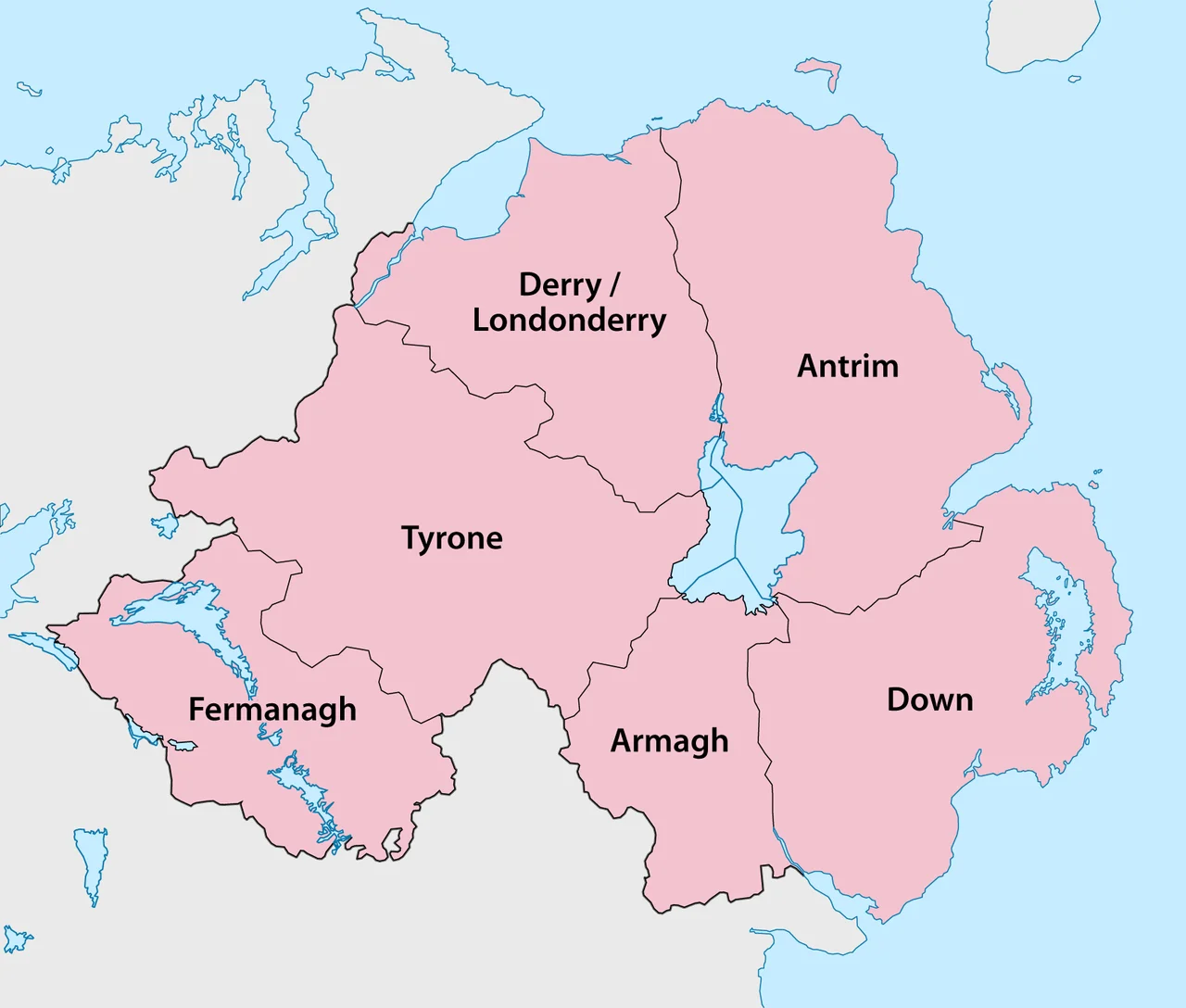
Forty percent of Northern Ireland's drinking water comes from a lake whose bed is privately owned by an English earl. Forty-three percent of Northern Ireland's land surface drains into it. Five of the six counties of the territory have shores on it. The lake is 383 square kilometres - the largest in the British Isles - shallow enough that strong wind can whip the whole surface into a hazard within minutes, and 80 feet deep at its deepest point. The Irish called it Loch nEachach, Eachaidh's lake, after a young Munster prince of legend who fell in love with his stepmother and tried to elope. The lake, as the story has it, exists because someone forgot to put the lid back on a magic well. This is Lough Neagh.
Eachaidh's Lake
The old Irish tale, written down in the Middle Ages but probably much older, names the lough after Echaid, son of Mairid, a king of Munster. Echaid falls in love with his young stepmother Ébliu, and the pair flee north with their retainers. The Dagda kills their horses; the great god Aengus gives Echaid a single horse, with one strict condition - that the animal must never be allowed to stop and urinate. The horse stops. The water that comes out floods the entire valley. Echaid, Ébliu and all their followers drown. The Cath Maige Tuired calls Lough Neagh one of the twelve chief loughs of Ireland. Geologists tell a less romantic but no less remarkable story: the basin is a tectonic depression shaped by 400 million years of plate movement. A graben - a block of crust that has slid downward between faults - is the kind of feature that makes a country's largest lake.
Five Counties, One Lord
Lough Neagh is the only major lake in the world whose entire bed and fishing rights are owned by a single private individual. In 1660, Charles II gave the rights to the fish and bed of the lough to John Clotworthy, 1st Viscount Massereene. The title passed through inheritance to the Ashley-Cooper family, and today the bed belongs to the 12th Earl of Shaftesbury. The lake also serves as a sewage outfall - an arrangement only legally permissible because the Crown is immune from the kind of regulations that would otherwise apply. In October 2023 Lord Shaftesbury told BBC Northern Ireland that he was open to selling the lough to the Northern Irish public, but "would not give it away for free." The ownership has been, in his own words, "very divisive and quite political" - blamed for things outside his control, used as an excuse for inaction by everyone else.
The Eel-Men of Toomebridge
For centuries, the lough's most distinctive industry was its eel fishery. Lough Neagh eels - born in the Sargasso Sea, drifting as glass eels across the Atlantic and up the Lower Bann - have been caught at Toomebridge and along the lough's shores using long lines and traditional techniques unchanged for generations. Seamus Heaney, the Nobel laureate who grew up near Castledawson on the lough's western shore, dedicated an entire collection of poems, A Lough Neagh Sequence, to the eel-fishermen and the natural history of their catch. The lake also holds dollaghan, a brown trout variety found nowhere else, along with salmon, pollan, perch, pike and bream. The pollan in particular is a relict from the last ice age, a freshwater whitefish stranded when the sea retreated.
Roads of Water
Lough Neagh sat at the heart of an inland navigation network. In the nineteenth century, three canals linked the lough to ports and cities across Ulster. The Lagan Navigation ran east to Belfast, the Newry Canal southeast to the port of Newry, and the Ulster Canal west to Lough Erne, which connected via the River Shannon to Limerick and Dublin. The short Coalisland Canal carried coal from the Tyrone fields. The Lower Bann was navigable north to Coleraine and the Antrim coast. Almost all of that infrastructure is now derelict, though the Ulster Canal is being restored in stages. Lough Neagh Rescue, a volunteer service operating 24 hours a day from three stations around the shoreline - Antrim, Ardboe, and headquartered at Kinnego Marina - is one of the busiest inland search-and-rescue organisations in the British Isles, because this lake gets dangerous fast.
The Algae
In the summers of 2023 and 2024, Lough Neagh turned green. Cyanobacterial blooms - blue-green algae - spread across the surface in patches large enough to be photographed from space. The water became toxic to dogs, fish and waterfowl. Birds died. The lake had been classified as hypereutrophic for decades; a 2016 study identified it as one of the world's most chronically nutrient-loaded freshwater bodies. The culprits are agricultural runoff (62% of phosphorus inputs), wastewater treatment works (24%), and septic tanks (12%). Climate change has accelerated everything: warmer summers, brighter sunlight, longer growing seasons. The invasive zebra mussel, which arrived in the 1990s, filters out competing algae but leaves the blue-green ones alone, and increases water clarity so that light penetrates deeper. In June 2025, in a vote that united political opposites, Sinn Féin MLAs sided with the DUP to oppose the Nutrients Action Programme that was meant to address the crisis. The lake, meanwhile, continues to bloom.
What Belongs to Whom
Around the shores of Lough Neagh sit villages whose names are written in older languages: Maghery, Ardboe, Toomebridge, Ballyronan, Moortown. Ram's Island, Coney Island and Derrywarragh Island scatter across the surface. The lough is a Ramsar wetland of international importance and hosts up to 80,000 wintering waterfowl - ducks, geese, swans and gulls in numbers that draw birdwatchers from across Europe. The activists who have begun calling for the lake to be granted legal rights of its own, inspired by the global rights-of-nature movement, are tapping into something the Gaelic story tellers understood long ago: that a lake this large, this old and this intricately bound up with the lives of the people around it cannot really belong to any single owner. It is, as the old tale suggests, what was here before anything else.
From the Air
Centred at 54.62°N, 6.40°W, Lough Neagh measures approximately 19 miles (31 km) long by 9 miles (14 km) wide. Recommended viewing altitude 2,500-5,000 ft AGL to take in the lake's full elongated shape and its position at the centre of Northern Ireland. Belfast International Airport (EGAA) sits just east of the lough at Aldergrove - the lake makes an unmistakable orientation point on approach. Belfast City (EGAC) is 12 nm east; City of Derry (EGAE) is 35 nm northwest. Best viewed from the south or east on a calm morning when the surface is mirror-flat. In summer 2023 and 2024 the algal blooms were dramatically visible from cruise altitude as bright green swirls across the western half of the lake.
Nearby Stories
- Milltown Cemetery 0.3 km away
- Carrickmore 2.5 km away
- Castlewellan Forest Park 5.9 km away
- Carncastle 7.4 km away
- County Monaghan 8.1 km away
- Ahoghill 9.1 km away
- Claudy bombing 11 km away
- Kingsmill Massacre 12 km away