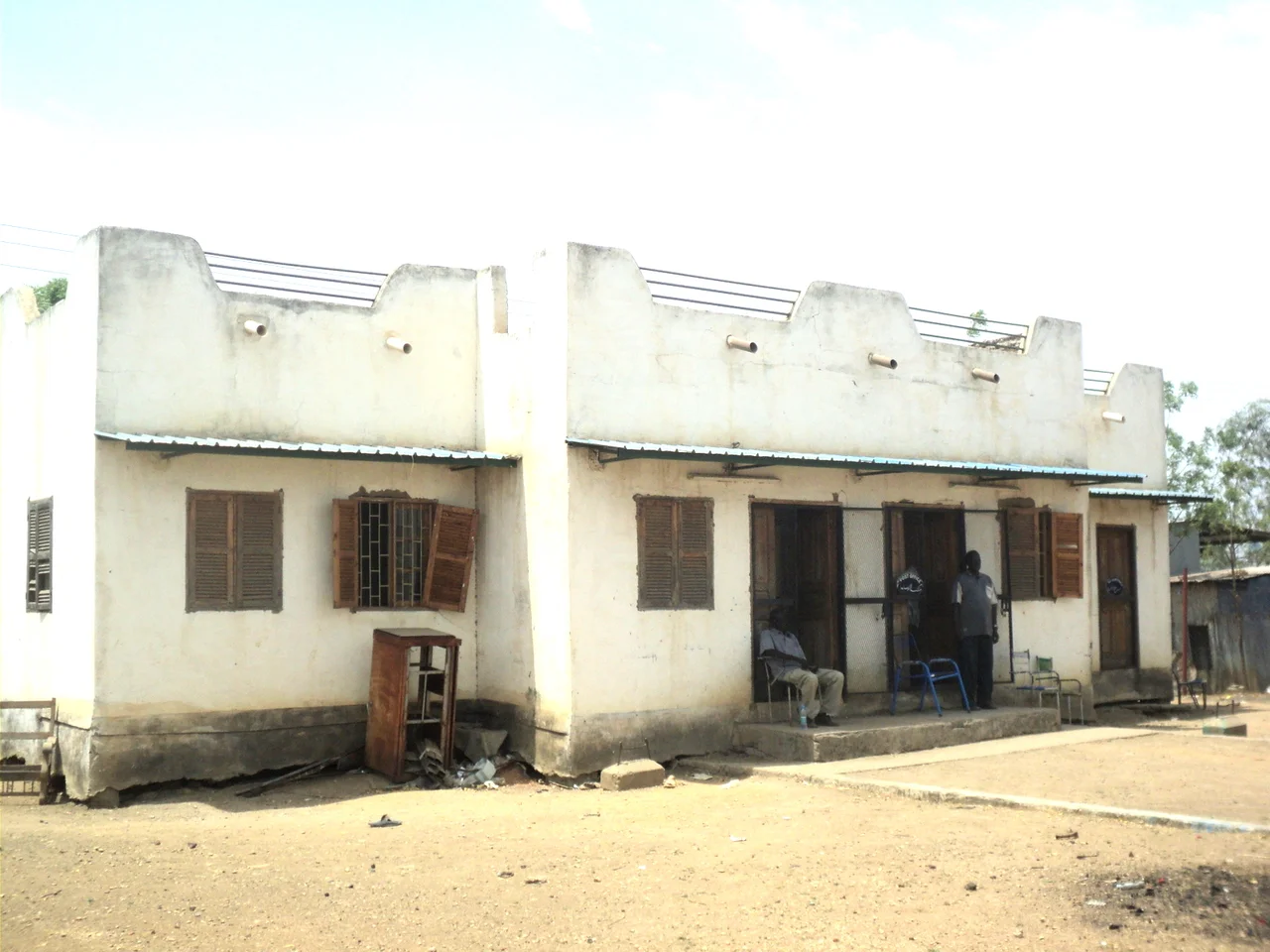

Malakal
In October 2015, a BBC reporter wrote a dispatch from Malakal and titled it 'The city that vanished in South Sudan.' At the time the description was accurate. Malakal had changed hands twelve times between government forces and opposition fighters in the twenty-two months since the civil war began, and what had once been a city of roughly 130,000 people was a landscape of burned roofs, empty markets, and a Protection of Civilians camp run by the United Nations that held tens of thousands of displaced residents behind wire. A decade later, the city is being rebuilt. It is still the capital of Upper Nile State. It still sits on the White Nile just north of the Sobat confluence, and families who scattered to Khartoum, Nairobi, and the POC camps have come back to rebuild houses on the footprints of the ones that burned.
Where the Rivers Meet
Malakal's location is why Malakal has always existed. It sits on the White Nile's west bank, just north of where the Sobat pours in from the east carrying the runoff of the Ethiopian highlands. This confluence is one of the great water features of the southern Sudd basin. North-bound river traffic can follow the Nile all the way to Khartoum. South-bound traffic can reach Adok in Lakes State. For centuries the settlement here was called the Sobat District, founded according to local tradition by the Kuei family. When the Egyptian-Turkish administration arrived in the nineteenth century, and later the British, they found the site so strategically obvious that they kept building on it. By the mid-twentieth century Malakal was the capital of the Upper Nile region of the southern Sudan.
Garrison Town, Then City
During the Second Sudanese Civil War (1983-2005) Malakal was a garrison town for the Sudanese Armed Forces, held by Khartoum against the SPLA rebels operating in the surrounding countryside. The November 2006 Battle of Malakal pitted government troops against SPLA forces that had nominally been integrated into the national army after the 2005 peace agreement; the integration had not taken. After South Sudan's independence on July 9, 2011, the Sudanese army withdrew north and Malakal became the capital of the newly organized Upper Nile State. The city's boundaries have shifted through several administrative reorganizations, but its role as the commercial and government center of the White Nile's easternmost reach has been consistent.
The Civil War That Erased the City
In December 2013 a political rupture in Juba between President Salva Kiir and Vice President Riek Machar metastasized into a full civil war along partly ethnic lines. Malakal became one of its worst-affected cities. Between 2013 and 2015 it changed hands twelve times between government SPLA forces and the Nuer White Army, with SPLM-IO and various local militias involved on different sides at different times. The Battle of Malakal in February 2016 inside the UN Protection of Civilians camp, when armed fighters entered the site and killed dozens of displaced Shilluk civilians, is among the documented atrocities of the war. Entire neighborhoods burned. The university emptied. The hospital was damaged and rebuilt and damaged again. On October 14, 2016, another assault killed 56 fighters from the Agwelek militia. By the end of that year, most of the city's pre-war population had scattered, many to the POC camp beside the airport or further abroad.
The People Who Returned
Revitalized peace agreements in 2018 and 2020 opened the door for returns. The city now has a climate that continues as it has always continued: hot semi-arid, with a wet season from June to October and a dry season of dust and haze from November to March. April is the hottest month, with average highs of 38.8°C. August is the wettest, with more than 160 mm of rain across roughly fifteen precipitation days. Upper Nile University, founded in 1991, is reopening its doors. The market is busy again, though shorter in goods than before. Notable people who have called Malakal home include the parliamentarian Abuk Payiti Ayik, the revolutionary and activist Aguil Chut-Deng, the human rights activist Nahid Gabrallah, and the boxer Sayed Abdel Gadir. The rebuilding is not triumphant. It is the ordinary, patient work of families who have decided, again, that this is home. The White Nile still carries barges north to Khartoum when the political conditions permit. Shilluk and Dinka communities in the surrounding country still argue about land and water. The rivers still meet where they have always met.
From the Air
Malakal lies at 9.53°N, 31.65°E on the west bank of the White Nile, just north of the Sobat River confluence. Malakal Airport (HSSM) sits immediately north of the city. At cruise altitude the confluence of the Sobat (from the east) and the White Nile is a striking visual reference. The city itself appears as a compact grid on the river's west bank. Dry-season haze (November-March) can reduce visibility; wet-season storms can be intense. Juba International (HJJJ) is 521 km south. Khartoum is roughly 800 km north.
Nearby Stories
- Fashoda Incident 33 km away
- 2025 Nasir clashes 110 km away
- 2012 Talodi Antonov An-26 crash 133 km away
- Nasir, South Sudan 135 km away
- The Vulture and the Little Girl 139 km away
- Block 5A, South Sudan 141 km away
- Ruweng Administrative Area 143 km away
- Jebel Moya 421 km away