.jpg)
Manaus Air Force Base
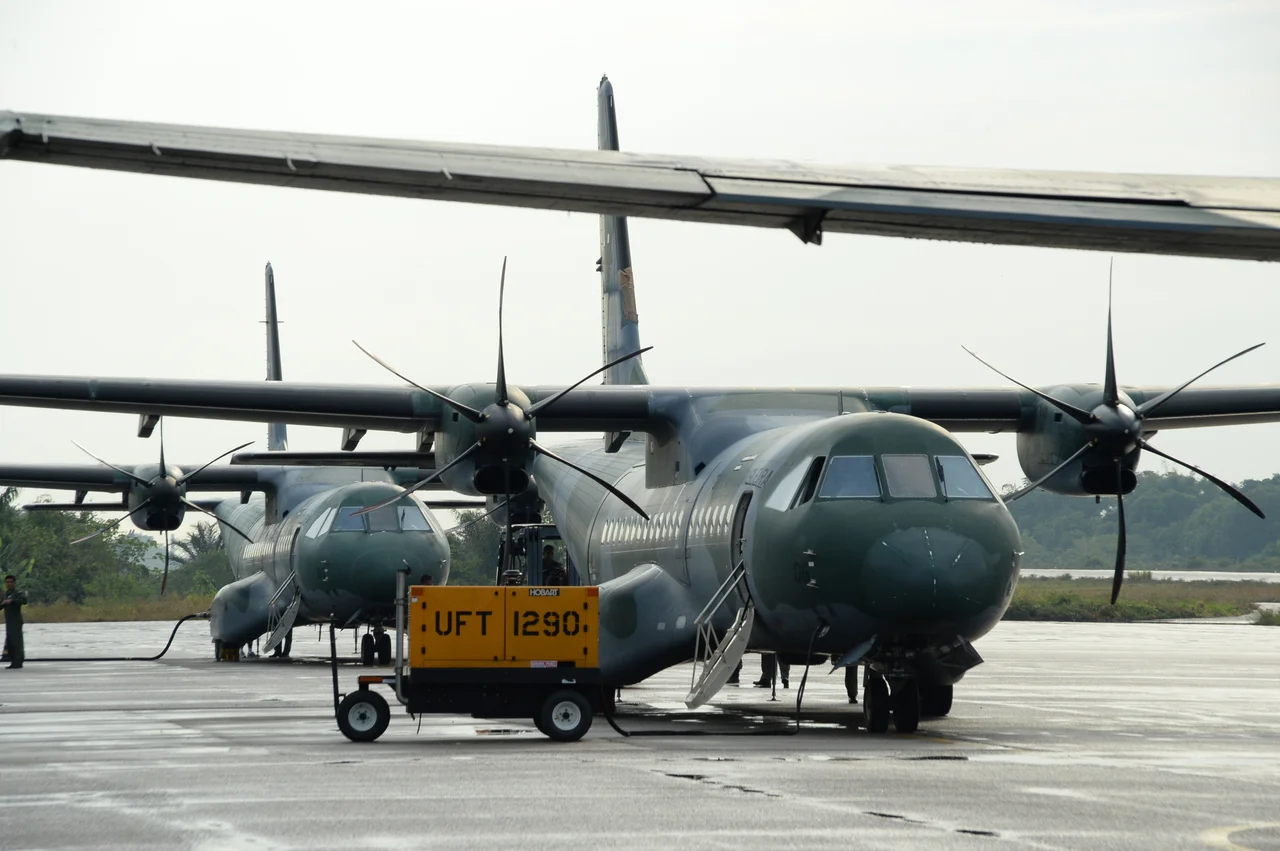
The Amazon has no roads worth the name for most of its territory - and that absence is what makes this military base matter. At Ponta Pelada, nine kilometers from downtown Manaus, Brazilian Air Force crews prepare aircraft that will disappear into green infinity for hours, sometimes days, before circling back to this cleared strip between river and jungle. The flight plans here read like expedition manifests. A Black Hawk destined for a Yanomami medical evacuation three hundred miles upriver. A C-105 Amazonas ferrying supplies to a frontier airstrip where no other transport reaches. When the continent's largest wilderness needs reinforcement, it comes from ALA8.
Two Lives of One Runway
The base and the city airport were once the same place. From 1970, when the facility opened, until 1976, Ponta Pelada handled both civilian passengers and military traffic on shared concrete. Commercial jets taxied past Air Force transports. The arrangement worked in the way arrangements in Brazil's north often work - pragmatically, with a certain improvisational grace. Then Eduardo Gomes International Airport opened in 1976 and took the civilian flights with it, leaving Ponta Pelada to be renamed Manaus Air Force Base. The field has handled only military operations ever since. What had been a shared stage became a dedicated one, and the squadrons moved into facilities that no longer needed to share space with vacation travelers and cargo handlers.
The Squadrons
Four units call the base home, each with a name drawn from the creatures of the region. The 7th Squadron of the 8th Aviation Group flies H-60L Black Hawks under the name Harpia, after the harpia eagle whose talons can crush a monkey's skull. The 1st Squadron of the 9th Aviation Group calls itself Arara - the macaw - and operates C-105A Amazonas transports, twin-engine turboprops built by Airbus in Spain. The 7th Air Transport Squadron goes by Cobra and flies C-97 Brasilia commuters and smaller C-98A Grand Caravans. The Brazilian Army's 4th Aviation Battalion rounds out the roster with Pantera and Jaguar helicopters. These names are not just unit nicknames. They are claims - assertions that the crews belong to this landscape as much as its predators do.
The Losses
Two crashes shadow the base's history. On April 28, 1971, a Douglas DC-6B bound for Rio de Janeiro developed engine vibrations shortly after takeoff, and the crew turned back to Manaus. On the ground, a right-side engine burst into flame. The fire spread to the fuselage before everyone could escape. Sixteen of the 83 aboard died - most of them likely Air Force personnel and their families, caught in the brief minutes when an aircraft that had just landed safely became something else. Two years later, on February 23, 1973, a de Havilland DHC-5 Buffalo crashed on landing, killing three. The Buffalo was a rugged short-takeoff transport - exactly the kind of aircraft needed for Amazon work. Its loss underscored what everyone operating from Ponta Pelada already knew: this terrain is unforgiving, and the flights required to serve it are not routine, no matter how often crews make them.
Amazon Strategic Value
The base exists because the Brazilian government decided, in the 1970s, that the Amazon could not be governed from Brasilia alone. A territory that contains most of a continent's fresh water and a rainforest larger than Western Europe needs aircraft based in it, not just flown over it. Ponta Pelada puts rotary-wing assets within reach of places that otherwise take days to visit by river. Fixed-wing transports link Manaus to airstrips across Amazonas, Roraima, and beyond - frontier posts, indigenous territories, research stations. The base is infrastructure for sovereignty, the quiet machinery by which a forest the size of a continent is kept connected to the state that claims it.
The View from Above
Overflying Manaus, the base is easy to spot. Look south of downtown, along the Rio Negro's black waterfront, and a long strip of cleared runway appears with military aprons and helicopter pads alongside. The city sprawls to the north and east, a grid of red roofs against the forest. To the south and west lies water - the meeting place where the black Negro joins the brown Solimoes to form the Amazon proper. Helicopters lifting off from Ponta Pelada usually head out over that water, then vanish into the green beyond. They might not land again for hours.
From the Air
Located at 3.1461 S, 59.9864 W, on the Rio Negro waterfront about 9 km from downtown Manaus. Eduardo Gomes International Airport (SBEG/MAO) is the closest civilian field, about 20 km north. Ponta Pelada's ICAO code is SBMN. The base sits at the northern edge of the Meeting of the Waters - an excellent visual landmark where the black Negro meets the tan Solimoes. Recommended viewing altitude is 3,000 to 5,000 feet for a clear look at runway, taps, and city geography. Weather is typically hot and humid; expect afternoon thunderstorms during the December-May wet season.
Nearby Stories
- Manacapuru 30 km away
- Biological Dynamics of Forest Fragments Project Area 45 km away
- Novo Airao 57 km away
- Amazon Tall Tower Observatory 88 km away
- Anama 107 km away
- 2019 Amazon rainforest wildfires 253 km away
- Alto Maues Ecological Station 294 km away
- Parintins 302 km away