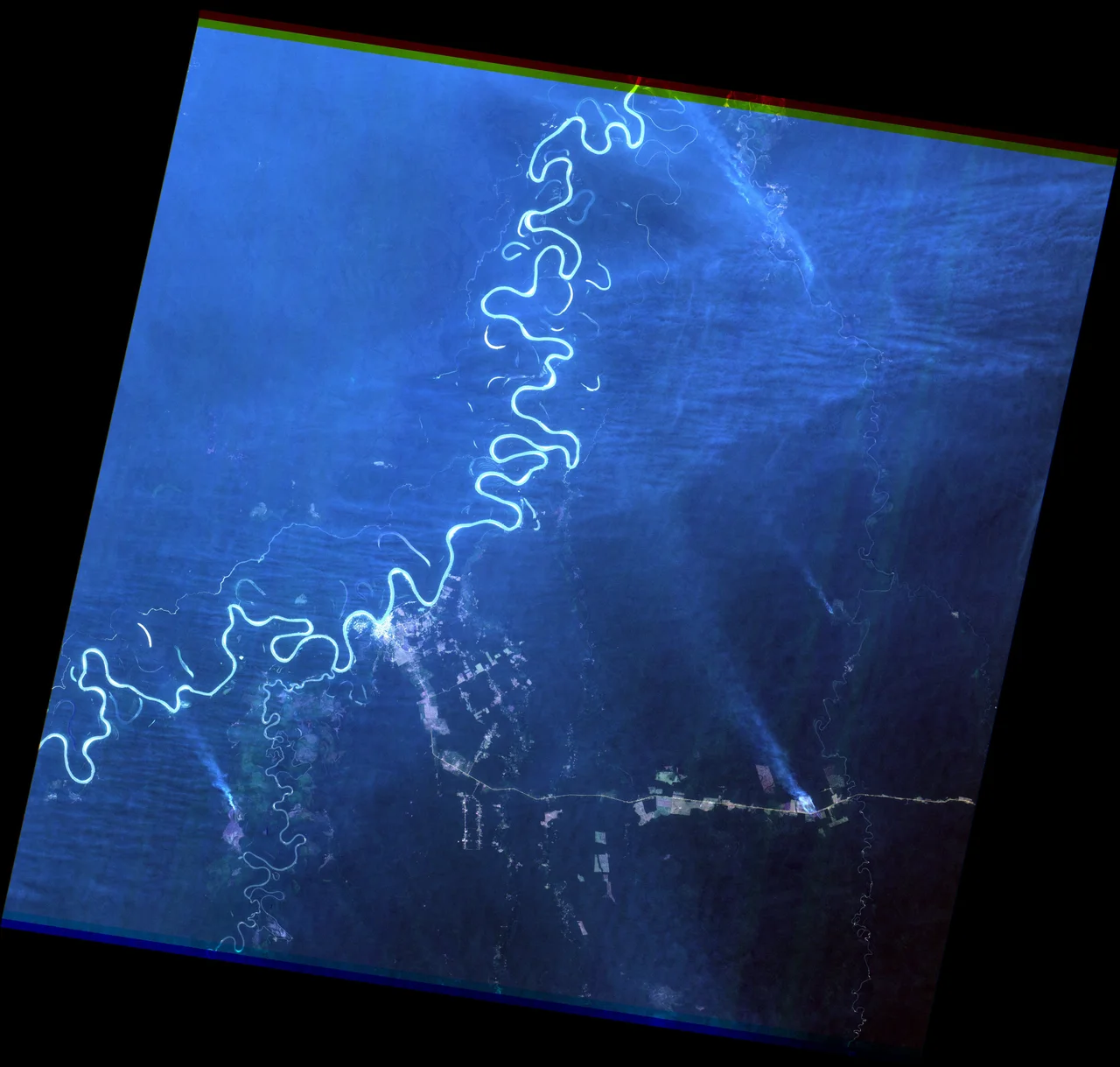

2019 Amazon rainforest wildfires
At around two in the afternoon on August 19, 2019, the sky over São Paulo went dark. Streetlights came on. Office workers stopped at windows. The smoke had traveled almost 2,800 kilometers from the state of Rondônia and the state of Amazonas, where the Amazon rainforest was burning at a rate not seen in more than a decade. NASA's satellites and Brazil's INPE monitoring system had been registering the surge for weeks, but the dark São Paulo afternoon was what made the world pay attention. By the end of August, more than 80,000 fires had been counted across Brazil - a 77 percent increase on the same period the year before. Across the whole Amazon basin, similar rises hit Bolivia, Paraguay, and Peru. An estimated 906,000 hectares of Amazon biome burned in 2019. It was not a natural disaster. The forest was being cleared.
The Arithmetic of a Dry Season
Fires are almost never spontaneous in the Amazon. Alberto Setzer, the scientist who runs INPE's fire monitoring program, estimated that 99 percent of 2019's wildfires were started by humans - either on purpose or accidentally. In the Amazon, farmers and land-grabbers clear forest in three steps. First they cut the trees. Then they let the fallen vegetation dry for months in the tropical sun. Then they burn what is left, turning primary forest into blackened stubble that can be seeded with grass for cattle. The timing is deliberate: they wait for the dry season, which peaks in August. In 2019 the first four months of the year were wetter than average, which meant there was more dried-out biomass piled up by mid-year than usual. By May, the burns began. By August, they were visible from space.
The Day of Fire
In early August 2019, farmers along the BR-163 highway in the state of Pará placed an advertisement in a local newspaper. They called August 10 a dia do fogo - a day of fire - and organized coordinated burns across the region. They did not hide. The publicity was the point. The farmers understood that Jair Bolsonaro, who had been elected president in October 2018 and inaugurated in January 2019, had weakened environmental enforcement to the point where there was little risk of consequence. A WhatsApp group of about 70 people organized the effort. Globo Rural's reporting eventually forced the federal police to open an investigation. By then the fires were out of control across the region. In August alone, 39,194 new fires were detected in the Amazon. The state of Acre declared environmental emergency on August 16.
Who Lives in the Forest
About 306,000 indigenous people live in the Brazilian Amazon. Their territories, which cover roughly 13 percent of Brazil, are formally demarcated and protected under the 1988 Constitution. In practice, during 2019, Bolsonaro's government weakened those protections at every level. Land-grabbers pushed into the territory of the Apurinã people in Amazonas, an area the reporting at the time described as holding some of the world's largest unbroken tracts of primary forest. Kerexu Yxapyry, a leader of the Kerexu in Santa Catarina, said bluntly what her community faced: We know our struggle will be arduous. Maybe many of our leaders will be killed, but we are organized. And we are going to defend our rights. Indigenous communities organized to fight the fires with their own crews. In some regions their traditional fire-management practices - which had been used responsibly for generations - were being criminalized at the same time that land-grabbers were burning with impunity.
The World Watches, Then Argues
French President Emmanuel Macron called the fires an international crisis. Our house is burning, he said on August 22. Literally. Finland's finance minister proposed an EU ban on Brazilian beef imports. Ireland's prime minister said his country would refuse to ratify the EU-Mercosur trade agreement unless Brazil protected the forest. Bolsonaro pushed back hard. He accused Macron of using a sensationalist tone. He accused environmental NGOs - without evidence - of starting the fires themselves to generate donations. In a November webcast he even blamed the actor Leonardo DiCaprio personally, who had donated five million dollars to Amazon conservation efforts. On August 23, facing the pressure, Bolsonaro announced what he called a zero-tolerance approach to environmental crimes. He dispatched 43,000 military personnel and four firefighting aircraft. On August 29 the government banned land-clearing by fire outright. But the damage was done.
The Tipping Point Question
Climate scientists had warned for decades that the Amazon was approaching a tipping point. The rainforest generates about half its own rainfall by evapotranspiration - the water that leaves tree leaves rejoins the atmosphere and returns as rain over the basin. Cut enough trees and the feedback fails. The forest begins to dry, becomes flammable, and converts to savanna. The 2019 fires pushed closer to that line. Brazilian ecologists estimated the economic dieback alone could cost the country between 957 billion and 3.5 trillion US dollars over 30 years. The Amazon has been the world's largest carbon sink - absorbing up to a quarter of global carbon dioxide. Losing it flips the equation: instead of absorbing carbon, the forest releases it. Monica de Bolle of the Peterson Institute called the fires lit for deforestation a carbon bomb that could release 200 million tons of carbon a year. By 2020 the fires were back, and worse. The forest still stood, but its margins had receded.
From the Air
The coordinates given (3.36 degrees south, 62.22 degrees west) place this article in the heart of the Brazilian Amazon, in the state of Amazonas. Manaus - the largest city in the Amazon basin - lies about 500 km to the east. From cruising altitude during the August-September dry season, smoke plumes from fires across Rondônia, Mato Grosso, Amazonas, and Pará can be visible for hundreds of kilometers. In 2019 the plumes were large enough to darken São Paulo 2,800 km away. Manaus International (SBEG) serves the region by air. In the dry season, visibility can be significantly reduced by smoke haze from surrounding fires.
Nearby Stories
- Anama 22 km away
- Novo Airao 88 km away
- Jaú National Park 111 km away
- Amazonas (Brazil) 153 km away
- Matupiri State Park 172 km away
- Amazon biome 230 km away
- Purus-Madeira Moist Forests 231 km away