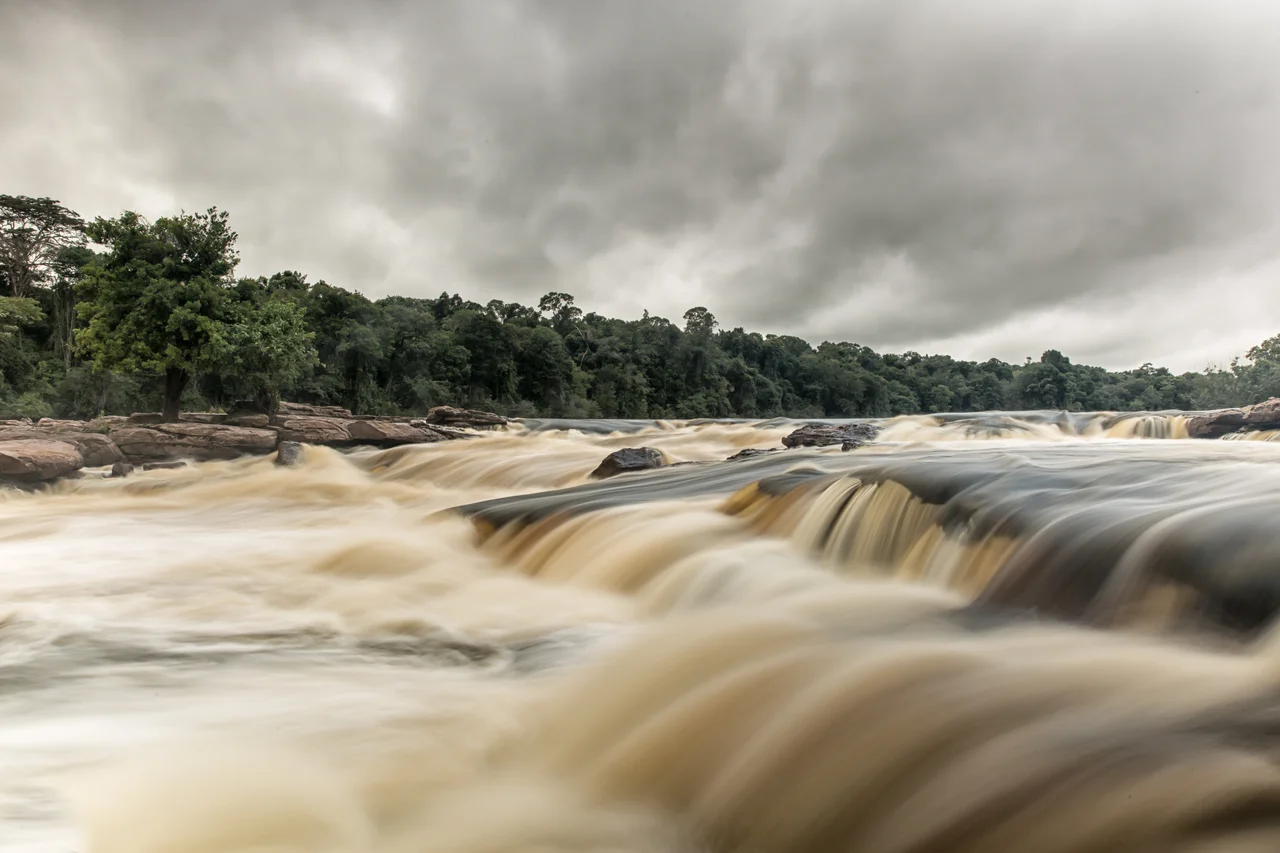

Jaú National Park
The park has no roads. That fact changes everything. You reach it by boat from Novo Airão, three hours of water before the first ranger station comes into view, and once you are inside Parque Nacional do Jaú you are inside an area roughly the size of Wales - several thousand square kilometers of virgin Amazonian rainforest with no highway threading through it and no village bigger than a cluster of stilt houses on a riverbank. The main river the park is named for, the Rio Jaú, carries black water the color of strong tea. Two smaller rivers, the Carabinani and the Unini, bound the protected area north and south. All three empty into the Rio Negro, and the Rio Negro empties into the Amazon at Manaus. The trip to get here is most of the experience.
Arrival by Water
From Manaus to Novo Airão is an overland trip of about 200 kilometers on a paved road, a route that still feels like an Amazon frontier despite the asphalt. Novo Airão is a small riverside town that serves as the management base for the park, with its local unit accessible by phone - +55 92 3613-3094 for the main office. From Novo Airão, flyer boats make the run to the park entrance in about three hours. Most travelers do not arrange their own trip. They book with a Manaus-based tour operator, which handles the fees, the permits, and the logistics of food, lodging, and guide. The park is not structured for casual tourism. To visit on your own, you need to contact the management authority - extension 229 at +55 92 3613-3277 - at least a month in advance.
The Price of Entry
IBAMA, the Brazilian environmental agency that oversees the park, charges a maintenance fee of three reais per person per day. There is an additional boat fee ranging from 16 to 64 reais, charged by vessel rather than by passenger and scaling with the size of the boat. Most tour packages include these fees. If you see an operator asking for much more - some claim official visitor fees of 100 reais or more - you are being overcharged. Damage to the park's flora or fauna is a federal crime, and the military police conduct regular patrols looking for poachers. The rules here are enforced, and they matter. The park's purpose is preservation, and casual tourism comes second to the ecosystem it protects.
Moving Through the Park
Once inside, everything moves by water. Motor boats for the main rivers, canoes for the side channels, sometimes nothing more than a light wooden hull that can float over tree roots and duck under low branches. When the water is high, especially from December to April, boats can reach places that in the dry season become mudflats. In the drier months from July to September, many of the smaller tributaries become impassable except to very light craft. Daily temperatures sit between 22 and 32 degrees Celsius year-round. The humidity is constant. December through April is the rainiest stretch of a generally wet climate - plan for afternoon downpours that turn the river surface to static and then pass as quickly as they came.
What You Will See
Wildlife in the Jaú is abundant but quieter than along the main Amazon channel - the fauna is less dense here than in the more productive waters of the Solimões. Still, what moves through is the full cast of Amazonian biodiversity. Pink river dolphins, or botos, surface in the channels. Jaguars pad through the flooded forest. Tapirs browse riverbanks at dusk. Armadillos scuffle in the understory. Monkeys call from the canopy and crocodilians - mostly caimans - slip off sandbars as your boat approaches. Fish of hundreds of species fill the water, some of them new to science when first catalogued. Birds of every description wake before dawn and go quiet through the middle of the day when the heat builds. The Jaú is not a zoo. Animals appear on their own schedule, often briefly, and a patient eye is rewarded more than a loud one.
Sleeping on the River
There are no hotels inside the park. Lodging options are in Novo Airão or further upstream in Barcelos, where hotels accommodate travelers before and after the boat trip. Inside the park, you sleep on the boat - either in a hammock strung between posts under a covered deck or, on larger vessels, in a cabin. There is a visitors' center at the park entrance and some facilities for researchers who have government permission to stay. Food is what you bring. Unless you are content with fish for every meal, stock up in Manaus or Novo Airão before the trip. The local diet is organized around what the river provides, and the river provides mostly fish. That constraint is part of the honesty of the place. You are not in a serviced destination. You are in a working ecosystem that tolerates visitors on its terms.
From the Air
Centered at 2.17 degrees south, 62.62 degrees west, about 220 kilometers northwest of Manaus. Cruising altitudes of 10,000 to 20,000 feet show the broad carpet of untouched canopy and the meandering black-water channels of the Jaú, Unini, and Carabinani. Nearest airport is Manaus (SBEG), with small airstrips in Novo Airão serving charter traffic. Expect heavy afternoon convection from December through April and improved visibility in the relative dry season of July through September.
Nearby Stories
- 2019 Amazon rainforest wildfires 100 km away
- Amanã Sustainable Development Reserve 132 km away
- Lower Rio Negro Mosaic 145 km away
- Xixuau 146 km away
- Amazon biome 157 km away
- Japurá-Solimões-Negro Moist Forests 166 km away
- Anama 195 km away
- Waimiri Atroari Indigenous Territory 275 km away