
Marine Corps Air Station Yuma
The runway at Marine Corps Air Station Yuma is named for Brigadier General Casey Vincent, who commanded American fighter forces in China during World War II and became famous enough to inspire a character in the comic strip 'Terry and the Pirates.' The base itself was named Vincent Air Force Base in his honor in 1956. Three years later, the Marines took over, renamed it, and have been flying from it ever since — making it, by many measures, the busiest Marine air installation in the world.
From Municipal Field to Military Installation
The field that became MCAS Yuma began as Fly Field, a municipal airfield established in 1928 and named for Colonel Ben Franklin Fly, a local figure whose support for aviation in the region helped establish the facility. President Calvin Coolidge signed the Yuma Aviation Bill on February 27, 1928, providing federal backing for the project — a moment when the federal government was still working out how to support the emerging commercial and military aviation industry.
Amelia Earhart visited Yuma in 1929 and nosed her aircraft into the sand during landing — a minor mishap that demonstrated both the imperfect surfaces of early desert airfields and the very real hazards of aviation in the pioneer era.
When World War II began, the Army requisitioned the field and expanded it dramatically. The Yuma Army Air Field became a major training installation where pilots flew AT-6 Texans and B-26 Marauders, preparing for combat in theaters that ranged from the Pacific to Europe. The desert climate — abundant sunshine, reliable visibility, minimal precipitation — made the Yuma area ideal for flight training, and the military took full advantage.
Vincent and the Comic Strip General
Brigadier General Casey Vincent commanded the Chinese-American Composite Wing during World War II, leading fighter operations against Japanese forces in China. His exploits in this theater — flying combat missions personally, managing a complex multinational command with limited resources — made him a figure of considerable fame during the war.
Milton Caniff, the creator of the comic strip 'Terry and the Pirates,' based the character Colonel Flip Corkin on Vincent. The strip, which followed an American adventurer in wartime Asia, was enormously popular, and the connection between Vincent and Corkin was widely known. When the Air Force renamed the Yuma base in 1956, choosing to honor Vincent was a recognition both of his military service and of his cultural presence — the general who had become a character in American popular mythology.
The Marines arrived in 1959, and the base was redesignated Marine Corps Air Station Yuma on July 20, 1962. Vincent's name stayed on the airfield itself even as the base changed hands and designations.
The Busiest Marine Station
MCAS Yuma is routinely described as the busiest Marine Corps air station in the world, measured by flight operations. The combination of good flying weather — over 350 days of flyable conditions annually — and the available training airspace in the surrounding desert makes Yuma one of the most productive locations for Marine aviation training in the United States.
The base hosts a range of aviation units and is the home of Marine Aviation Weapons and Tactics Squadron One (MAWTS-1), which develops and teaches aviation weapons and tactics for the entire Marine Corps. The Weapons and Tactics Instructor course — WTI — brings Marine aviators from across the service to Yuma for advanced instruction, making the base the intellectual center of Marine Corps aviation training.
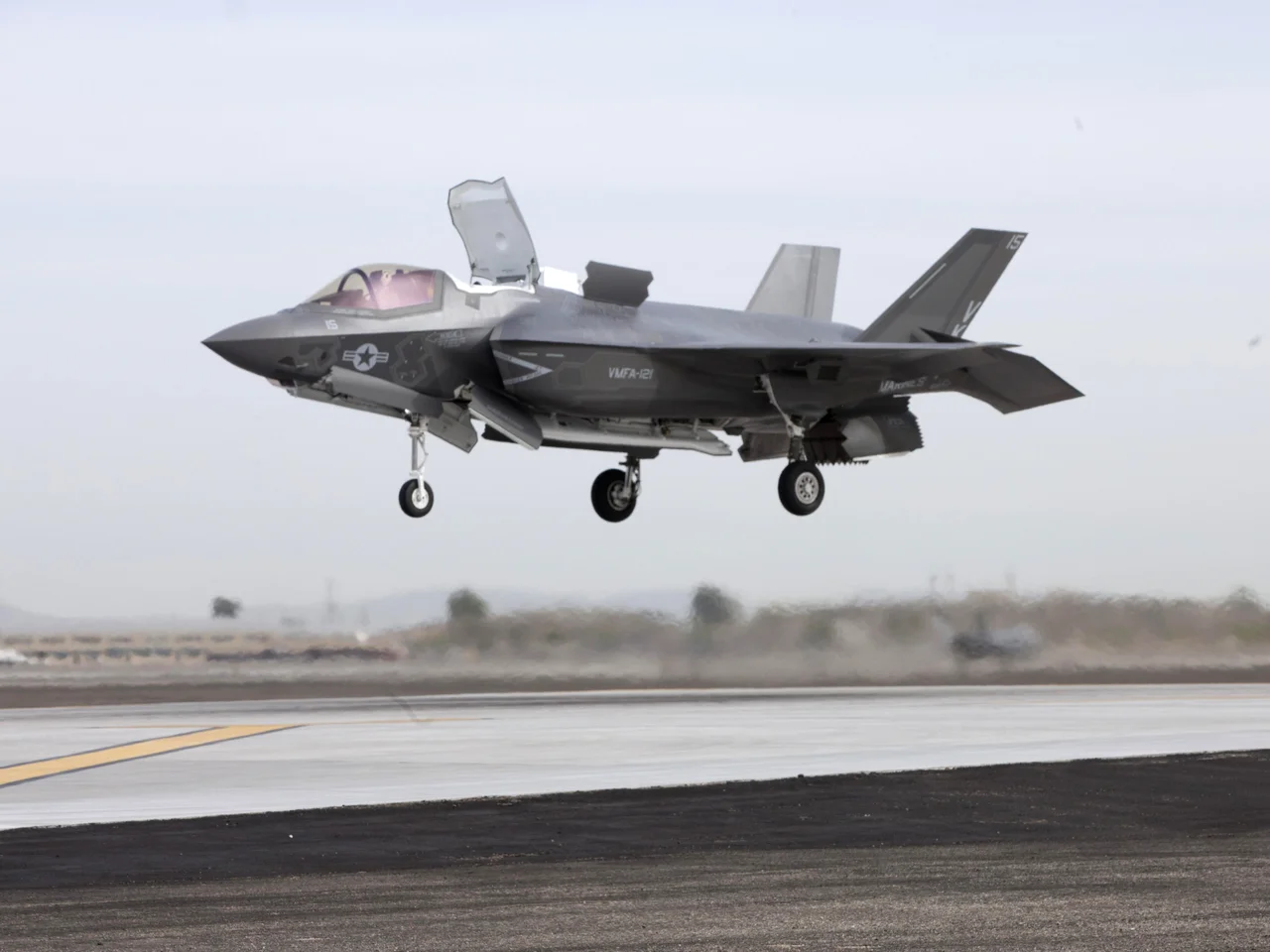
The F-35B, the short-takeoff/vertical-landing variant of the Joint Strike Fighter, arrived at MCAS Yuma on November 16, 2012, making it one of the first operational bases for the aircraft. The F-35B's vertical landing capability is suited to the kind of expeditionary operations the Marine Corps emphasizes, and Yuma became one of the primary locations for developing operational procedures for the new aircraft.
A Superfund Site in the Desert
The decades of military aviation at Yuma have left environmental consequences. MCAS Yuma is listed on the EPA's National Priorities List — the Superfund program — due to contamination from fuels, solvents, and other materials associated with aviation operations over many decades. The cleanup process, like most Superfund sites, is long-term and ongoing.
The base occupies a substantial portion of the desert south of the Gila River, with runways, hangars, and support facilities covering thousands of acres. From the air, the installation is unmistakable: the parallel runways, the aircraft parking areas, the controlled airspace that makes Yuma a place where civilian pilots must be careful about where they fly. The mountains of the airspace restriction around the base reflect the intensity of military operations below.
From the Air
Located at approximately 32.65°N, 114.60°W south of Yuma, Arizona. MCAS Yuma shares the field with Yuma International Airport (KNYL/YUM). The parallel runways and military facilities are visible from altitude; the base is within active military airspace. Pilots should check current NOTAMs and contact approach control — this is restricted airspace. IATA: YUM, ICAO: KNYL.
Nearby Stories
- Holtville, California 45 km away
- Battle of Stanwix Station 49 km away
- Imperial Valley 52 km away
- Chocolate Mountain Aerial Gunnery Range 97 km away
- Gillespie Dam Bridge 127 km away
- Off-roading in Baja 135 km away
- Misión San Pedro Mártir de Verona 180 km away
- Arizona-Sonora Desert Museum 258 km away