_3.jpg)
Market Theatre (Johannesburg)
On 21 June 1976, with the country tightening into open conflict, a group of theatre people opened a playhouse inside an old fruit market and staged Chekhov's The Seagull. The choice of a Russian classic in apartheid Johannesburg was its own small statement: art that refused to recognise the colour bars drawn up outside its doors. The Market Theatre in Newtown would go on to become one of the very few places in 1980s South Africa where Black and white South Africans could sit, perform and create together as equals. The world came to call it the Theatre of the Struggle.
A Stage Inside a Market
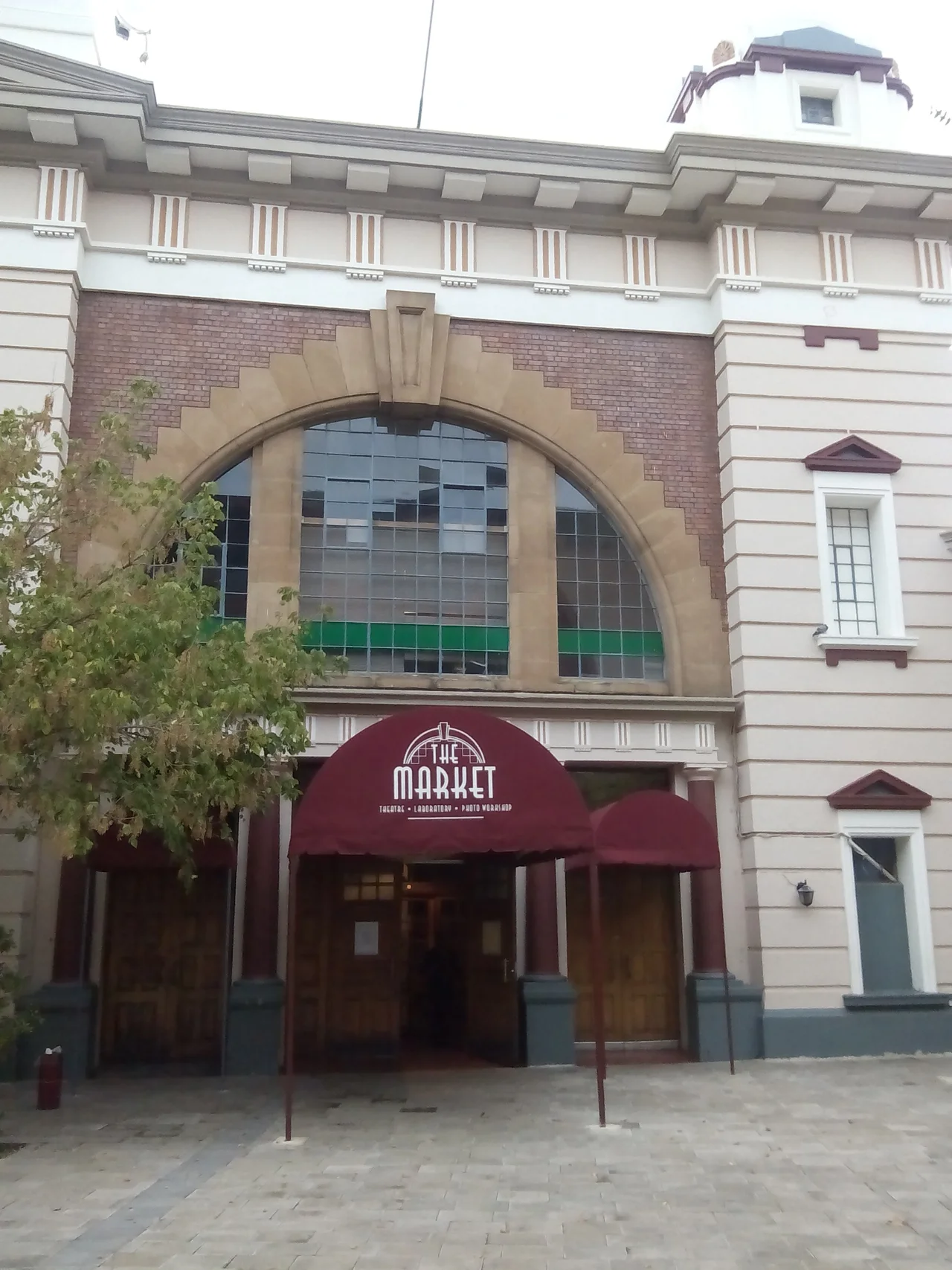
The building was not designed for drama. Its steel frame was shipped from Britain and bolted together on site in 1913, with soaring arches and a cathedral-like dome raised to shelter Johannesburg's Indian Fruit Market. For decades it was a place of produce and commerce; on Sundays its main hall hosted symphony concerts. By the 1970s the complex sat neglected, and a band of theatre-makers including Barney Simon and Mannie Manim began raising money to rescue it. Much of the renovation was done by the artists themselves. They kept what they could, and today a good deal of the original Edwardian ironwork and signage survives, the bones of a marketplace now sharing the site with Museum Africa. It is a theatre that still smells faintly of the work that built it.
The Theatre of the Struggle
By the time the Market opened, international pressure on the apartheid government was mounting, and inside the country the system was straining. The theatre planted itself squarely in that turbulence. Under Barney Simon's artistic direction it became deliberately non-racial at a moment when mixing across the colour line on stage and in the audience was a provocation. A stream of fierce, locally grown plays followed, Woza Albert, Asinamali, Bopha, Sophiatown, Born in the RSA, You Strike the Woman, You Strike a Rock, work that gave voice to people the state preferred silent. As one tribute put it, in providing a voice to the voiceless, the Market did not abandon artistic excellence but made a point of it. The theatre's contribution to South Africa's eventual arrival at democracy in 1994 is woven through the whole period.
Confrontations on Stage
Some of the boldest moments came when the theatre staged the world's classics with South African defiance. In October 1987 the director Janet Suzman mounted a multi-racial production of Othello, casting a Black actor as the Moor opposite a white Desdemona, a piece of staging that was incendiary in a country where such intimacy on stage broke deep taboos. Suzman also directed Brecht's The Good Person of Szechwan, pointedly renamed The Good Woman of Sharpeville after the township that gave its name to a 1960 massacre. In 1981 the theatre presented the first Afrikaans translation of a play by Athol Fugard, Hello and Goodbye, drawing in Afrikaner audiences and proving the stage could speak across the very divides the state had built. The Market did not lecture so much as confront, and trust its audiences to feel the point.
The Names on the Doors
The complex grew into three performance spaces, opening with the Barney Simon Theatre, a 120-seat room, while restoration on the rest of the building continued, followed by the Main Theatre that October and the Laager. The names attached to the place read like a roll-call of South African performance: the playwrights Fatima Dike, Maishe Maponya and Paul Slabolepszy; the satirist Pieter-Dirk Uys; directors Lara Foot, Malcolm Purkey and Yael Farber; the Handspring Puppet Company that would later astonish the world with War Horse. In 1995 the theatre won the American Jujamcyn Award. In 2014 its Main Theatre was renamed for John Kani, the celebrated actor who served as its chairperson, and whose career as a Black artist on these boards is itself a history of the struggle the building helped carry. The fruit market is long gone. The stage it became is still arguing, still alive.
From the Air
The Market Theatre stands at 26.202 degrees south, 28.032 degrees east, in the Newtown precinct on the western edge of central Johannesburg, at roughly 1,750 metres elevation on the Highveld. From the air it sits among the cultural buildings of Newtown, near the white cable-stayed Nelson Mandela Bridge that spans the railway lines just to the north, a clear navigational landmark. The nearest major airport is O.R. Tambo International (FAOR), about 22 km to the east-northeast; Rand Airport (FAGM) lies to the southeast and Lanseria (FALA) to the northwest. As across the Highveld, summer afternoons bring rapid thunderstorm build-up, so clear winter mornings offer the steadiest light over the inner city.
Nearby Stories
- Kyalami Grand Prix Circuit 12 km away
- TauTona Mine 16 km away
- Boipatong Massacre 17 km away
- Battle of Bronkhorstspruit 33 km away
- Nan Hua Temple 57 km away
- Royal Bafokeng Nation 59 km away
- Secunda CTL 69 km away
- Vaal Reefs Mining Disaster 79 km away