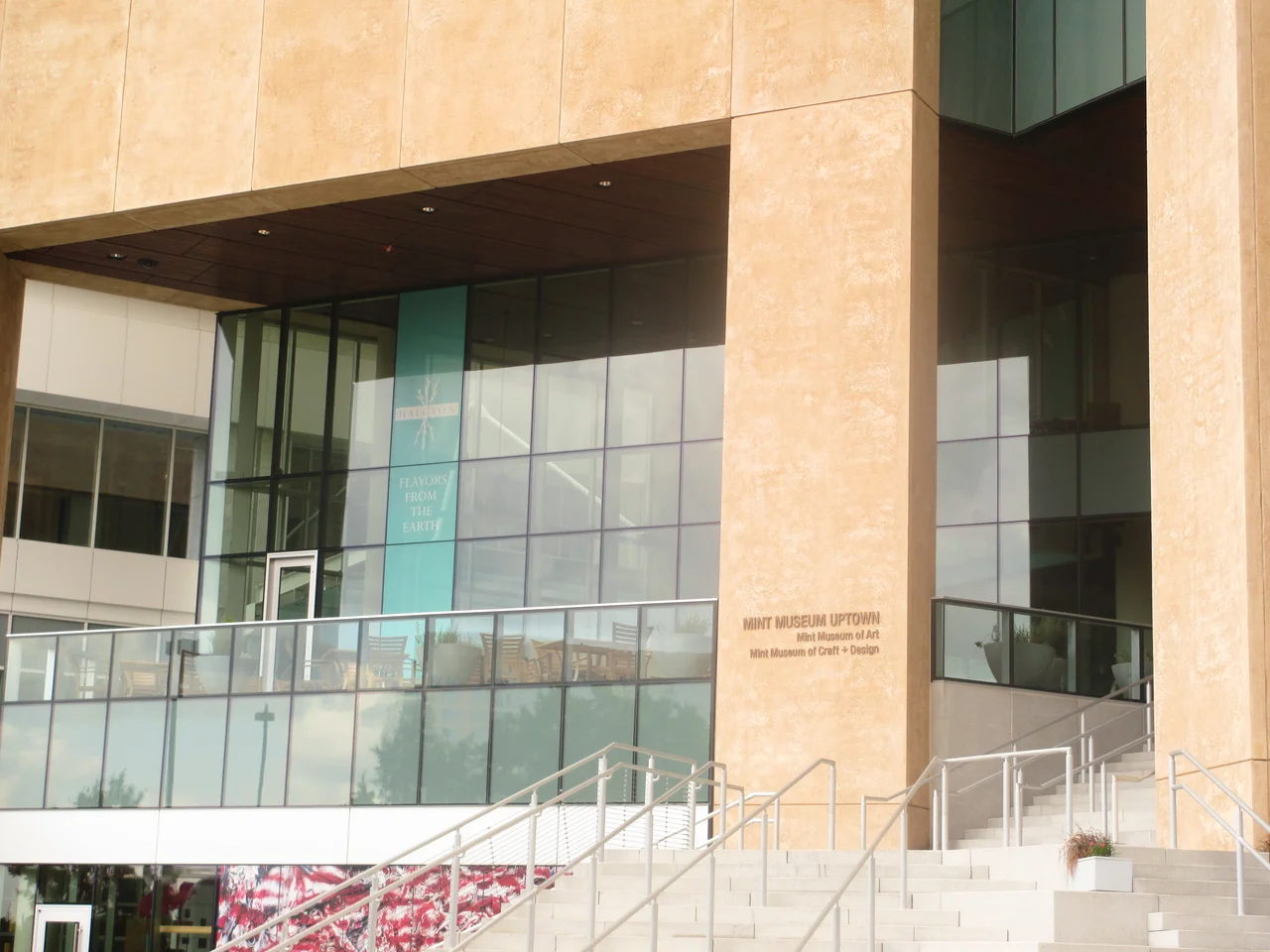

Mint Museum
In 1933, a group of Charlotte citizens raised nine hundred and fifty dollars to take a building apart. The structure was the old Charlotte Branch of the United States Mint, designed by William Strickland in 1836 and slated for demolition to make way for a post office expansion. The U.S. Treasury Department had shrugged its shoulders: it had no objection to anyone who wanted to move the building, but offered no help. So the Federal-style facade came down brick by brick, was hauled across town, and rose again on donated land on Randolph Road. When it reopened on October 22, 1936, it was no longer a mint at all. It was North Carolina's first art museum.
Gold Rush Foundations
The building's first life began with North Carolina gold. In the 1830s, the Charlotte region was the heart of America's first gold rush, and the federal government built branch mints to process the bullion. Strickland, the same architect who designed the Second Bank of the United States in Philadelphia, drew the plans. Perry and Ligon of Raleigh broke ground in 1836; construction cost $29,800, an enormous sum at the time. The mint opened on July 27, 1837 at 403 West Trade Street and coined roughly five million dollars in gold before the Civil War shut it down. The mint was constructed using the labor of enslaved workers, a fact often absent from the building's celebratory histories but inseparable from its origins.
Saved Brick by Brick
By 1931, Mecklenburg County wanted the land for an expanded post office, and the mint stood in the way. Preservation campaigns to keep it on its original site failed. Citizens then took the only path left: they would move the building themselves. The dismantling crew numbered the stones, packed up Strickland's Federal-style portico, and hauled the pieces to Randolph Road. The reassembled building opened as the Mint Museum of Art in 1936, in the middle of the Great Depression, on land donated by Mary Myers Dwelle and other supporters. It was an act of municipal stubbornness that gave Charlotte a museum it might otherwise never have had.
Two Buildings, One Museum
Today the Mint Museum is really two museums under one name. The original Randolph Road building holds historic costume, ceramics, ancient American art, Asian art, and the Delhom collection of two thousand pieces of pottery and porcelain donated in 1966. The newer Mint Museum Uptown opened October 1, 2010, in a five-story, 145,000-square-foot building designed by Boston's Machado and Silvetti Associates at a cost of $57 million. Uptown houses contemporary art, American art, and the craft and design collection. Together the two buildings hold the largest public collection of work by Romare Bearden, the celebrated collage artist born in Charlotte in 1911.
The Bearden Legacy
Bearden left Charlotte as a child during the Great Migration and built his career in Harlem, but Charlotte never let go of him. The Mint's holdings include his most personal work: collages and watercolors that wove together memory, jazz, and Black life in the American South. Walking through the Bearden galleries, you see a Charlotte that the Strickland building could never have imagined when its cornerstone was laid. The American Art collection extends back to John Singleton Copley and Gilbert Stuart, includes Hudson River School landscapes by Thomas Cole and Sanford Gifford, and gathers paintings by The Eight, the Ashcan School realists who broke from academic tradition at the turn of the twentieth century.
A Building That Refused to Die
The Mint Museum's two campuses encode something about Charlotte itself: a city willing to take apart its past and put it back together in a new place. The Randolph Road building was placed on the Charlotte-Mecklenburg Historic Landmarks list in 1976, exactly 140 years after construction began. Its walls have housed federal gold, then nothing, then art, and now art again after expansions in 1967 and 1985. The Uptown campus, all crisp geometry and gallery light, sits a few blocks from where the building first stood. The mint was never demolished. It was just relocated, twice over, into something new.
From the Air
Mint Museum Randolph is at 35.224 degrees N, 80.848 degrees W in south Charlotte; Mint Museum Uptown is in the central business district just east of Interstate 277. Best viewed from 3,000 to 5,000 feet AGL. Charlotte Douglas International Airport (KCLT) is about 8 miles southwest; the Uptown skyline is the obvious visual landmark, with Bank of America Stadium and Truist Field nearby.
Nearby Stories
- Battle of Colson's Mill 12 km away
- Kings Mountain Mine 13 km away
- Thyatira Presbyterian Church, Cemetery, and Manse 16 km away
- Andrew Jackson State Park 19 km away
- Charleston Naval Hospital Historic District 22 km away
- Hickory Motor Speedway 22 km away
- North Carolina Aviation Museum 29 km away
- Battle of Fishdam Ford 47 km away