
Narberth
Before Pembrokeshire existed - before the Normans, before the Anglo-Saxons, before the Welsh language had a written form - there was a king named Pwyll whose court was at Arberth. The Mabinogi opens here, in the First Branch, with Pwyll Prince of Dyfed sitting on a magical mound and waiting for whatever happens when you sit on magical mounds. What happens, in the story, changes Welsh literature forever. The town that stands here now is small enough to walk across in twenty minutes, and you can buy artisanal cheese and pass the cell where the Rebecca Rioters were locked up and stand outside the venue where Elton John played his first headlining show. Arberth - now Narberth - has been holding all of this at once for a very long time.
The Court of Pwyll
The Mabinogi is Welsh literature's oldest known prose - a collection of four interlinked tales preserved in two medieval manuscripts but reaching back into oral tradition centuries earlier. Narberth is its most important location. In the First Branch, Pwyll, Prince of Dyfed, hosts the Otherworld lord Arawn at his court here. He sits on the magical mound at Arberth and sees Rhiannon ride past on her impossible horse, and from that meeting the whole subsequent story tumbles. In the Third Branch, Pwyll's son Pryderi returns to Narberth with his stepfather Manawyddan and finds the land mysteriously emptied - all its people gone, only an enchanted fortress remaining. The court is named in Welsh as *Arberth*, from *ar* meaning 'on' or 'against' and *perth* meaning 'hedge.' English speakers heard the phrase *yn Arberth* - 'in Narberth' - and rebracketed it. The N stayed. The original meaning faded. The town kept the name.
The Rebecca Riots
In the 1830s and 1840s, rural Welsh tenant farmers were being taxed to death by the proliferation of turnpike toll gates - gates erected by turnpike trusts to fund road maintenance, but which by the 1840s had become a punitive system of charges on a population already squeezed by tithes, rents, and a series of bad harvests. The protest movement that emerged took the name Rebecca, from a verse in Genesis: 'And they blessed Rebekah, and said unto her, Thou art our sister, be thou the mother of thousands of millions, and let thy seed possess the gate of those which hate them.' Men dressed in women's clothing, blackened their faces, and rode at night to smash toll gates. Narberth was one of the centres of the movement, and the cell beneath the Town Hall - where the Rebecca leaders were imprisoned after capture - is still preserved. The toll system was eventually reformed. The riots had worked.
Elton John and the Queen's Hall
On 13 June 1970, an unknown English pianist played his first proper headline gig at the Queen's Hall in Narberth. Tickets cost ten shillings. The pianist's name was Elton John - he had just released his second album. The show was poorly attended; some accounts have him playing to about thirty people. He went on to fill stadiums and sell hundreds of millions of records. The Queen's Hall went on to host Deep Purple, Status Quo, Desmond Dekker, Hot Chocolate, Therapy?, The Blockheads, and a long list of other bands working their way up or down the touring circuit. It still operates as the town's cultural centre, with a contemporary art gallery, restaurant, and yoga classes alongside the concerts. None of it advertises the Elton John connection particularly loudly. The hall is too busy being itself.
Little Town, Liveliest Wales
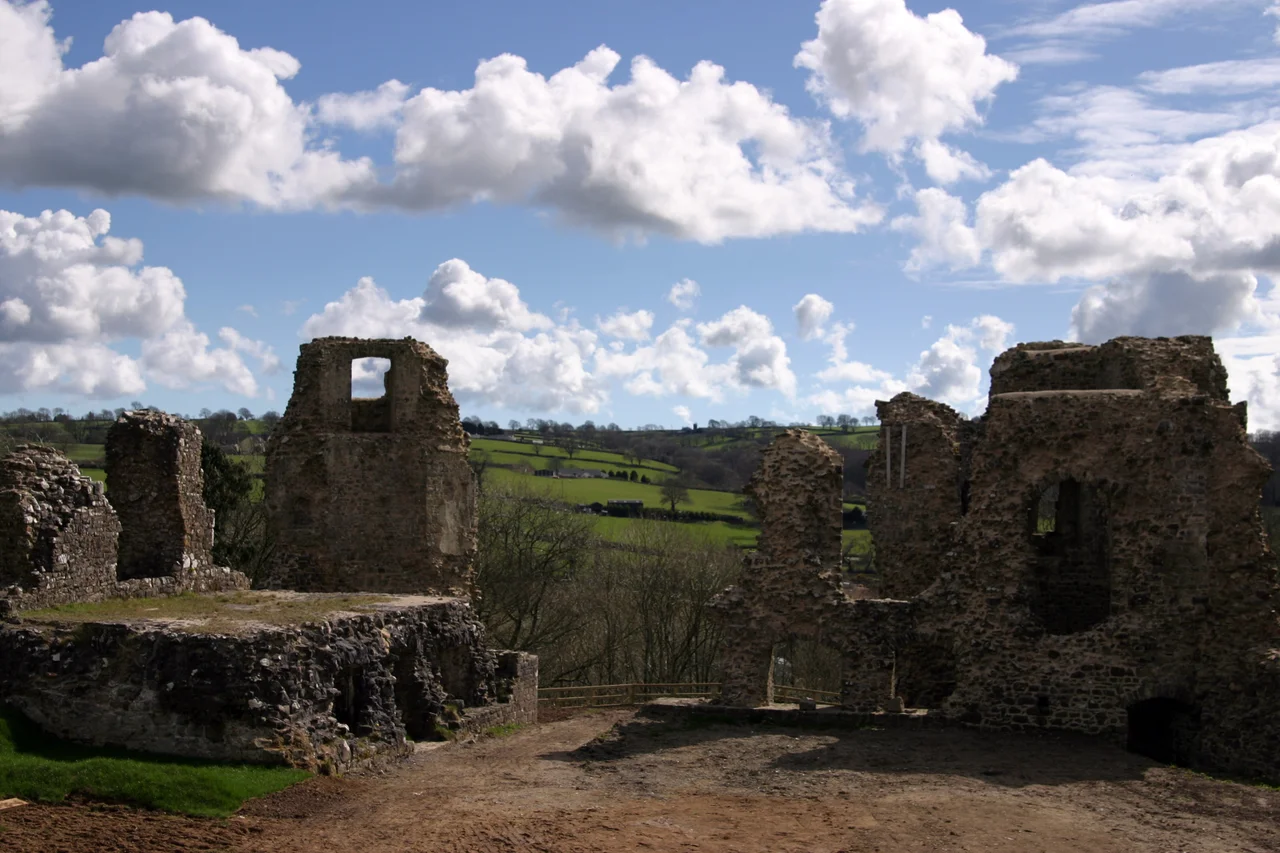
The Guardian in 2014 called Narberth 'not only a gastronomic hub for west Wales but also one of the liveliest, most likeable little towns in the UK.' The population, at the 2021 census, was around 4,100. Just under twenty percent are Welsh-speaking. The town has more than seventy listed buildings packed into a few streets. Independent shops dominate the High Street: an award-winning butcher, women's boutiques, antiques dealers, gift shops. Narberth Civic Week runs at the end of July with a carnival parade dating back over a century. The food festival in September draws crowds from across Wales and beyond - the town is twinned with Ludlow, another small town with a serious food reputation, and the two trade festival visits. Narberth Castle still stands in ruin at the edge of the town centre, the official entrance to the Mabinogi's court, now reopened to the public after restoration.
Faces From Narberth
The town has produced a surprising number of figures. Sir Thomas Foley (1757-1833), born just outside Narberth at Llawhaden, was Nelson's senior captain at the Battle of the Nile and again at Copenhagen - the kind of naval career that ended in admirals' uniforms and quiet retirement. Wyn Calvin (1925-2022) was the great Welsh pantomime dame and comedian, a fixture of British variety for half a century. Josephine Reynolds, born here in 1965, became one of the first full-time professional female firefighters in the UK. The footballer Joe Allen, born in 1990, was raised and educated in the town - he played for Liverpool, Stoke City, and Wales, including at the Euro 2016 semi-final. None of these careers happened here. They happened to people from here, which is a different thing, and one that Narberth seems comfortable with.
From the Air
Narberth lies at 51.80°N, 4.74°W in southern Pembrokeshire, just north of the A40 and on the A478. From the air, look for the compact town centre rising on a slight hill, with Narberth Castle's ruined keep visible at the southern edge. The town is roughly 9 nm east of Haverfordwest. Best altitude 2,000-3,500 ft. Nearest airports: Haverfordwest (EGFE) about 9 nm west-northwest, Pembrey (EGFP) about 15 nm east, Swansea (EGFH) about 28 nm east-northeast.
Nearby Stories
- St Andrew's Church, Bayvil 1.6 km away
- Skomer 3.7 km away
- National Botanic Garden of Wales 9 km away
- HMS H47 13 km away
- Mumbles Lifeboat Disaster 32 km away
- Strata Florida Abbey 38 km away
- Lighthouses on Lundy 38 km away
- Tehidy Country Park 140 km away