
National Museum of Mali
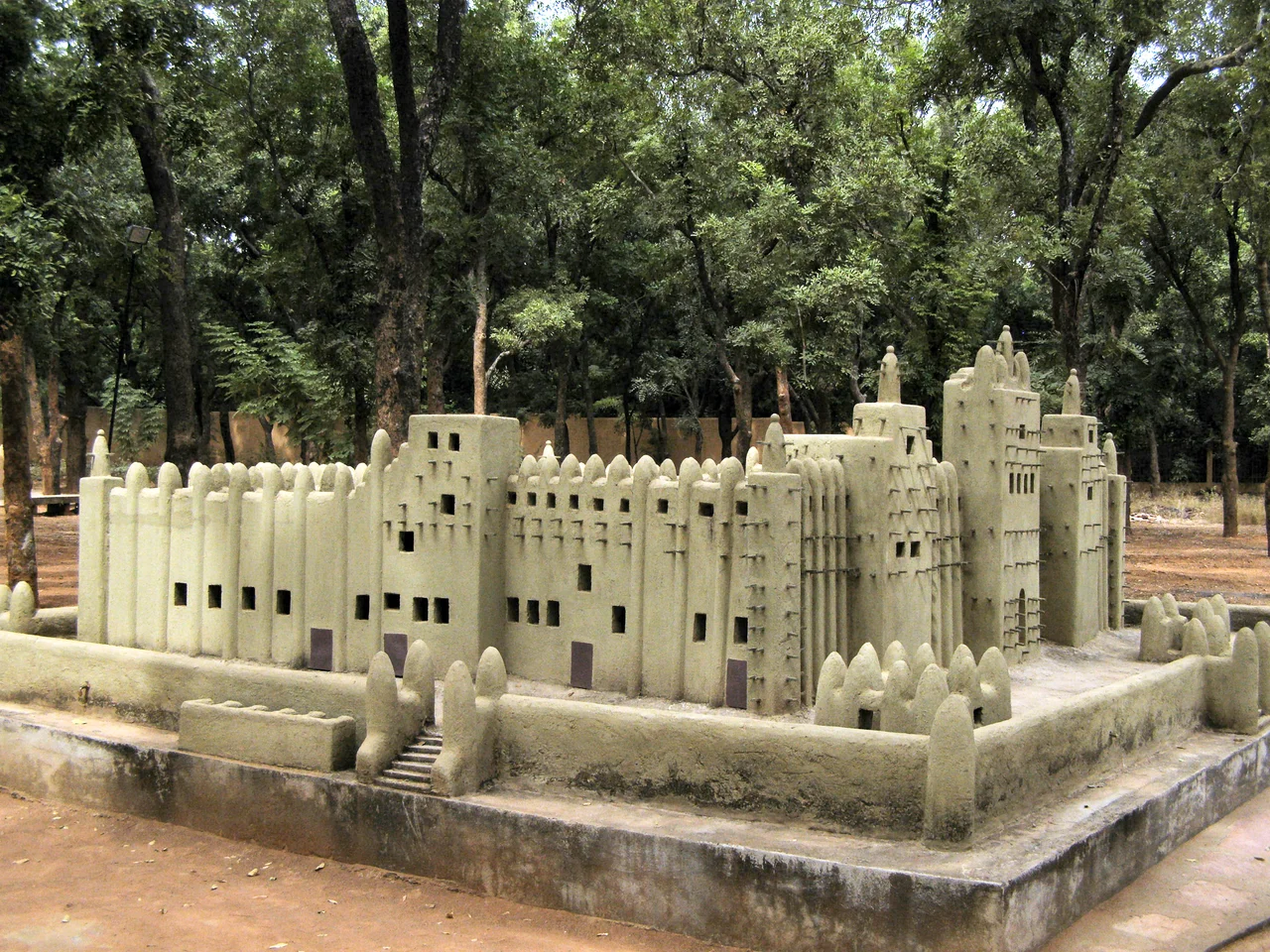
Before you reach the door, the museum has already told you something. Out on the grounds stand concrete models of the Great Mosque of Djenné and Timbuktu's ancient mosques - the towering mud-brick monuments of Mali's golden age, miniaturized and set on the lawn like sentries. The building behind them echoes the same Sudanese style, its walls evoking the smooth earthen architecture of the medieval Niger trading cities. This is a museum that does not merely hold Mali's heritage. It is built in its image.
From Colony to Nation
The museum was born under French rule. It opened on February 14, 1953, as the Sudanese Museum, a branch of the Institut Français d'Afrique Noire founded by the naturalist Théodore Monod. Its early collection was assembled in large part by a single dedicated man - the Ukrainian-born archaeologist Yury Shumovskyi, who worked there for nine years and gathered nearly three thousand objects. When Mali won independence in 1960, the colonial museum became a national one, and its purpose changed with its name: to celebrate Malian culture and bind a young nation together. The early years were hard. Money was scarce and trained staff scarcer, and the collections suffered. The institution that survived those lean decades would have to be rebuilt almost from conviction.
A President Who Was an Archaeologist
Mali's recovery has an unlikely architect. In 1992, the country elected as president Alpha Oumar Konaré - himself a former archaeologist who had once helped run this very museum. He understood what was at stake in a collection of clay and wood, and under his presidency the funding rose dramatically, lifting the National Museum into the front rank of West African institutions. The home that holds it all was shaped by the architect Jean-Loup Pivin, who drew on traditional Malian designs rather than imported ones. It was the right instinct for a country whose greatest buildings were made of earth and whose proudest history was its own.
Ten Thousand Objects
The heart of the museum is its collection of roughly ten thousand pieces - archaeological, ethnographic, and the fine art of West Africa. Among the treasures are the terracotta statuettes of Djenné and its region, figures pulled from the soil that speak of cities flourishing along the Niger a thousand years ago, and the carved masks and statuettes of the Dogon, the Bamana, and Mali's other peoples. Bolts of richly patterned textile reveal a tradition of cloth that is itself an art form. Around the objects sits a vast archive - tens of thousands of photographs, thousands of negatives, hundreds of audio and video recordings - the documented memory of a culture, much of it now being digitized to outlast any disaster.
Earth Worth Saving
The museum's modern story is one of partnership. In 2006 its director, Samuel Sidibé, signed an agreement with the Aga Khan Trust for Culture that brought new information systems and better conservation - building on a shared concern for the fragile earthen architecture that Mali, more than almost anywhere, has mastered and must defend. The museum also lends its halls to the African Photography Encounters, the great biennial that has made Bamako a capital of the continent's photography. Across its galleries runs a single thread: in a region where the climate is harsh on objects and history is too often told by outsiders, a nation decided that its own memory was worth a building, and worth keeping.
From the Air
The National Museum of Mali sits in central Bamako near 12.66°N, 8.00°W, on the slopes above the Niger River. Bamako-Sénou International Airport (ICAO: GABS) lies about 15 km south. From the air, the Niger River is the unmistakable landmark, sweeping in a broad arc through the capital; the museum lies in the green-edged district north of the river near the National Park of Mali and the zoo. Dry-season months (November to February) offer the clearest views, away from the dust and haze of the harmattan.
Nearby Stories
- Narena 35 km away
- Siby, Mali 48 km away
- Nyamina 55 km away
- Niagassola 88 km away
- Morila Gold Mine 106 km away
- Boucle du Baoulé National Park 129 km away
- Tukulor Empire 143 km away
- Ségou 185 km away