
Newport News, Virginia
The origin of the name is genuinely unresolved. The most popular theory holds that in the winter of 1610, half-starved Jamestown colonists were fleeing back to England aboard a ship captained by Christopher Newport when they encountered Lord De La Warr's supply fleet in the James River. De La Warr ordered them back. The community supposedly took its name from Newport's "good news." Other historians point to old maps that label the spot "Newport Ness" - mariners' shorthand for Newport Point. A third theory traces it to Sir William Newce, an Irish-English soldier granted land here in 1621 who died two days later. Pick the version you like. What is certain is that by 1851 the U.S. Post Office sanctioned "New Port News" as three words, and by 1866 it had merged into the form used today.
The Californian Who Built a Coal Port
For most of two and a half centuries, Newport News was a quiet fishing village in Warwick County. The city as it exists now was essentially conjured into being by one man: Collis P. Huntington, the California railroad magnate who was one of the "Big Four" behind the Central Pacific Railroad and the western half of the first transcontinental line. Recruited by former Confederate General Williams Carter Wickham to help build a southern railway, Huntington completed the Chesapeake and Ohio Railway to the Ohio River in 1873. Then he looked at his map and realized that West Virginia's bituminous coal had nowhere to go. His agents began buying land along the Virginia Peninsula in 1865. On October 19, 1881 - exactly a century after Cornwallis surrendered at Yorktown - the first train from Newport News rolled down temporary tracks to the Cornwallis Surrender Centennial Celebration. The coal piers followed. Newport News was incorporated as a city in 1896.
The Shipyard
Huntington's next project was a small dry dock to handle ships moving cargo between the rail terminus and ocean carriers. By 1890 it had a new name - Newport News Shipbuilding & Dry Dock Company - and by 1900 it had built the two Kearsarge-class battleships and USS Illinois for the U.S. Navy. It eventually became the largest shipyard in the world. It built seven of the sixteen battleships of Theodore Roosevelt's Great White Fleet that sailed around the world in 1907. It launched USS Theodore Roosevelt in 1984 and USS Harry S. Truman in 1996. Today, owned by Huntington Ingalls Industries, it is the only shipyard in the United States that builds nuclear-powered aircraft carriers, and the only one that does the mid-life refueling and complex overhaul on Nimitz-class hulls. It employs more than 24,000 people - the largest employer in the city by a wide margin.
Hilton Village
In 1917 the Navy's wartime shipbuilding contracts brought a flood of workers to Newport News that the city had nowhere to house. Congress responded with what is generally considered the first federally funded planned community in the United States: Hilton Village. The 473 homes were designed in English Village style, the streets curved gently along the James River, and the design was overseen by some of the leading planners of the era. The community survives today as a historic district. The Huntington family's mark is everywhere here. Collis Huntington's son Archer and his wife, the sculptor Anna Hyatt Huntington, founded the Mariners' Museum in 1932. It is one of the largest maritime museums in the world, and its USS Monitor Center holds 210 tons of artifacts recovered from the ironclad that fought CSS Virginia in Hampton Roads in March 1862.
Splitting the Atom
Tucked into the city's northwestern neighborhoods is the Thomas Jefferson National Accelerator Facility - formerly the Continuous Electron Beam Accelerator Facility, or CEBAF. JLab is a U.S. Department of Energy national laboratory that operates a racetrack-shaped continuous-wave electron accelerator, the only one of its kind. More than 2,000 scientists from around the world come here to do experiments on the fundamental structure of nuclear matter - the quarks and gluons that bind protons and neutrons together. The site employs about 675 people year-round. The accelerator's 12-billion-electron-volt upgrade, completed in 2017, made it one of the most precise tools in subatomic physics. A few miles south, coal trains still rumble down to the piers Huntington built. The city houses both.
City Center, Port Warwick, and the East End
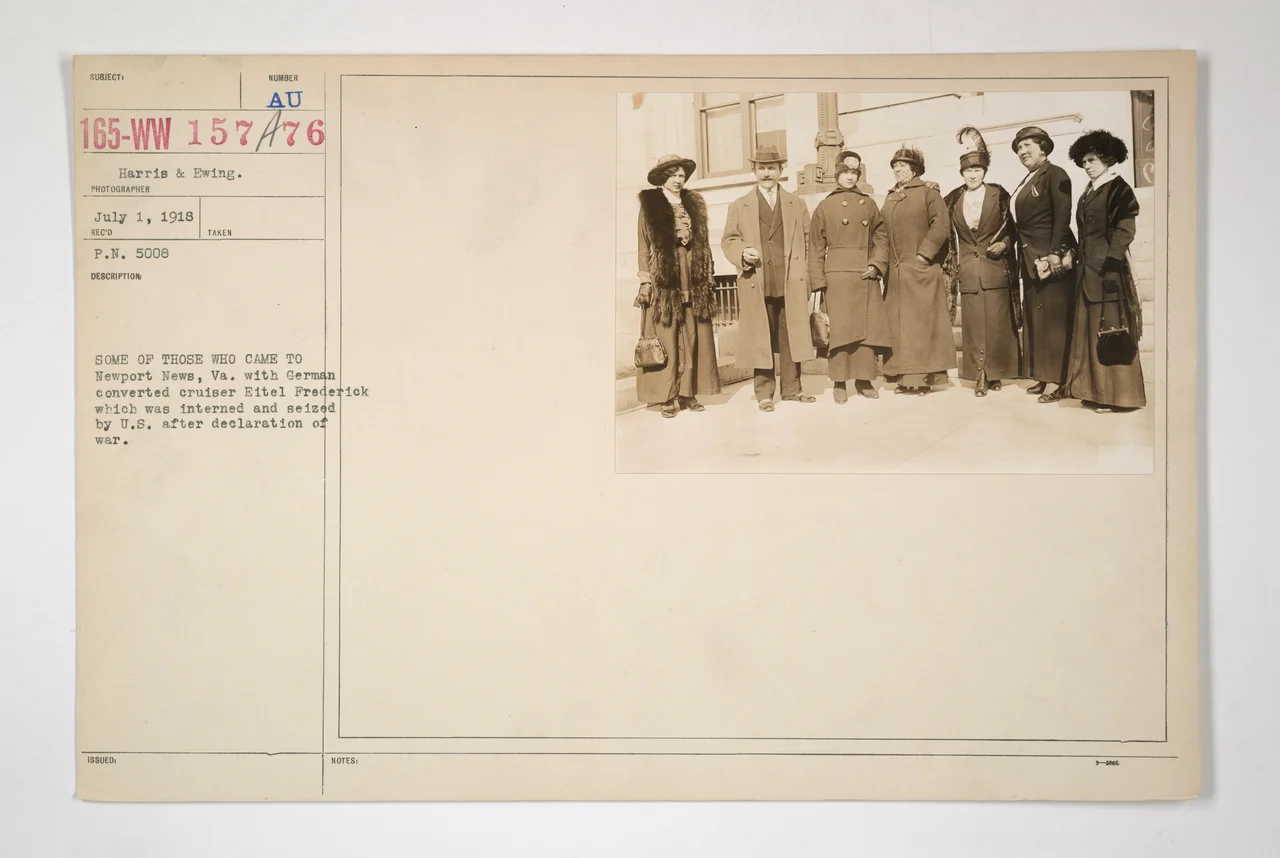
The 1958 merger of Newport News with the adjacent city of Warwick recreated, more or less, the original boundaries of the colonial Warwick River Shire. The merged city stretches roughly 24 miles along the James River. The downtown end, where the shipyard and coal piers sit, has struggled for decades with the postwar shift to suburbs - the East End in particular bears the marks of the country's longest pattern of disinvestment in Black neighborhoods. The city has tried to balance this with New Urbanism: City Center at Oyster Point opened in stages from 2003 to 2005, and Port Warwick - named for the fictional city in William Styron's novel Lie Down in Darkness - became a residential urban community next door. A small Korean enclave on Warwick Boulevard near Denbigh is known locally as "Little Seoul." The Victory Arch downtown, with its Eternal Flame, marks the spot where troops returning from Europe disembarked after World War I. They came home through Newport News because that was where the ships came in.
From the Air
Newport News is centered near 37.07N, 76.48W on the northern shore of the James River. From altitude, look for the immense Newport News Shipbuilding dry docks along the river - often with a nuclear carrier under construction or in overhaul - and the row of coal piers stretching south. Newport News/Williamsburg International (KPHF) sits inland in the northeastern part of the city; Norfolk International (KORF) is across the water to the southeast. The James River Bridge crosses to Isle of Wight County to the south; the Monitor-Merrimac Memorial Bridge-Tunnel crosses to Suffolk to the southwest. Watch for Fort Eustis (KFAF) airspace near the city's northwest edge.
Nearby Stories
- Battle of Gloucester Point (1861) 3 km away
- Coast Guard Station Cobb Island 3 km away
- Flowerdew Hundred Plantation 11 km away
- Great Dismal Swamp 11 km away
- Cape Charles Lighthouse 14 km away
- False Cape State Park 17 km away
- Cactus Hill 29 km away
- Chowan University 35 km away