
Ockenburg
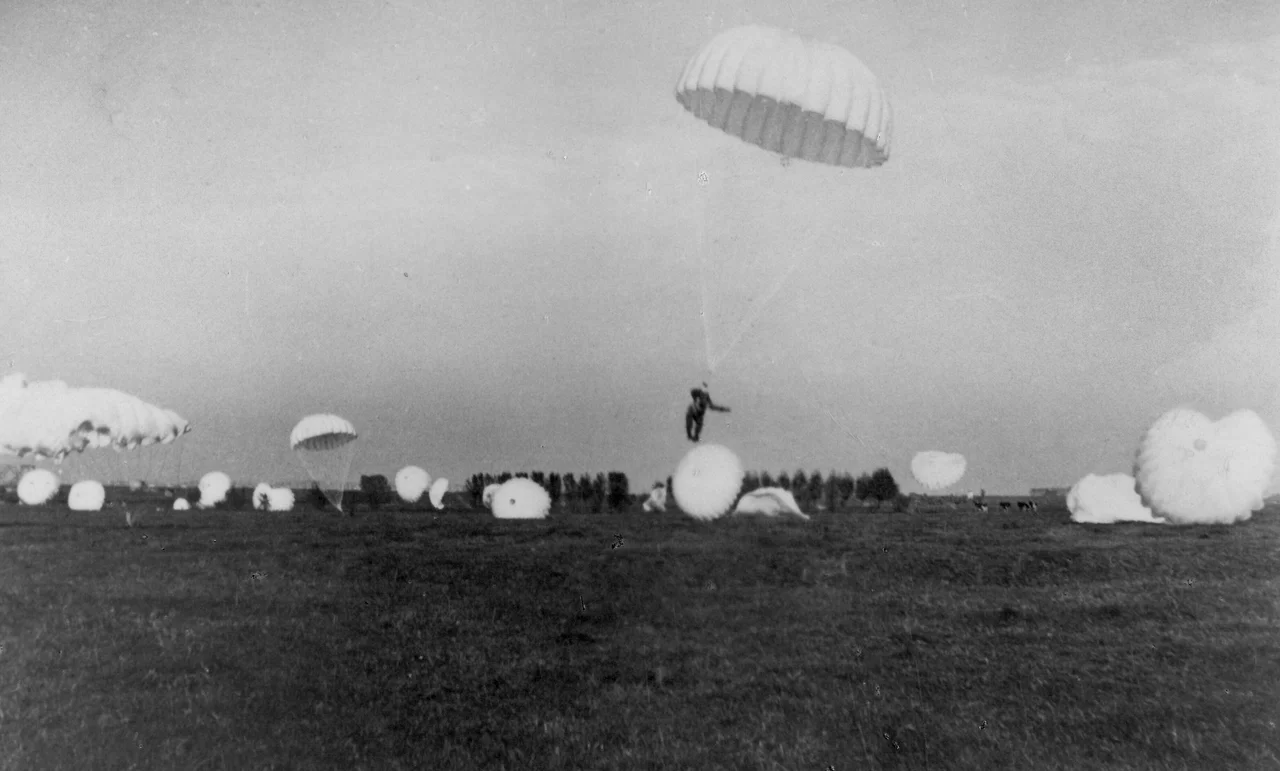
The Junkers transports came in low over the dunes at first light on 10 May 1940. Their pilots had been told to land paratroopers on three Dutch airfields ringing The Hague, then take the city by surprise and capture the royal family. One of those fields was Ockenburg - a single short strip of grass and sand, six hundred meters by two hundred, surrounded by a ditch, ringed by villa estates and pine. Six months earlier it had been an auxiliary base of the Dutch Air Force, opened with quiet ceremony on 13 November 1939. By the morning of 13 May it was a smoking wreck. The whole battle for Ockenburg lasted three days.
An Airshow Dream
The story of Ockenburg starts the way a lot of European aviation history starts - with optimism. Already in May 1915 a private aircraft was moved here, apparently to teach pilots. By April 1919 The Hague's city council was discussing buying a parcel of dune-edge land in Westduinen for a proper airport. That September, plans went on display at a national airshow in Amsterdam. They were grand: runways, a restaurant, an apron for private planes, multiple daily flights to Amsterdam and Rotterdam, and a flagship terminal building modeled on the Scheepvaarthuis - the great Amsterdam shipping headquarters whose Expressionist brickwork the planners thought aviation deserved an equivalent of. The full vision never materialized. What did get built was modest: a sports park first, whose porters' lodge was eventually absorbed into the airfield buildings.
Auxiliary Base
The serious construction came late, in 1938, when the Netherlands was reading the news from across the German border and deciding it needed more places to disperse its small air force. Ockenburg became one of several auxiliary fields built that year. The 1939 opening was almost unbearably topical: World War II had begun in September with the invasion of Poland, and the Dutch were betting once more on the neutrality that had carried them through the First World War. The Hague's new auxiliary field had a single grass strip, a perimeter ditch, and not much else. From the air it was barely distinguishable from the dunes and pasture around it. That, of course, was the point - except when an enemy was looking for it specifically.
Three Days in May
The Germans were looking specifically. The plan, hatched in Berlin, called for paratroopers and air-landed infantry to seize three airfields - Ockenburg, Ypenburg, and Valkenburg - then converge on The Hague and capture the Dutch government before it could organize. On 10 May 1940 the Ju 52s came in. At Ockenburg the landings were bloody almost immediately. Dutch defenders, including grenadiers and dismounted hussars, fought back through the dunes and the pinewoods. German aircraft began crash-landing in fields, on roads, anywhere a wheel could find purchase. By the end of 11 May the field had been retaken by Dutch forces, in some places literally yard by yard. The bigger Dutch defeat came elsewhere: the Luftwaffe destroyed Rotterdam from the air on 14 May, the Dutch high command surrendered the next day, and the Netherlands was occupied. But the airborne coup against The Hague had failed. Ockenburg held until it didn't matter. The airfield itself was so beaten up that German forces never put it back into serious service. It was closed in 1946.
Park, Estate, Memory
After the war the runways were broken up and the land returned to the city. The name Ockenburg, much older than the airfield, had originally belonged to a seventeenth-century country estate built by the poet Jacob Westerbaen, friend of Constantijn Huygens, who farmed the dunes and wrote pastoral verse here long before anyone thought of aviation. The estate park survived, and today Landgoed Ockenburgh is one of the larger green spaces in The Hague - oak avenues, a small castle-like manor house, paths through the dunes down toward the sea at Kijkduin. Where the grass runway ran, joggers now run, and a sports complex occupies part of the old airfield. Bronze plaques along the paths name the Dutch and German soldiers who died on 10 May 1940. The dunes hold a kind of double memory: the genteel country of Westerbaen's pastoral, and the smoke-streaked sky of 1940. The place is still called Ockenburg. Most people enjoying a Sunday walk here never know it was a battlefield.
From the Air
Coordinates 52.06°N, 4.217°E, on the southwest fringe of The Hague near Kijkduin and the North Sea coast. The former airfield site is now parkland and a sports complex - look for the open meadow oriented roughly east-west between dunes and suburb. Rotterdam The Hague (EHRD) lies 18 km southeast and controls the airspace; nearby Valkenburg (now closed) was another 1940 airborne target a short hop north. Expect coastal winds off the North Sea and heavy GA traffic into EHRD. The Scheveningen lighthouse is a good visual landmark 7 km north.
Nearby Stories
- Zuid-Kennemerland National Park 3.9 km away
- Alphen aan den Rijn 5.7 km away
- Toren van Goedereede 6.2 km away
- Dordrecht 8.5 km away
- Luchterduinen Offshore Wind Farm 9.2 km away
- SS Elbe 21 km away
- Southern Bight 46 km away
- Battle of Cadzand 55 km away