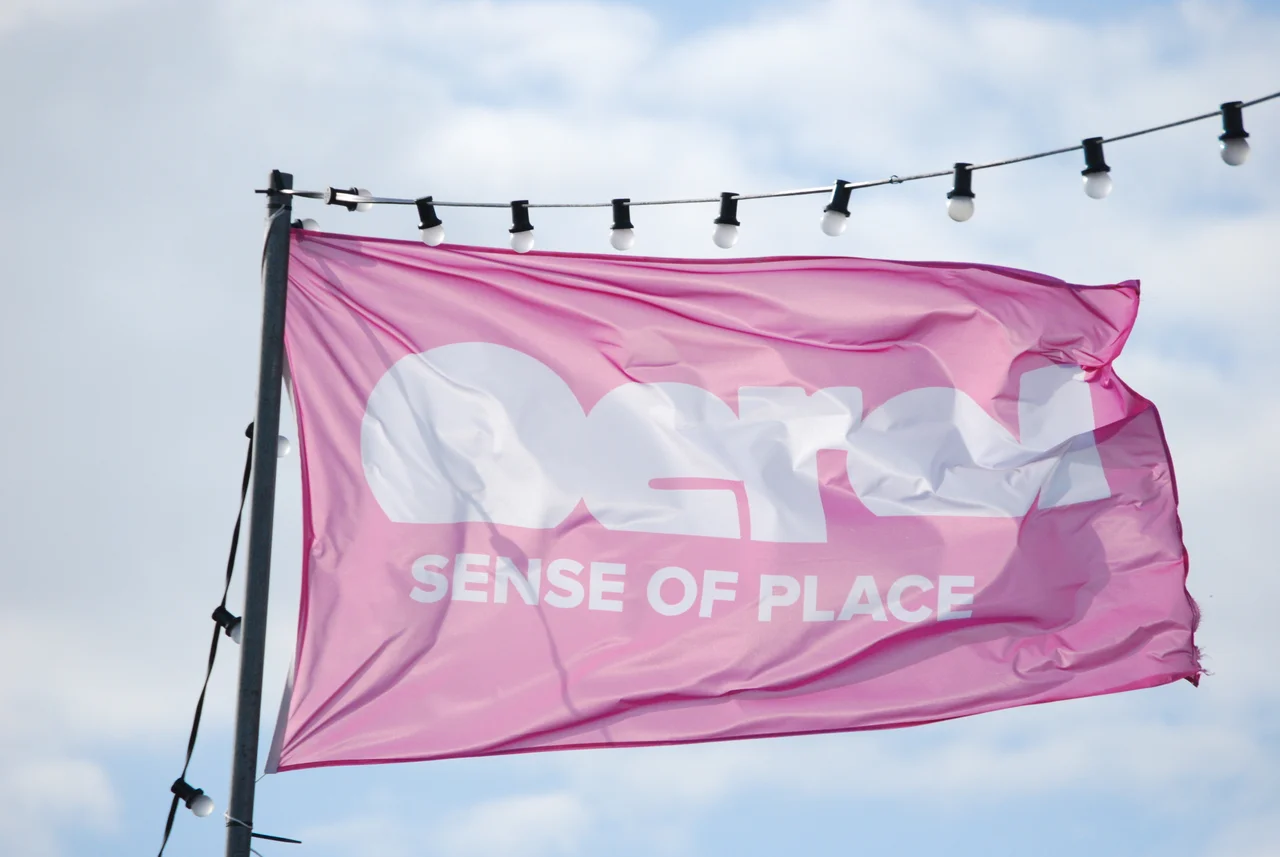

Oerol Festival
The word oerol is old Frisian for everywhere, and it once described a practice. For centuries on Terschelling, after the autumn harvest, farmers turned their cattle loose to wander the entire island until spring. The cows ate where they liked. They slept where they liked. They sometimes slept on the road, which is why oerol ended when paved roads arrived and bicycles started colliding with sleeping cows in the dark, and which is why it was finally killed off during the German occupation in World War II. In 1981 a café owner named Joop Mulder borrowed the word for a different kind of letting-loose: a theater festival that uses the entire island as its stage.
A Café Owner with an Idea
Mulder ran a café called De Stoep in Midsland, the small village near the middle of Terschelling. In the summer of 1981 he started planning a festival; on 18 June 1982 the first Oerol opened. The premise was simple and a little stubborn: beaches were stages, woods were stages, dunes were stages, farm sheds and boathouses and even an old army bunker were stages. Audiences would walk or bike between performances. Two main venues — the Groene Strand on the south coast and Westerkeyn near the western end — anchored the program, but most of the work happened scattered across thirty kilometers of island. Site-specific theater, before that phrase had become an academic discipline, was just what Joop Mulder wanted Terschelling to host.
Forty Years of Almost Closing
Oerol has come close to ending more than once. In 1993, after subsidy negotiations with the Ministry of WVC and the province of Friesland fell apart, Mulder used the opening of that year's festival to announce that this would be the last one. Visitors left the island convinced they had seen the final Oerol. A few weeks later a rescue package appeared. In 2004, on the closing day of the twenty-third edition, Mulder did the same again: a record fifty-five thousand visitors had come, but a €180,000 subsidy was not enough to plan for the next year. "We need at least €400,000," he said, "or it won't happen." In 2005 the support came through. Since 2017 Oerol has held a place in the Dutch Basic Infrastructure with a modest structural subsidy, and during the COVID-19 pandemic emergency arts funding kept artists and staff paid. The festival has now run for over forty years.
Where the Stages Are
Walk Terschelling during Oerol and the island reads as a single program. A drone-music ensemble performs in a hollow in the dunes; an aerial dancer works inside the cavernous brick shell of an old farm; a sound installation runs from sunset to sunrise along a beach. Audiences carry passport-style tickets that get them onto the island for a day or the full ten; individual ticketed performances happen alongside street theater, art installations, and pop-up concerts that are free. Around fifty-five thousand visitors come each year; the 2007 festival sold roughly ninety-five thousand individual tickets. For a permanent island population under five thousand, June is unrecognizable. The ferries run heavy. Every bicycle is rented. Every bed is taken.
Joop Mulder, in the Wadden
Joop Mulder died on 10 January 2021, at the age of sixty-seven. He had spent forty years arguing, fundraising, defending, and reinventing his festival; he had also become the central figure in a longer Frisian movement around landscape art and the Wadden Sea. As a tribute, artist Marc van Vliet's installation De Streken is being placed in the Wadden during summers for several years to come, funded by private donations. On the mainland side of the Wadden, the Sense of Place foundation installed a bench called whatdataangaat — a phrase Mulder used so often it became his epitaph. Loosely: as far as that is concerned. A shrug, an opening, an invitation to keep going. The bench faces the water. Visitors sit on it and look toward the island where Oerol still happens, every June, on every kind of ground.
Everywhere, Still
What survives in the festival's name is the older sense of the word — that everything is available, that the boundaries between stage and not-stage are negotiable. A boathouse can be a theater for an evening. A dune at twilight can be the place where a sound piece resolves. A bunker can hold an audience of forty in absolute darkness. Mulder's bet was that an island could carry that idea for ten days a year without losing its quietness for the rest. Four decades in, the bet is still being honored. The cattle no longer roam, but the audiences do.
From the Air
Coordinates 53.38°N, 5.25°E — the festival ranges across the entire island of Terschelling, with primary stages at Groene Strand on the south coast and Westerkeyn near the western end. Recommended viewing altitude 2,500–5,000 ft AGL during the festival window (mid-June, 10 days) to see the scatter of stage sites along beach, dune, and woodland. Visual landmarks: the Brandaris lighthouse at the western tip; Midsland near the center where De Stoep café once stood; long beaches along the north coast facing the North Sea. Nearest airports: Texel (EHTX) ~45 km southwest, Leeuwarden Air Base (EHLW) ~50 km southeast. Ferry access via Harlingen. Weather: June on Terschelling can deliver anything — blue sky and twenty-five degrees one day, North Sea fog and ten degrees the next; dress for both.
Nearby Stories
- Sneek 6.4 km away
- Het Bildt 6.5 km away
- Afsluitdijk 11 km away
- French submarine Amazone (Q161) 20 km away
- Gemini Wind Farm 52 km away
- Antiope 56 km away
- SMS Blucher 90 km away
- West Sole Gas Field 226 km away