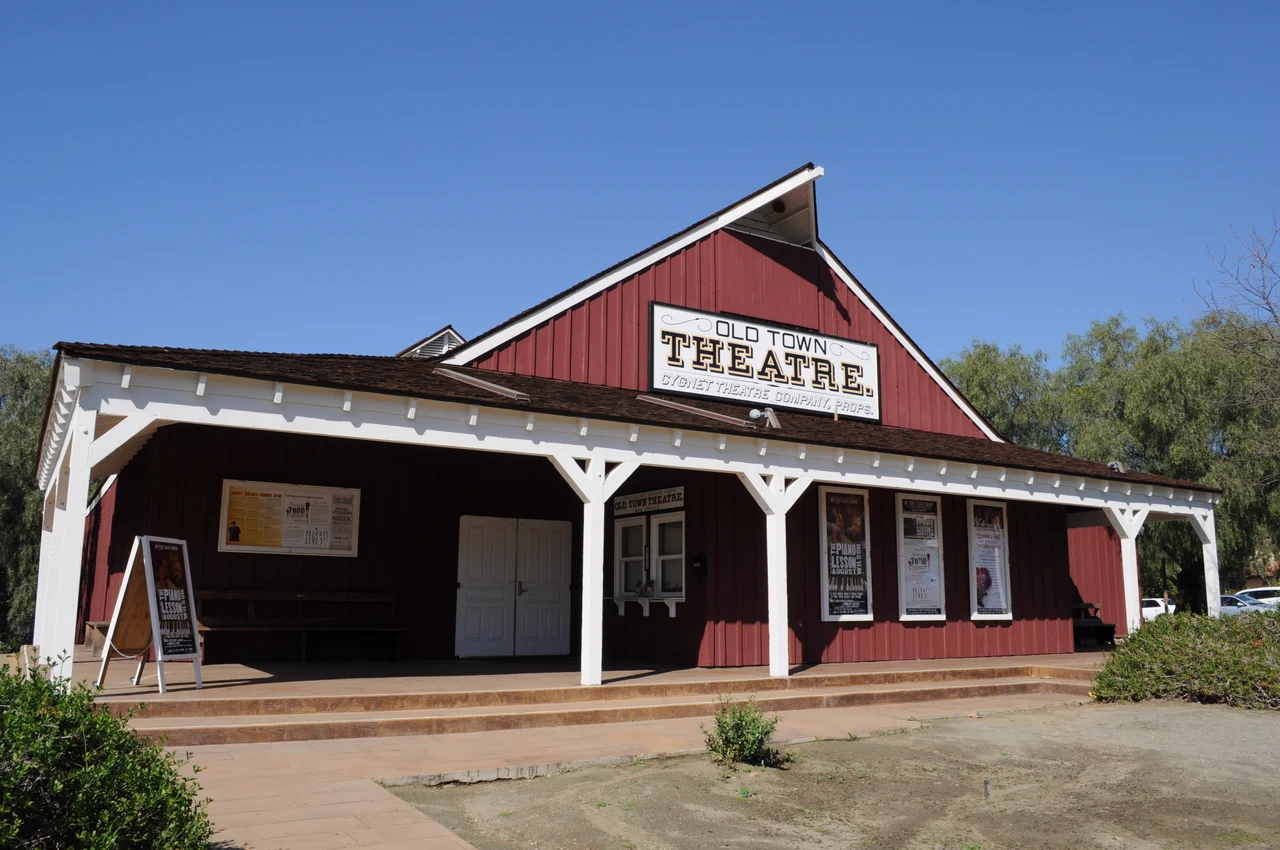

What San Diego Looked Like Before It Became San Diego
Richard Henry Dana Jr. was nineteen years old when he first saw Old Town San Diego from the deck of a hide-trading vessel in 1835. He described what he saw in Two Years Before the Mast, published in 1840 — a cluster of adobe buildings on a slope above the bay, inhabited by a few hundred people living at the far edge of Mexican California. The account he wrote is one of the few contemporaneous descriptions of the place that is now preserved as Old Town San Diego State Historic Park, California's most visited state park.
The Oldest Neighborhood
Old Town San Diego sits at the base of Presidio Hill, the site of the Spanish military installation established in 1769. As the presidio's population grew and civilian life developed, families moved down from the hill and established the settlement that would become Old Town — the first real civilian community in what is now California's second-largest city.
The period the historic park preserves — 1820 to 1870 — encompasses Spanish colonial rule, the Mexican period, American annexation, and the early years of American California. It is a compressed history: Spanish missions and Mexican ranchos and American manifest destiny, all in a few decades on a small piece of ground above the bay. Five of the adobe buildings that survive from that period are originals, not reconstructions. They have been standing through all of it.
Casa de Estudillo
The most substantial original structure in Old Town is the Casa de Estudillo, the home of the Estudillo family, built beginning in 1827. The family patriarch, José María de Estudillo, was a captain in the presidio garrison; the casa that bears his name was the grandest private residence in the region, built around a central courtyard in the Spanish colonial manner, with thick adobe walls that kept the interior cool through the California summers.
The casa deteriorated after the Estudillo family left, falling into ruin by the end of the nineteenth century. In 1910, businessman and preservationist John Spreckels funded a restoration; the building was reconstructed using historical documentation and period techniques. What visitors see today reflects both the original structure and the careful work of early twentieth-century restoration — an approach to historic preservation that was unusually sophisticated for its era.
Most Visited in California
Old Town San Diego State Historic Park was the most visited California state park in 2005 and 2006, a distinction that reflects both its central location in a major metropolitan area and its appeal to the enormous tourism economy that San Diego sustains. The park receives millions of visitors annually, drawn by the historic buildings, the Mexican restaurants and shops that line the plaza, and the pageantry of events staged throughout the year.
The commercial elements of Old Town — the restaurants, the gift shops, the mariachi music — sit in some tension with the historical interpretation the state park provides, but they also make the place accessible and alive in ways that purely curatorial historic districts sometimes are not. People come for the food and stay for the history, or come for the history and stay for the food. The mix keeps the place vibrant.
The Layers Beneath the Surface
The archaeological record beneath Old Town is substantial and still being studied. Excavations over the decades have turned up evidence of Kumeyaay occupation long predating the Spanish arrival, as well as artifacts from the Spanish, Mexican, and early American periods. The ground holds a more complete record of what happened here than the surviving buildings alone can convey.
For visitors who look past the surface — past the restaurants and the adobe facades and the costumed interpreters — Old Town offers an opportunity to encounter the actual complexity of California's founding. The Spanish who built the presidio on the hill above, the Mexican families who lived in the casas below, the Kumeyaay whose territory all of it occupied, the Americans who arrived and eventually renamed everything: they were all here, in this small place above the bay, and the park is where their stories are held.
From the Air
Old Town San Diego State Historic Park is visible from the air at the base of Presidio Hill, near the junction of Interstates 5 and 8, identifiable by its preserved adobe buildings and central plaza.
Nearby Stories
- Laguna Fire 0.9 km away
- San Diego Botanic Garden 3.3 km away
- Santa Ysabel Asistencia 10 km away
- Valle de Las Palmas 19 km away
- Tijuana: The Border City That Became Its Own Third Country 20 km away
- Laguna Art Museum 55 km away
- San Clemente Island 69 km away
- USS Higbee 206 km away