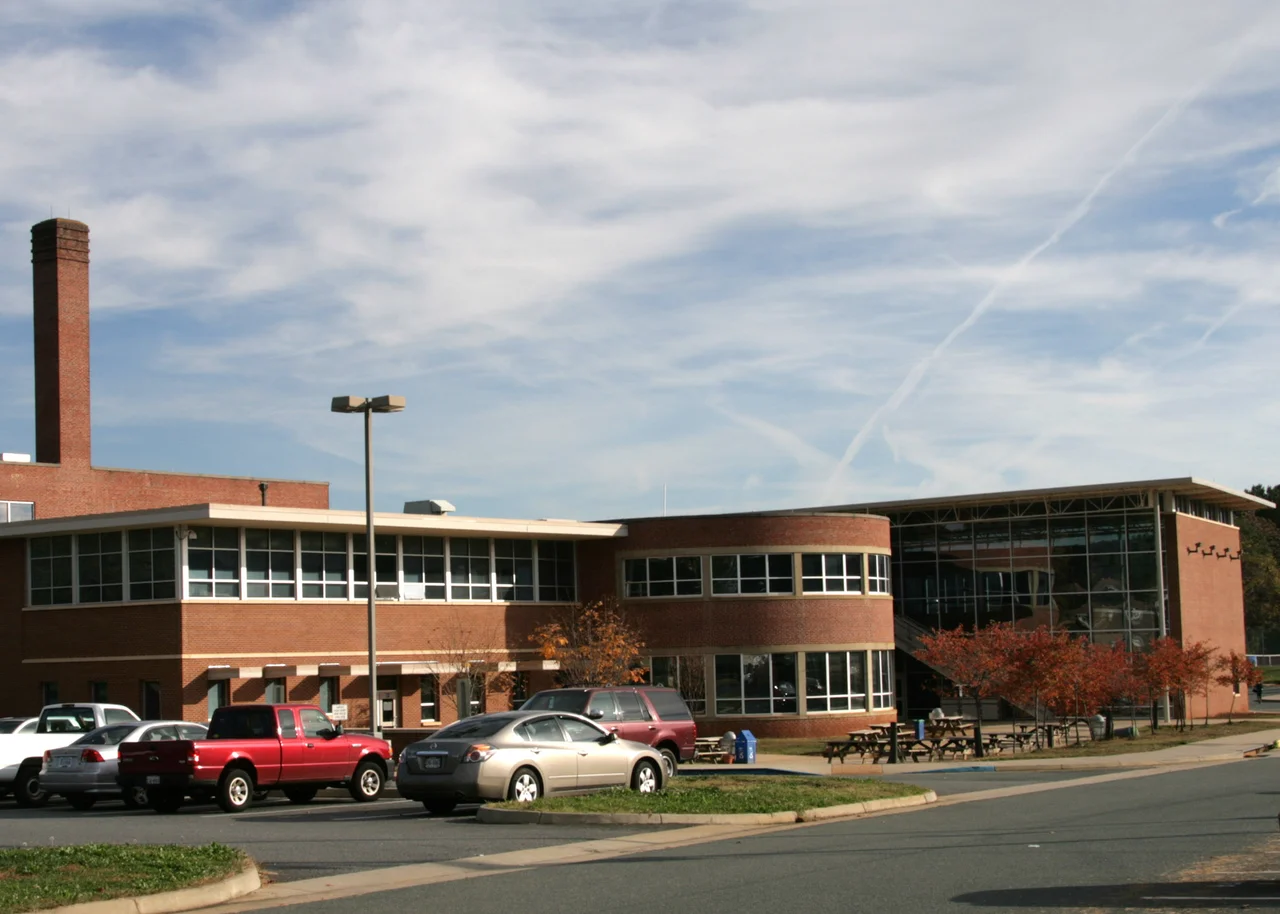

Orange County, Virginia
For four years in the 1730s Orange County, Virginia, was the largest county that has probably ever existed in the English-speaking world. When the House of Burgesses created it in August 1734, its eastern border ran along the Blue Ridge but its western border was set as the utmost limits of Virginia - which at the time meant the Mississippi River and the Great Lakes. The Colony of Virginia claimed it. The English had barely seen it. Four years later most of it was sliced off to form Augusta County. The Orange County that remains - 343 square miles in the central Virginia Piedmont, county seat Orange - holds James Madison's home, two consequential Civil War battlefields, and one of the country's older wine regions.
From the Manahoac to Germanna
Before the boundary lines, the rolling hills between the Rapidan River and the Blue Ridge belonged to the Ontponea, a subgroup of the Siouan-speaking Manahoac. The first European settlement in what became Orange County was Germanna, founded in 1714 when Governor Alexander Spotswood brought twelve immigrant families from Westphalia - forty-two people in total - to mine iron on the south bank of the Rapidan. The settlement was named for the people who built it and for the governor who installed them. The county itself came twenty years later, in 1734. Its western boundary lasted only until 1738. The final adjustment came in 1838 when Greene County was carved off to the west. The Town of Orange officially became a town in 1872; Gordonsville followed in 1870. The Orange and Alexandria Railroad and the Virginia Central, both built through the county in the 1840s and 1850s, connected its farms and timber to markets in Richmond, Washington, and Norfolk and shaped its economic life for decades.
Madison's Mountain
James Madison spent most of his life on a 2,700-acre plantation called Montpelier, eight miles southwest of the Town of Orange. His father built the original house around 1764. Madison added wings in 1800 and 1812, while serving in Jefferson's cabinet and then the presidency. After his death in 1836, his wife Dolley sold Montpelier to pay off debts run up by her son. A series of owners followed, including the duPont family who held the property for most of the twentieth century. The National Trust for Historic Preservation took ownership in 1984. A $25 million restoration from 2003 to 2008 stripped away the duPont-era additions and returned the house to its 1820 footprint - the way it looked when James and Dolley lived there together. Both Madisons are buried in the family cemetery on the property. The estate also holds the cellar quarters and outbuildings where the enslaved people who worked Montpelier lived, now interpreted through The Mere Distinction of Colour exhibit that opened in 2017.
The Wilderness
On May 5-7, 1864, Ulysses S. Grant and Robert E. Lee faced each other for the first time in the eastern thickets of Orange County. The Battle of the Wilderness took place in second-growth scrub forest so dense that musket fire ignited brush fires; some of the wounded were burned alive where they fell. Over 160,000 soldiers were engaged. When the fighting ended on May 7, nearly 29,000 were dead, wounded, captured, or missing across both armies. Tactically the battle was inconclusive. Strategically it changed the war. Every previous Union commander had withdrawn after taking that kind of loss. Grant did not. He turned south. The Overland Campaign that followed - Spotsylvania, the North Anna, Cold Harbor, the siege of Petersburg - led to the fall of Richmond and Lee's surrender at Appomattox. The Wilderness Battlefield is now part of Fredericksburg and Spotsylvania National Military Park; 2,773 acres of the original ground are preserved. Ellwood Manor, the only surviving house from the time of the battle, served as Grant's nearby headquarters. The amputated arm of Stonewall Jackson - lost the year before at Chancellorsville - is buried in the Ellwood family cemetery.
Hospital at the Crossroads
In Gordonsville, where the Virginia Central Railroad met the road south from Washington, an 1860 hotel called the Exchange was converted into a Confederate receiving hospital within months of the war's first battles. Receiving hospitals were triage centers; the Exchange treated more than 70,000 wounded soldiers between 1862 and 1865 before sending them on to longer-term care in Richmond or Lynchburg. During Reconstruction the same building became the Freedmen's Bureau Hospital, serving newly emancipated Black residents. It eventually returned to its original purpose as a hotel before closing in the twentieth century. Today the Exchange is the only Civil War receiving hospital in Virginia still standing, restored in 1971 and operating as a museum. The building speaks for the way the rail junctions of central Virginia were drawn into the war whether they wanted to be or not - and for the brief, often-forgotten period when the same building served the people it had earlier failed.
Vines on the Piedmont
Most of Orange County lies inside the Monticello American Viticultural Area, the wine region centered on Charlottesville. The county is now Virginia's leading producer of nursery, greenhouse, floriculture, and sod, and a serious contributor to the state's wine industry. Four wineries operate in the county - Barboursville Vineyards, Horton Vineyards, Chateau MerrillAnne, and Reynard Florence. Barboursville sits on land originally owned by Governor James Barbour, whose 1814 home was designed by Thomas Jefferson and stood until it burned on Christmas Day 1884. The ruined columns still stand on the property, and the working winery was founded by the Zonin family of Italy in 1976. Cowherd Mountain, the county's high point at 1,196 feet, rises about 2.5 miles northwest of Gordonsville. The Rapidan River defines the county's northern boundary. From above the county reads as rolling green pasture and forest, threaded by the rivers and the railroad, with the small white houses of Orange and Gordonsville at its center and the Wilderness scrub still dense to the east.
From the Air
Orange County, Virginia, sits at roughly 38.25 N, 78.05 W in the central Virginia Piedmont. Recommended viewing altitude is 3,000 to 5,000 feet AGL to see the rolling Piedmont landscape, the Rapidan River along the northern boundary, and the Blue Ridge rising to the west. The county's two small airports are Orange County (KOMH) about 3 nm north of Orange and Gordonsville (KGVE) just south of Gordonsville. Charlottesville-Albemarle (KCHO) is about 15 nm southwest. Major landmarks include Montpelier (about 8 nm southwest of Orange), the Wilderness Battlefield in the county's east, and Lake of the Woods residential community. Mountain wave from the Blue Ridge can produce afternoon turbulence in summer. Best light for vineyard country is early morning.
Nearby Stories
- Battle of Brandy Station 1.5 km away
- Skyline Drive 7.9 km away
- John Wilkes Booth 14 km away
- Battle of Rio Hill 18 km away
- Murder of Hannah Graham 20 km away
- Lorton Reformatory 24 km away
- Battle of North Anna 34 km away
- Battle of Garnett's & Golding's Farms 46 km away