
Oriental, North Carolina
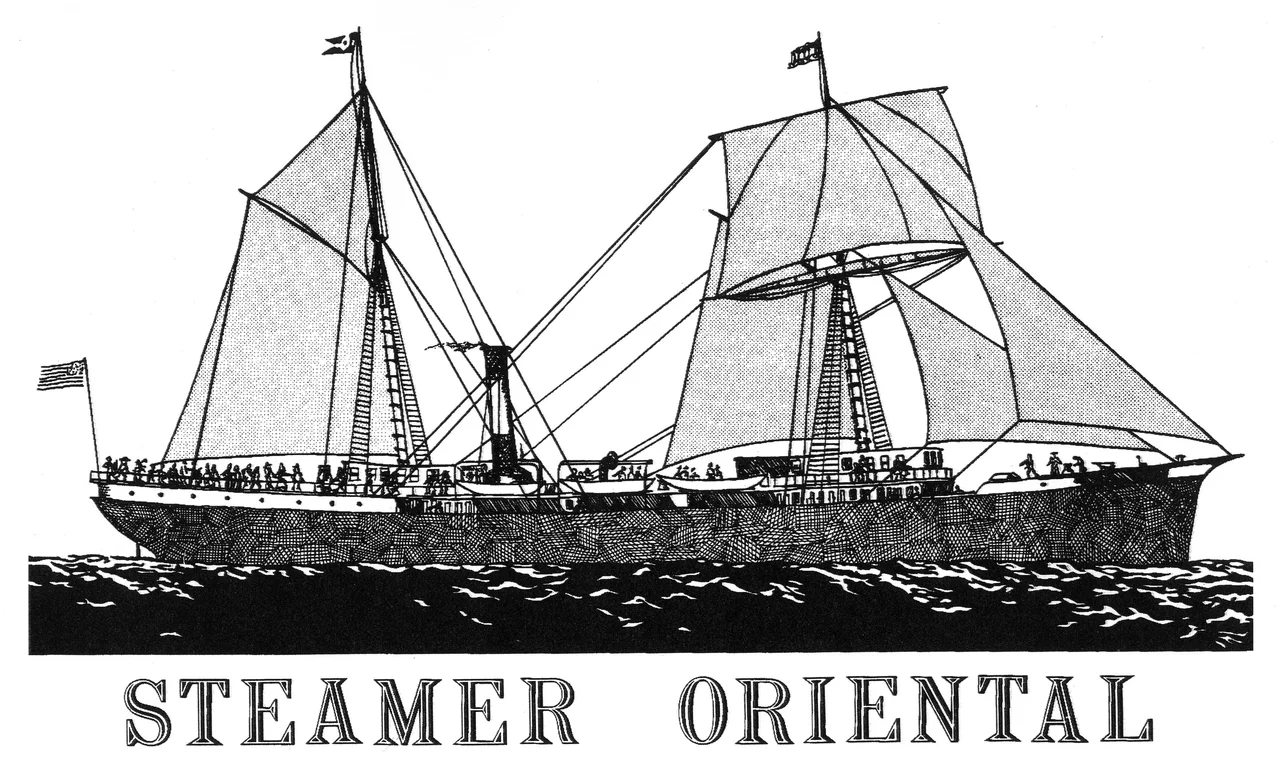
The Federal transport steamship Oriental ran aground off Bodie Island in May 1862, thirty-three miles north of Cape Hatteras, after a year of carrying Union supplies and troops in the American Civil War. Her passengers and crew were saved. Her nameplate floated up onto the Outer Banks beaches, where it caught the eye of Rebecca Midyette - or, in another telling of the story, where she saw it later in a home on Manteo. Her husband Lou had just been appointed postmaster of a Pamlico County settlement called Smith's Creek, and Rebecca thought Smith's Creek needed a better name. "Oriental" stuck. The village adopted it, incorporated under it in 1899, and grew up around a small sheltered harbor that today flies more sailboat masts per resident than just about any other town in North Carolina.
The Harbor That Built the Town
Oriental's harbor is small - you can walk its perimeter in fifteen minutes - but it sits where the Neuse River broadens toward Pamlico Sound, with deep water close to shore and good holding ground. Through the early 1900s, lumber and fishing and farming supported the village. Trains served the docks. Fishing trawlers tied up alongside the sawmill. The trains stopped running in the 1950s. The last sawmill closed in the early 1960s. What replaced them was the wind. Sailors discovered Oriental's protected harbor and easy access to the broad reach of the Neuse, and the village reinvented itself as "The Sailing Capital of North Carolina" - a title visitnc.com still officially confers. The fishing trawlers haven't entirely gone. Shrimp boats and crabbers still work the harbor depending on the season, and a porthole from the steamship Oriental sits on display in the Oriental History Museum, the only piece of the original ship that ever came home.
Pirate Country
Long before the steamship gave Oriental its name, this stretch of the North Carolina coast was pirate country. Edward Teach - Blackbeard - made his home up the sound in Bath, north of Oriental, and worked the inlets and shallows of Pamlico Sound where deep-draft Royal Navy ships couldn't easily follow. The native population fished and farmed the creeks long before any European arrived. Land records date grants from English kings to colonial farmers, though as one local history dryly observes, "the King didn't actually own the land." Several current residents can trace their families back to those colonial-era grants. The Midyettes (sometimes Midgettes) and other old harbor families arrived later, in the late nineteenth century, drawn by the same protected water that draws sailors today.
A Dragon at Midnight
Oriental punches above its weight as a festival town. The Croaker Festival, an arts and vendor event benefiting county nonprofits, fills the streets and harbor with people the first weekend of July and ends with fireworks over the water. The Oriental Cup Regatta sails the third Saturday of September. Boat races run most Saturdays from May through September - and very informal ones happen most Wednesdays too, because that's the kind of place this is. The Oriental Rotary Club hosts a catch-and-release tarpon fishing tournament the last weekend in July. In early December, the Spirit of Christmas brings open houses and church concerts and, when the weather cooperates, a boat parade of yachts strung with lights gliding around the harbor. And every New Year's Eve, the Oriental dragon makes a run through town - twice, at 8 p.m. and again at midnight, carried by locals in a tradition that no one quite seems able to explain to outsiders.
The Town That Lost Its Grocery Store
In 2016, Walmart closed its Express location in Oriental, leaving the town of roughly 900 people without a grocery store. The closing followed a familiar Southern small-town pattern - the chain had opened, undercut and pushed out the local grocers, then pulled out itself when the numbers stopped working. For six months Oriental made do, driving forty minutes to New Bern for anything that wouldn't keep. Then a Piggly Wiggly opened, and the town got its groceries back. The episode is the kind of thing that shows up in passing conversations at the marina or at TownDock.net, the village's beloved local news site with its live harbor camera trained on the masts in the harbor - a town small enough that the comings and goings of grocery stores qualify as historical events. Sailors still arrive year-round, drawn by the same harbor that gave the village its name and its identity. Most stay longer than they planned.
From the Air
Located at 35.0311°N, 76.6878°W where the Neuse River broadens toward Pamlico Sound, in Pamlico County. There is no airport in Oriental itself - the nearest general aviation field is Coastal Carolina Regional (KEWN) at New Bern, about 17 nm west-northwest. MCAS Cherry Point (KNKT) lies 12 nm southwest across the river. Best viewed at 3,500-5,500 feet AGL on transits across Pamlico Sound, where Oriental's harbor and the masts of dozens of sailboats are visible at the narrow inlet from the Neuse, with the wide sound stretching east toward the Outer Banks.
Nearby Stories
- Newport, North Carolina 4.4 km away
- Jones County, North Carolina 6.9 km away
- 3rd Battalion, 3rd Marines 7.8 km away
- Bath, North Carolina 15 km away
- Skylight Inn BBQ 16 km away
- Portsmouth, North Carolina 21 km away
- Lake Mattamuskeet 21 km away
- Mercury-Redstone 4 810 km away