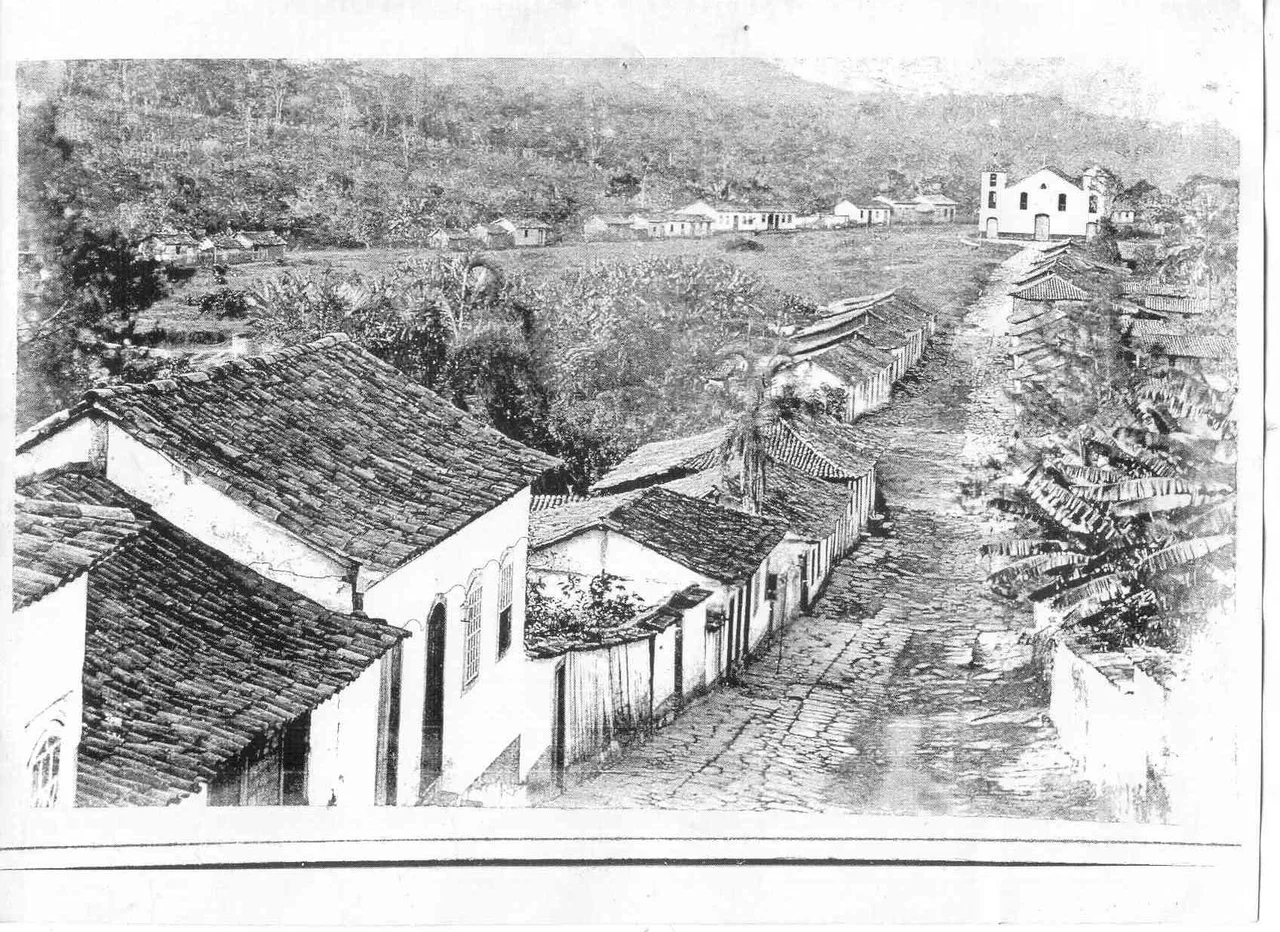

Our Lady of the Rosary Parish (Pirenópolis)
The building was put up on Sundays - on the one day of rest that enslaved laborers had in the colonial goldfields of central Brazil. That is how the Mother Church of Our Lady of the Rosary rose in Pirenópolis starting in 1728, built with the mixed technique of earth structure, stone masonry, and adobe, its altars carved slowly over the following decades in baroque, rococo, and neoclassical styles. The laborers who built it did not see their names recorded. The brotherhood who organized the work - the Brotherhood of the Blessed Sacrament - got its name on the stones. The parish was formally created in August 1736 and has outlasted empires, dictatorships, a catastrophic fire, and three centuries of shifting ecclesiastical boundaries.
A Town That Wanted To Be A Capital
Pirenópolis was not always called Pirenópolis. In the eighteenth century it was Meia Ponte - halfway bridge, named for a crossing on the Almas River. In the middle of a gold rush that brought Portuguese and their enslaved laborers deep into the Goiás interior, Meia Ponte briefly aimed higher than its geography suggested it should. It wanted to be the capital of Goiás. It wanted to be the seat of a diocese. The first baptism recorded in the Church of the Rosary took place in 1732, only four years after construction began - evidence, according to the Baptistery Book still in the parish archives, of how quickly the community organized itself. The dream of being a capital never materialized. Goiás Velho took that title, and later Goiânia took it from Goiás Velho. But the aspiration left behind an unusual concentration of colonial religious architecture for a town its size.
The Black Rosary
In 1811 a parallel brotherhood was authorized inside the Church of Our Lady of the Rosary of the Black People - the Brotherhood of Saint Benedict, which drew its membership from the enslaved and free Black population of Pirenópolis. These were the people whose labor had built the town's churches. They now organized their own devotional lives around Saint Benedict, whose feast they continued to celebrate on the Tuesday after Pentecost. The Brotherhood of Saint Benedict maintained one of the side altars of the Rosary of the Black People church. The Reign of Our Lady of the Rosary, celebrated each first Sunday of October, and the Feast of Saint Benedict together gave the Black Catholic community of colonial Pirenópolis a distinct liturgical rhythm. The Church of Our Lady of the Rosary of the Black People was later demolished. The images of Our Lady of the Rosary of the Black People, Saint Raphael, and Saint Benedict survived and are now scattered across the town's remaining three major churches.
1978
In September 1978 thieves walked into the Church of Our Lord of Bonfim and took what the Goiás state government later described as the largest theft of sacred art in state history - three and a half million cruzeiros worth. Gone: eighteenth-century baroque images, silverware, a French image of Saint Barbara, a French image of Saint Lucy, images of the Immaculate Conception and Saint Anne, a Divine Eternal Father attributed to the sculptor José Joaquim da Veiga Vale, four crucifixes, two wooden candlesticks. The theft was attributed to a man named Ivan Ferreira Santos, who went by the alias Sandra and had already been arrested in Rio de Janeiro for stealing sacred pieces across multiple Brazilian states. He was arrested, then released. The Pirenópolis objects were never recovered. They are still missing today - a loss that altered the town's physical devotional landscape forever.
The Mother Church Burns
On 5 September 2002 fire consumed the Mother Church of Pirenópolis. The roof collapsed. The interior burned to the ground. What had stood since 1728 - built on Sundays by enslaved hands, decorated across decades by baroque and rococo craftsmen, survived through empires and republics - was in a single night reduced to stone walls and ash. Emergency rescue work began that same year. An exhibition called Canteiro Aberto opened in 2004 to show the restoration in progress. On 30 March 2006 the reconstructed temple was inaugurated. It is not quite what it was - some of what burned cannot be replaced - but it is again in regular use and again the main temple of the parish. The restoration also prompted the town to commit more formally to protecting its remaining heritage, which is now regulated at municipal, state, and federal levels.
Holy Week And The Carpets
On Corpus Christi hundreds of volunteers spend the night between Wednesday dusk and Thursday dawn laying carpets of colored sawdust, flowers, and salt along the streets of the historic center. The carpets are walked through during the morning procession and then swept away by afternoon. The tradition has continued even through the years when the actual procession was cancelled - through the COVID-19 pandemic in 2020 and 2021, volunteers still made the carpets, the tradition outlasting the event it was meant to honor. During Holy Week the Choir and Orchestra Nossa Senhora do Rosário, a centenary ensemble, performs repertoire in Latin and Portuguese composed by musicians from Goiás. The Tantum Ergo Sacramentum hymn, composed in the early twentieth century by Eugênio Leal da Costa Campos, has been sung during Corpus Christi here for generations. The Feast of the Divine continues annually. The Cavalhadas, a competitive horseback drama retelling medieval battles between Christians and Moors, is held in September and in 2022 was recognized as one of the best cultural events in the world in international competition.
From the Air
Coordinates: 15.85 S, 48.96 W. Best viewing altitude: 2,000-3,500 feet AGL. Nearest airport: Brasília International (SBBR), approximately 50 nautical miles east. The historic center of Pirenópolis is compact with the Mother Church at the center - white stucco, blue accents, distinctive colonial towers. The Almas River and the surrounding Pireneus range provide clear visual landmarks.
Nearby Stories
- Alexânia 19 km away
- Anápolis 20 km away
- Ceres, Goiás 38 km away
- Anicuns 53 km away
- Luziânia 61 km away
- Contagem Biological Reserve 69 km away
- Itapuranga 98 km away