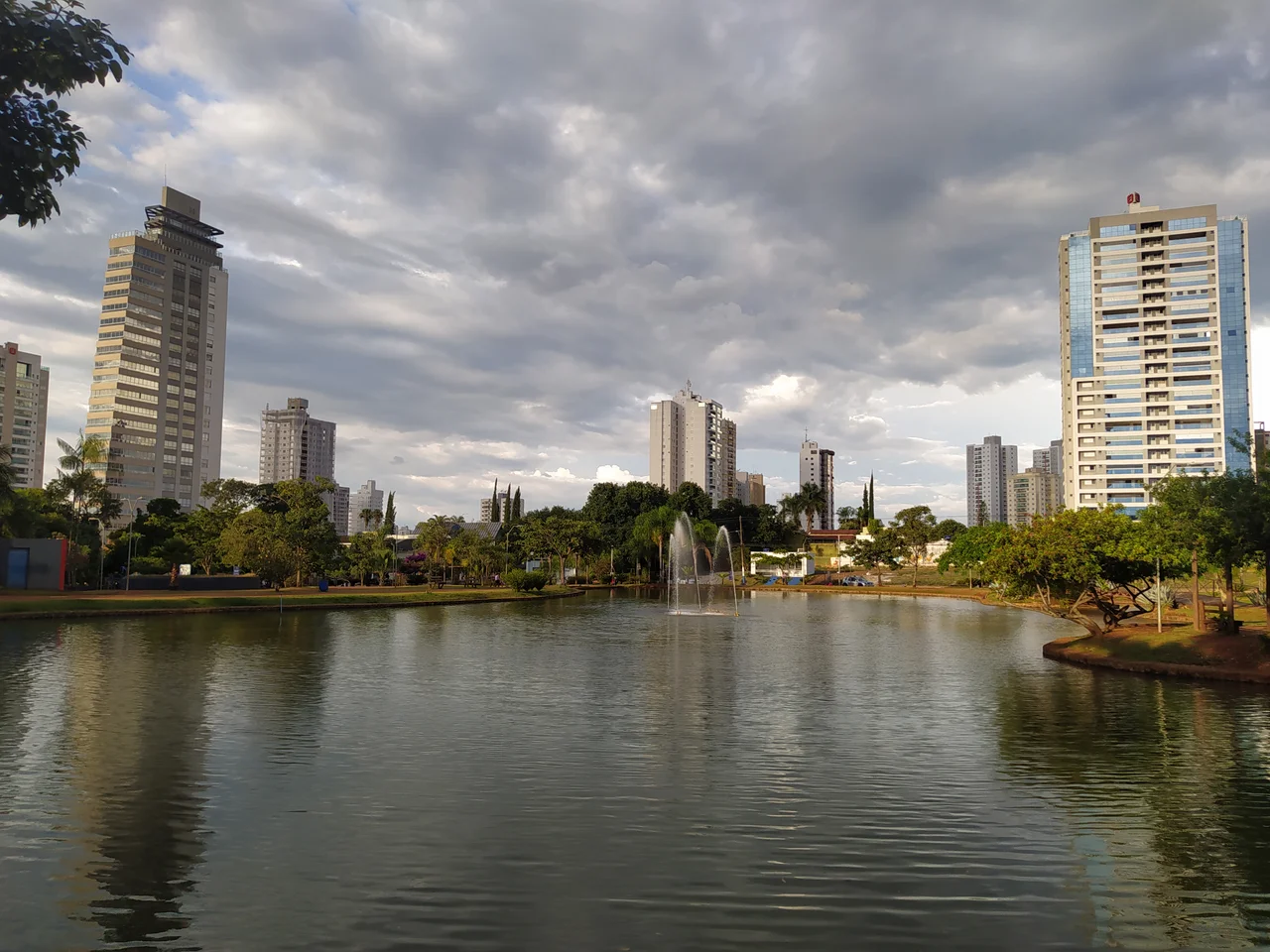

Anápolis
The story insists that a mule got tired and a woman took it as a sign. In 1859, Ana das Dores was traveling from Jaraguá to Bonfim when one of her pack animals - the one carrying a statue of Saint Anne - refused to go any further. She promised to build a chapel on that exact spot. The mule moved again. Her son erected the chapel eleven years later. The settlement around it would become Anápolis, a name meaning city of Ana in Greek, and today it runs plants that produce more generic medicine than any other plant in Brazil and an assembly line that turns out the Hyundai Tucson. Not bad for a place whose origin story is an exhausted mule.
From Tapirs to Streetlights
The first written records of the region come from the French naturalist Auguste de Saint-Hilaire, who passed through in 1819 and noted the abundance of tapirs. The local name for the place - Tapirs' Farm - reflects what settlers found when they came hunting the animal they were still allowed to hunt. Gold drovers had worked the region before them, but by then the easy gold had run out. The ones who stayed raised cattle. The chapel became a parish in 1873, the parish became a town in 1887 (de facto, a decade later, once the tax disputes with Pirenópolis subsided), and the town became a city in 1907. On January 9, 1924, Anápolis became the first place in Goiás to have electricity. The telegraph followed in 1926. The railroad arrived in 1935.
Between Two Capitals
Geography did most of the heavy lifting. Anápolis sits on the plateau between Brasília and Goiânia - 140 kilometers from the federal capital, 54 from the state capital - on the BR-060 highway that became a four-lane motorway and the BR-153 Belém-Brasília route that begins here. That location turned the town into an obvious logistics center. The municipality sits at 1,017 meters elevation in tropical savanna climate, with winters dry enough that the mean July rainfall is four millimeters. The population hit 398,869 in the 2022 census, making it the third-largest city in Goiás. The DAIA industrial district, built in 1970, became the engine. Today it contains Laboratório Teuto Brasil, the country's biggest generic drug plant, along with dozens of other pharmaceutical, chemical, and logistics operations.
Wings and Wheels
The Brazilian Air Force base at Anápolis - ALA 2 - houses one of the service's most important installations and a significant portion of the Amazon Surveillance System, SIVAM, which monitors airspace over the world's largest rainforest. The base protects the national capital 140 kilometers to the east. Meanwhile, across town, Hyundai's assembly plant produces the HB20 and Tucson for the Brazilian and South American markets. The federal government chose Anápolis to anchor a major national logistical center, tying together road, rail, and air. A Centro-Atlântica railroad branch of 685 kilometers runs through Goiás, and the city sits at the planned terminus of the north-south railway that will connect to the Port of Itaqui in Maranhão. The planned Expresso Pequi passenger rail between Brasília and Goiânia will stop here.
An Industrial GDP
Anápolis had a gross domestic product of 13.3 billion reais in 2015, second largest in the state behind Goiânia. The city hosts Hyundai and Mabel (cookies) and Vepeza and the generic medicine dynasty at Teuto Brasil. It produces 90,332 automobiles and 13,542 pickups' worth of traffic on its streets as of 2011. But the agricultural base that built the place has not disappeared. The municipality still counts 65,000 head of beef cattle, 138,000 poultry, and substantial harvests of bananas, citrus, corn, and soybeans. Eighty-three hundred hectares of bananas yield 8,300 tons annually. Education anchors the rest: the State University of Goiás campus, UniEVANGÉLICA (a Protestant university and one of the state's first), and six other colleges serve thousands of students. The city ranks 16th of 242 Goiás municipalities on the human development index.
The People Who Left
Footballer Luciano came from Anápolis. So did Derley. Henrique Meirelles - who served as president of the Central Bank of Brazil under Lula and Finance Minister under Temer - grew up here before becoming one of the most powerful economic policymakers of his generation. Racing driver Felipe Guimarães was born here. Paulo Bertran, economist and historian of central Brazil, came from the same plateau. For a city whose origin story revolves around a saint's statue and a stubborn mule, Anápolis has sent an unexpected share of its children into professions that demand precision: banking, economics, motorsport, professional football. The chapel Ana das Dores promised to build is long gone. The city that grew around its site has had better luck lasting.
From the Air
Coordinates 16.33°S, 48.95°W, elevation approximately 1,017 m on the central Brazilian Highlands plateau. Recommended viewing altitude 3,000-5,000 ft AGL to trace the BR-060 corridor between Brasília (140 km northeast) and Goiânia (54 km south). Anápolis Airport (SWNS) is being upgraded as a cargo facility. The Anápolis Air Force Base (ALA 2) operates nearby and is one of the Brazilian Air Force's most important installations. Nearest major international airport is Brasília (SBBR). Clear skies most reliable May through September during the cerrado dry season.
Nearby Stories
- Altamiro de Moura Pacheco State Park 11 km away
- Our Lady of the Rosary Parish (Pirenópolis) 18 km away
- Alexânia 20 km away
- Anicuns 47 km away
- Ceilândia 48 km away
- Orizona 61 km away
- São Luís de Montes Belos 86 km away