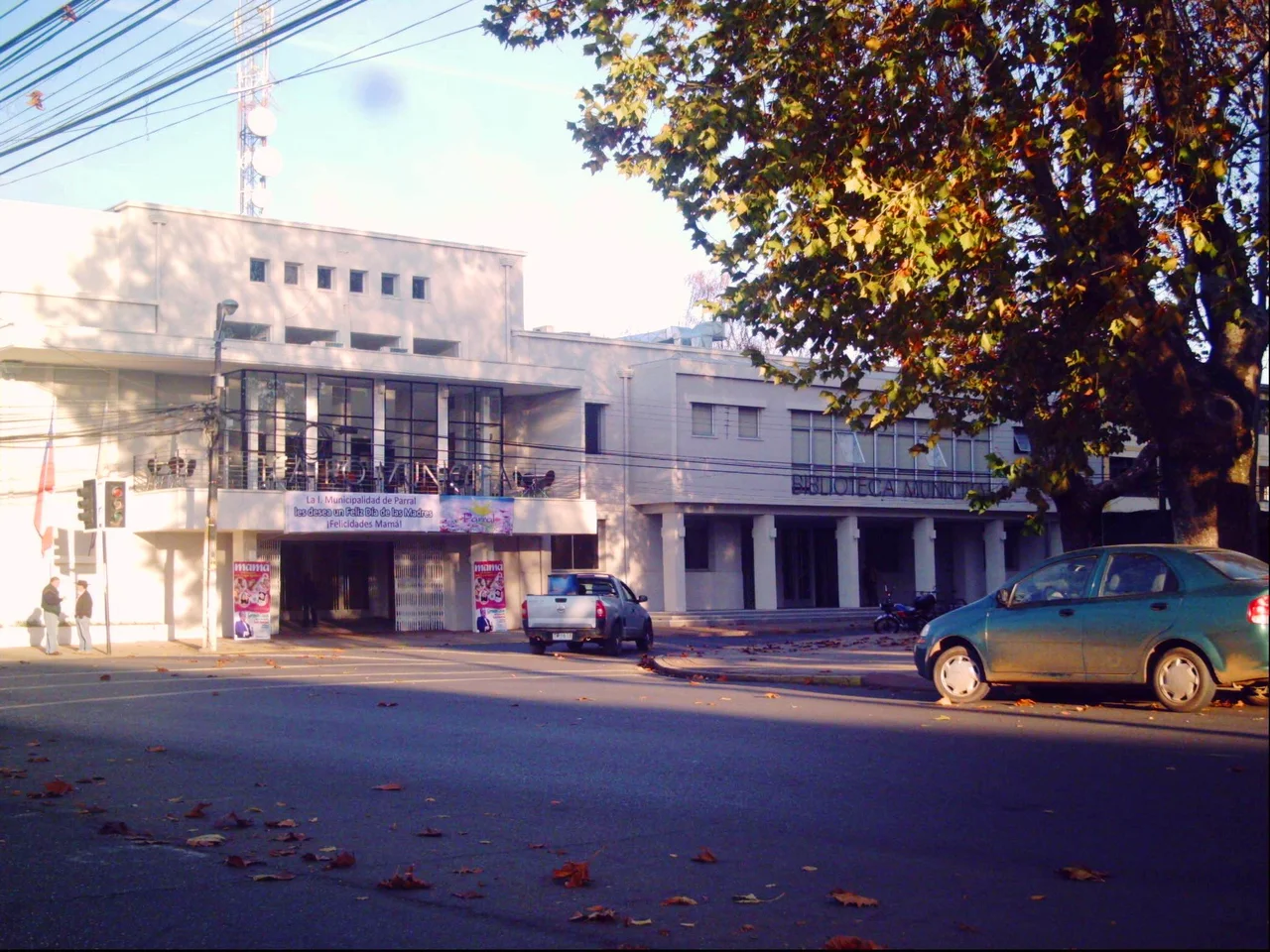

Parral, Chile
He was not Pablo Neruda yet. On July 12, 1904, in this small Maule town, a boy was born and named Ricardo Eliécer Neftalí Reyes Basoalto. His father worked on the railway. His mother, a schoolteacher, died two months after his birth, so the future Nobel laureate never knew her face. The pen name came later, borrowed in his teens from a Czech poet and made legally his own only in middle age. But the beginning was here, in Parral, in a house touched early by loss, in a town whose trains his father rode for a living. Chile would eventually claim Neruda as its national poet. Parral can claim something narrower and more intimate: it is where the life began.
The Poet's First Town
Pablo Neruda would go on to win the Nobel Prize in Literature in 1971, write some of the most translated poetry of the twentieth century, and serve his country as diplomat and senator. Yet his time in Parral was brief. His mother's death soon scattered the family, and the boy was raised mostly to the south, in Temuco, amid rain and forest. Parral remains his birthplace nonetheless, the first coordinate in a life that ranged across continents. The town some 350 kilometers south of Santiago holds that distinction quietly. There is no grand monument competing for attention, only the fact, plainly stated and quietly proud: the man the world knows as Neruda drew his first breath in Parral.
Reina Luisa's Vineyards
Parral was founded in 1795 by Ambrosio O'Higgins, the Irish-born Viceroy of Peru whose son Bernardo would later become the liberator of Chile. The settlement was christened Villa Reina Luisa del Parral, honoring María Luisa of Parma, wife of Spain's King Carlos IV. The name carried a hint of the land itself, for parral means grape arbor, a vine trained overhead on a trellis. The town sits at the southern edge of the Maule Region, where the Perquilauquén River draws the border, and over the centuries it welcomed immigrants from Italy and Germany who added their own threads to the valley's farming life. It is a place of wine country and railway lines, of newcomers settling into old agricultural rhythms.
Hot Springs and the Cordillera
East of Parral, the land climbs toward the Andes, and with the mountains come the thermal springs. The Termas de Catillo, 27 kilometers from town and 320 meters above the sea, draw visitors to their warm mineral waters and a sprawling hotel complex. Higher still, near the cordillera, La Balsa offers more hot springs in a wilder setting. Reservoirs punctuate the foothills: the Digua Dam, a quiet and largely undeveloped place for fishing, and the Bullileo Dam beside the Laguna de Amargo. For a town best known for one famous son, Parral keeps an outdoors worth lingering in, a hinterland of warm water and cold mountain rivers running down from the snow.
A Darker Neighbor
Not every chapter of Parral's surroundings is gentle. About 40 kilometers to the southeast lies Colonia Dignidad, the German enclave founded in the early 1960s that became one of the most disturbing places in modern Chilean history. Behind its fences, a fugitive German lay preacher held a closed community in fear, and during the military dictatorship the colony served as a site of detention and torture for political prisoners. Decades of investigation eventually pulled its secrets into the light. The colony's proximity is a reminder that the same fertile valley that gave Chile a poet of conscience also hid, for a time, a place that demanded one. Today the site, renamed, draws those who come to remember rather than to forget.
From the Air
Parral sits at 36.15 degrees south, 71.83 degrees west, in the Central Valley near the southern boundary of the Maule Region, about 40 kilometers south of Linares and 97 kilometers south of Talca. From altitude it appears as an orderly town in a broad agricultural plain, the Perquilauquén River threading its southern edge and the Andes climbing sharply to the east toward the thermal springs of Catillo. The closest commercial gateway is Carriel Sur International (ICAO SCIE) at Concepción to the south-southwest; the regional airfield near Chillán (ICAO SCCH) also lies within easy reach to the south. For the clearest view, choose a dry summer day when the valley haze lifts and the contrast between green farmland and the brown coastal hills is at its strongest.
Nearby Stories
- San Carlos, Chile 7.3 km away
- Chanco, Chile 17 km away
- LAN-Chile Flight 621 26 km away
- Battle of Reynogüelén (1536) 29 km away
- Yerbas Buenas 31 km away
- Cobquecura 33 km away
- Altos de Lircay National Reserve 49 km away
- Pincheira Brothers 59 km away