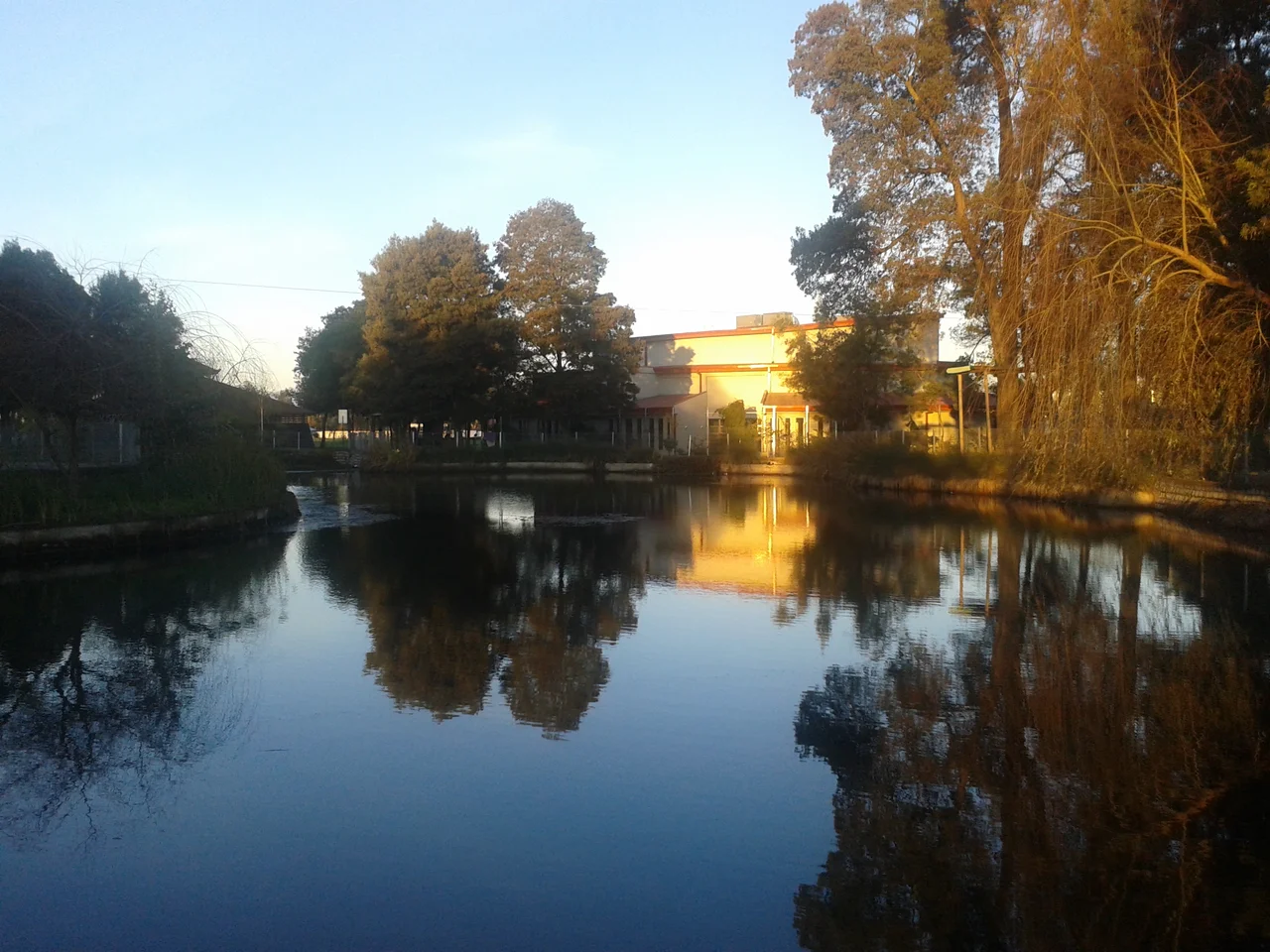

San Carlos, Chile
Two towns argue over a house. San Carlos points to a modest dwelling on Calle El Roble, a few blocks from its central square, and says: here is where Violeta Parra was born. Forty kilometers up the road, the village of San Fabián de Alico makes the same claim. The Violeta Parra Foundation sides with San Fabián. San Carlos sides with itself, and in 1992 it persuaded the Chilean state to declare the El Roble house a National Monument. The dispute will probably never be settled, and that feels fitting. Parra spent her life collecting the songs of ordinary people across this valley, songs nobody had bothered to write down. A century later, the valley fights over who gets to call her its own.
The Voice That Came From Here
Violeta del Carmen Parra Sandoval was born on the fourth of October, 1917, and grew up poor in this corner of southern Chile. She became a composer, singer, folklorist, and visual artist, the woman who pioneered the Nueva Canción Chilena, the renewal of Chilean folk music that carried its influence far beyond the country's borders. She wrote 'Gracias a la Vida,' a song so widely sung that it has crossed languages and generations. Chile honors her birthday, October 4, as Chilean Musicians' Day. That a child of this agricultural town should reshape a nation's music is the kind of fact that turns a quiet place into a place of pilgrimage. The town now plans a Casa Museo de Violeta Parra, a house museum, built around the home it insists was hers.
A Town in the Orchard Country
San Carlos sits roughly in the center of Chile's agricultural heartland, on a flat alluvial plain between the town of Chillán and the Perquilauquén River. It is the second most populous city in the Ñuble Region, a bustling market town surrounded by orchards heavy with apples, grapes, and berries, with kiwi vines a more recent arrival. The land here is generous. The depresión intermedia, Chile's Central Valley, runs fertile and broad, and the rhythm of San Carlos has always been the rhythm of harvest: trucks rolling into the market, fruit changing hands, the seasons measured in what the soil gives up. It is the sort of working town that produces people who notice the lives of working people, which is exactly what Parra spent her career doing.
Where Patriots Won
Long before it was anyone's birthplace, San Carlos was a battlefield. The town was founded in 1800 by a Spaniard, José Joaquín del Pino de Rozas y Negrete, who hailed from Baena in Andalusia, the Spanish town with which San Carlos is twinned to this day. Thirteen years later, on May 15, 1813, the fields around it became the setting for one of the decisive clashes of the Chilean War of Independence. The patriot army, led by General José Miguel Carrera, defeated the royalist forces here, and the victory helped ignite the independence movement across the whole region. The town that would later give Chile a poet of the people first gave it a foothold for its revolution.
Saddle and Song
Parra was not the town's only export. The painter Hernán Gazmuri was born here, and the 1970s band Los Ángeles Negros formed in San Carlos before finding national fame. The town's cultural pride sits alongside an older Chilean passion: rodeo. San Carlos is home to a medialuna, the crescent-shaped arena where Chilean rodeo is contested, with seats for eight thousand spectators, second in size only to the famous arena at Rancagua. On festival days the medialuna fills with the dust and noise of horsemen working cattle in pairs against the curved wall, a tradition as deeply rooted in this valley as the harvest itself. Music and horsemanship, the two things San Carlos has always done well.
From the Air
San Carlos lies at 36.42 degrees south, 71.97 degrees west, at roughly 151 meters elevation on the flat floor of Chile's Central Valley, about 32 kilometers north of Chillán and 133 kilometers northeast of Concepción. From the air it reads as a compact grid of streets set in a quilt of orchards and farmland, the snow-streaked Andes rising to the east and the coastal range low to the west. The nearest major field is Carriel Sur International (ICAO SCIE) at Concepción to the southwest; General Bernardo O'Higgins Airport (ICAO SCCH) near Chillán is closer still, just to the south. Best viewing is a clear summer morning, November through March, when the dry Mediterranean air leaves the valley sharp-edged and the orchards glow green against the brown hills.
Nearby Stories
- Parral, Chile 8.7 km away
- Battle of Reynogüelén (1536) 19 km away
- Pincheira Brothers 32 km away
- Cobquecura 34 km away
- LAN-Chile Flight 621 34 km away
- Cueva de los Pincheira 35 km away
- 1751 Concepción Earthquake 52 km away
- Tragedy of Antuco 100 km away