
Picton Castle
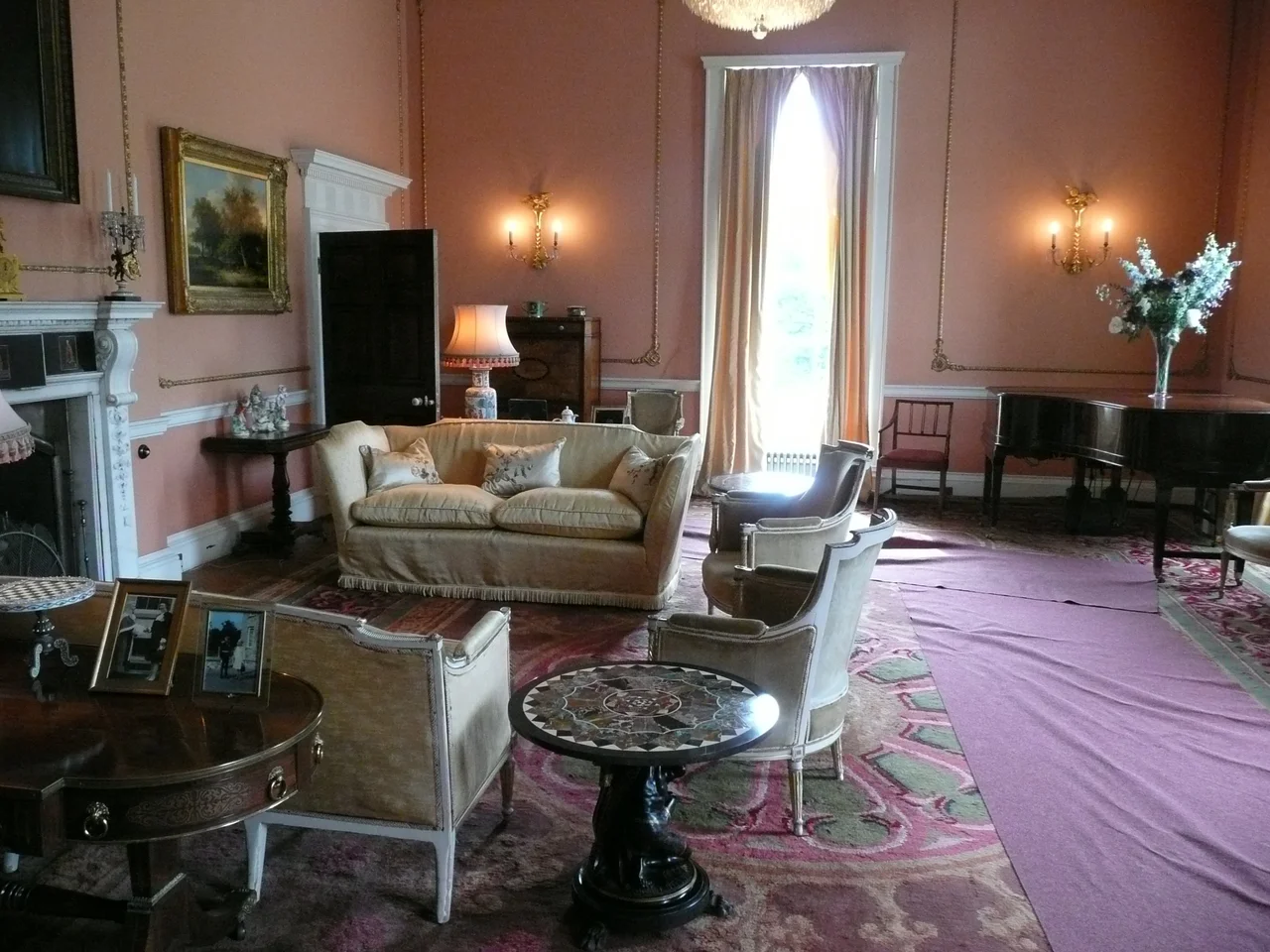
The Philipps family has held Picton Castle since the 1490s. Five hundred and thirty-odd years, give or take. Generations have come and gone, the building has been remodelled twice, the entrance has moved, a Renoir of contested authenticity hangs in the drawing room - but the family name on the deeds has not changed since Henry VII was on the throne and Christopher Columbus was alive. There is no courtyard inside the castle, just one continuous building protected by seven circular towers that project from the wall like the points of a crown. It looks defensive. It is also, and has been continuously, a home.
A Flemish Beginning
The castle owes its existence to a flood. In 1108, the low-lying lands of Flanders suffered catastrophic inundation, and many of their inhabitants - Flemings - asked for refuge from Henry I of England, whose mother had come from there. Henry settled them in the hinterland of his new Marcher Lordship of Pembroke. A Fleming named Wizo led the settlers in the eastern part, Dungleddy, and built Wiston Castle. He parcelled out the surrounding land to his followers, and an unrecorded mesne lord received Picton, three miles south. His name is lost. His castle - probably an earth and timber motte a short distance from the present building - is barely traceable. By the late 13th century, the site had passed to the Wogan family through marriage or inheritance, and they began to build in stone.
The Seven Towers
Sir John Wogan rebuilt Picton between 1295 and 1308. His design was unusual then and remains so now. Most medieval castles surround a courtyard with curtain walls and buildings against them. Wogan built a single solid block - the main building itself - and ringed it with seven circular towers projecting outward like spokes. At the east end, two of those towers act as a gatehouse, and the portcullis between them led directly into the lower part of the great hall. Windows in the original fabric were narrow slits, suited to defence; around 1400 they were replaced with larger windows, and a grand recessed arch went into the gatehouse. The Wogan male line failed in the 15th century. Their heiress Katherine married Owen Dunn. Sir Henry Dunn, their grandson, had only daughters. When Jane Dunn married Sir Thomas ap Philipps of Cilsant in the 1490s, the castle changed family - and stayed in that family ever since.
A Baronetcy for £1,095
Sir John Philipps inherited the castle in the 15th century and remodelled it, creating a new entrance that stood until the 1820s. The Philippses prospered - through marriage, through politics, through careful management of their Welsh estates. In 1611, King James I needed to fund his army in Ireland. His solution was to invent a new hereditary title - baronet - and sell it. Sir John Philipps paid £1,095. It was not cheap, but it was effective. The Picton baronetcy entered the family's collection of honours, and the castle began its slow ascent from medieval fortress to comfortable country house. In the 1820s, the architect Thomas Rowlands designed a new entrance - the same Thomas Rowlands who designed Slebech Church a few miles away. The estate has cycled through baronetcies, baronies, and royal licences renaming branches of the family, but the Philipps surname has held.
Gardens and a Possible Renoir
The gardens at Picton run to more than forty acres and are Grade I listed - the highest possible designation. The Royal Horticultural Society recognises them as a Partner Garden. Inside the enclosing walls are the Walled Garden, the Jungle Garden, Peach House Woods, Peep-In Woods, a Dew Pond, a Fernery, and an Apothecary's Garden. In the castle itself hangs the painting known as the 'Picton Renoir.' BBC's *Fake or Fortune?* investigated it in July 2015. The painting has clear provenance pointing to Renoir; the Wildenstein Institute, which controls authentication of Renoir's catalogue, declined to accept it. The episode highlighted long-running concerns about how authentication works in the high-end art market - who decides, on what evidence, with what financial consequences. The painting still hangs at Picton. Visitors can see it. Whether it is by Renoir or by someone Renoir-adjacent depends on which authority you believe.
Lived In
Picton Castle is now owned and managed by the Picton Castle Trust, a registered charity, but the building remains a living house rather than a museum piece. The gardens are open daily; the castle has guided tours; the gatehouse lodges offer self-catering accommodation. Events, fairs, and workshops cycle through the calendar. The family connection persists in the trust's stewardship. Across the River Cleddau, the ruined Big House at Landshipping looks back - the same river, the same view that Hugh Owen's drawing room offered in 1844 when the Garden Pit colliery flooded. Two houses on opposite banks. One a ruin. One still occupied, as it has been for more than seven hundred years.
From the Air
Picton Castle sits at 51.78°N, 4.89°W on the southwest bank of the Eastern Cleddau, about 4 nm southeast of Haverfordwest. From the air, look for the distinctive seven-tower outline of the castle against the gardens and surrounding parkland, with the river to the north and east. The Cleddau forms a striking dendritic pattern of inlets from this altitude. Best altitude 2,000-3,500 ft. Nearest airports: Haverfordwest (EGFE) about 4 nm northwest, Pembrey (EGFP) about 18 nm east, Swansea (EGFH) about 32 nm east-northeast.
Nearby Stories
- St Andrew's Church, Bayvil 1.6 km away
- Skomer 3.7 km away
- National Botanic Garden of Wales 9 km away
- HMS H47 13 km away
- Mumbles Lifeboat Disaster 32 km away
- Strata Florida Abbey 38 km away
- Lighthouses on Lundy 38 km away
- Tehidy Country Park 140 km away