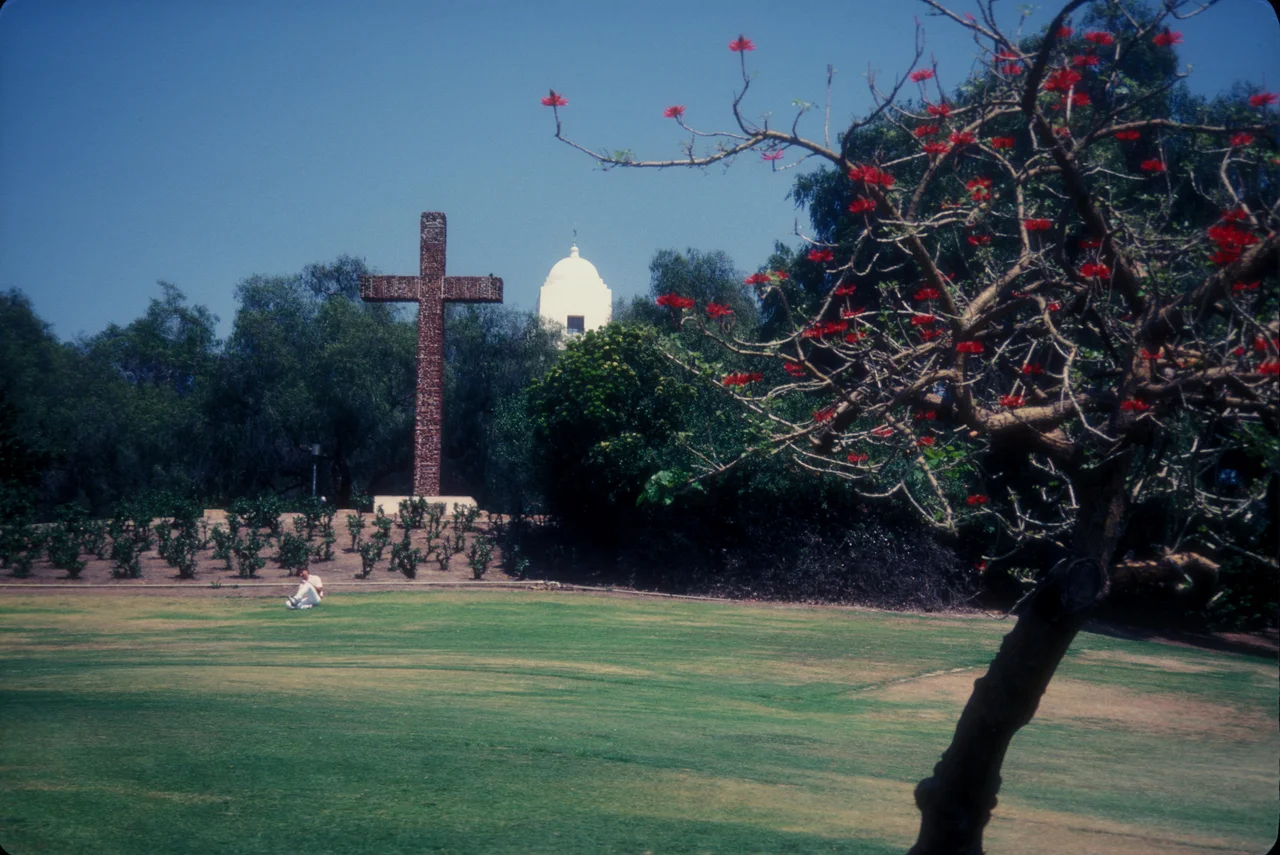

The Hill That Started California
The hill above Old Town San Diego is where the United States Pacific coast begins — not geologically, but historically. On May 14, 1769, Gaspar de Portolá established the Presidio of San Diego here, creating the first permanent European settlement on what would eventually become the American Pacific coast. Everything that California became starts on this particular hill, with this particular decision, made by a Spanish captain who had walked north from Baja California with a group of soldiers and missionaries.
The Spanish Garrison
The presidio was a military installation — a fortified garrison designed to protect the mission established nearby by Junípero Serra and to assert Spanish sovereignty over the territory. The combination of military garrison and religious mission was the standard apparatus of Spanish colonization, and the San Diego presidio followed the pattern: soldiers to enforce order, missionaries to convert the indigenous population, and the two institutions in a complicated relationship with each other.
Life at the presidio was isolated and sometimes desperate. Supply ships arrived irregularly; the garrison depended on the labor of indigenous converts at the mission for much of its food. Relationships with the Kumeyaay people ranged from uneasy coexistence to open conflict. The 1775 uprising at the mission, which killed Father Luis Jayme, was felt at the presidio as well — evidence that the colonial project was more contested than its administrators in distant Mexico City sometimes acknowledged.
Abandonment and Preservation
As San Diego's civilian population grew in the early nineteenth century, people moved down from the hill to what became Old Town. The presidio became increasingly irrelevant to daily life; by 1835 it had been effectively abandoned. The adobe structures that had housed the garrison deteriorated through the decades of neglect that followed, and by the early twentieth century little remained above ground level.
The site's preservation was largely the work of George Marston, a San Diego businessman and civic leader who purchased the Presidio Hill property in 1907 and dedicated it to the city. Marston's sense of civic responsibility extended to funding the construction of the Serra Museum in 1929 — a building in the Spanish Colonial Revival style that now stands at the summit of the hill — and establishing the park that allows San Diego residents to walk the ground of their city's origin.
The Serra Museum
The Serra Museum that Marston built at the presidio summit is not itself a historic structure — it was constructed in 1929, a century and a half after the original garrison stood here. But it serves the function that the historic site requires: it provides a visible landmark on the hill and houses the archaeological collections and interpretive materials that help visitors understand what happened at this location.
The museum is named for Junípero Serra, whose role in California's founding has been the subject of sustained historical and moral debate. The missions he established were sites of genuine suffering for the indigenous populations forced into them; his canonization by the Catholic Church in 2015 drew protests from Native American communities across California. The Serra Museum sits in that complexity without resolving it — which is perhaps the most honest relationship a commemorative institution can have with a contested history.
Presidio Park Today
The park that occupies Presidio Hill today is quiet in the way that historically significant but not heavily touristed places tend to be quiet. The views from the summit — of Mission Valley, of Old Town below, of the bay and the hills beyond — are among the most comprehensive available in San Diego, and they help explain why Portolá chose this location for his garrison.
Archaeological investigations have uncovered the foundations of the original presidio buildings beneath the park's lawn, confirming the documentary record with physical evidence. The hill holds the literal ground floor of California's European history, and the park preserves it as public space — available to anyone who wants to stand where Portolá stood and look out at what he saw, minus the undeveloped landscape and plus the freeway interchange visible in the valley below.
From the Air
Presidio Hill rises prominently above Old Town San Diego, with the white Serra Museum building visible at its summit from the air, overlooking the confluence of Mission Valley and the approach to the bay.
Nearby Stories
- Laguna Fire 0.9 km away
- San Diego Botanic Garden 3.3 km away
- Santa Ysabel Asistencia 10 km away
- Valle de Las Palmas 19 km away
- Tijuana: The Border City That Became Its Own Third Country 20 km away
- Laguna Art Museum 55 km away
- San Clemente Island 69 km away
- USS Higbee 206 km away