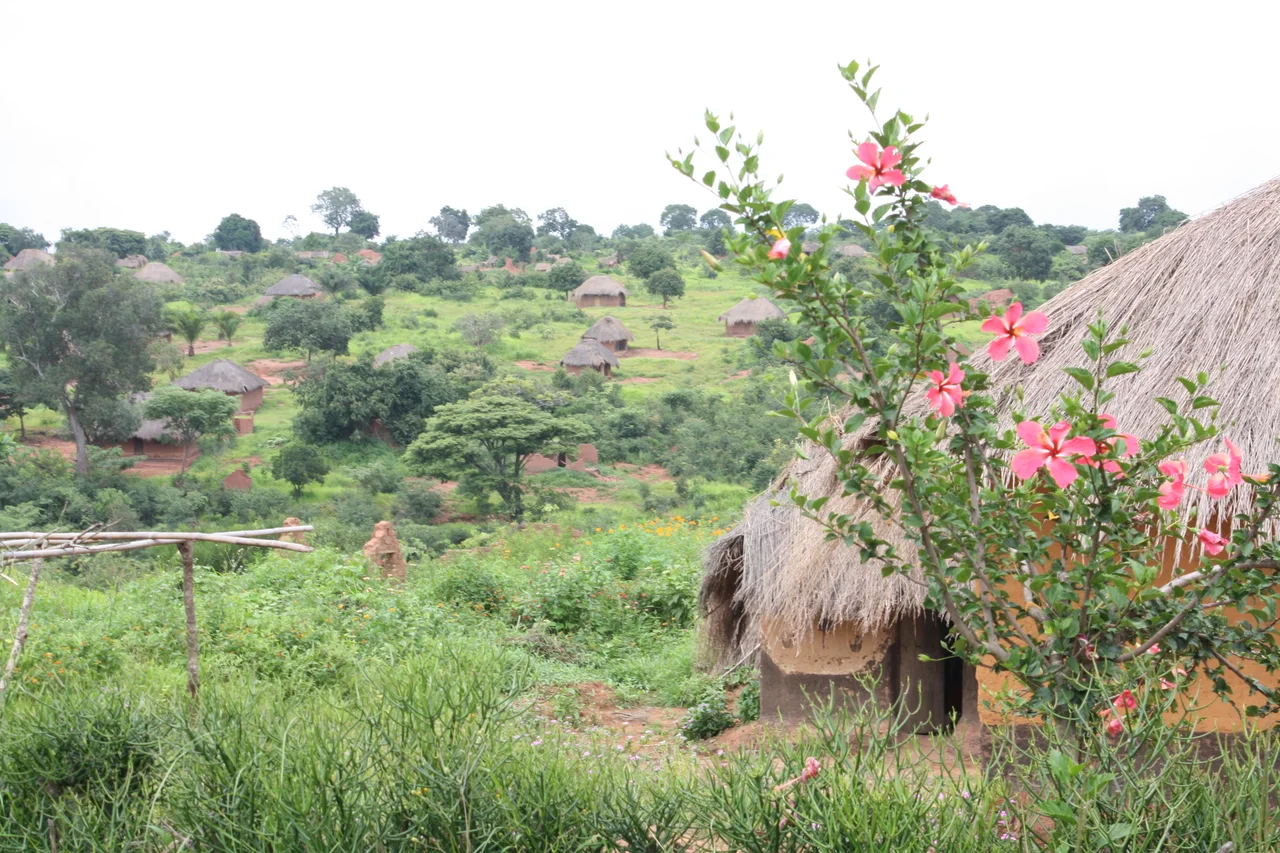

Pweto
In early December 2000, sixty thousand civilians fled across the Luvua River with whatever they could carry. Behind them, Pweto was falling. The Battle of Pweto - one of the major engagements of the Second Congo War - was more than a tactical defeat for the government forces of Laurent-Desire Kabila. It was a rupture. Three thousand government soldiers crossed into Zambia to escape the Rwandan-backed advance. Thirty-three tanks and armored vehicles were burned to keep them from enemy hands. A T-62 tank, misloaded onto the only ferry across the Luvua, sank and took the crossing with it. Six weeks later, President Kabila was assassinated by his own bodyguards in Kinshasa, 2,000 kilometers away, and the course of the war shifted. Pweto itself - a town of fishing families on the northern shore of Lake Mweru - had become shorthand for how badly things could go.
The Lake and the Border
Pweto lies where Lake Mweru meets the Luvua River, a place that in peacetime is mostly known for fish. The lake holds Oreochromis macrochir - a tilapia species local people call the kabambale - along with abundant other fish, and fishing has always been the backbone of the local economy. Small-scale farmers grow cassava, millet, maize, groundnuts, and sweet potatoes on the fertile plain that stretches north and east. To the west, the Mitumba Mountains wall off the Congo Basin proper; the Luvua River cuts through them in a single violent exit from the lake, dropping several meters in rapids immediately below Pweto. The Belgian and British colonial governments drew the border with what was then Northern Rhodesia - now Zambia - along a straight line running east from where the Luvua leaves the lake. The technical effect is that the shoreline of the Congolese town actually sits on paper in Zambian territory. These are the kind of lines wars later pull tight.
The Battle
Pweto in late 2000 was already a humanitarian crisis. Civilians fleeing fighting elsewhere in Katanga had tripled the town's population. Health care collapsed under the strain - 1,800 cases of cholera and 150 deaths had been recorded in the first eleven months of the year alone. Then came the battle. DRC government forces, reinforced by Interahamwe fighters and former Rwandan army troops, along with Burundian FDD, Mayi Mayi militia, Namibian, Angolan, and Zimbabwean troops, had pushed north from Pweto in October. They were reversed at Pepa. The retreat back to Pweto turned into a rout. By the time Rwandan Patriotic Army and RCD-Goma counter-attacks reached the town in early December, panic had already destroyed the ferry. Young General Joseph Kabila - son of the president, soon to succeed him - escaped by air. Thousands of soldiers and civilians ran for the Zambian border. What the fighters suffered, the displaced suffered worse.
The Aftermath
The fall of Pweto did not simply rearrange a battlefield. On 16 January 2001, President Laurent-Desire Kabila was shot dead by one of his bodyguards inside his palace. The political landscape shifted overnight. Rwandan President Paul Kagame, pressured by a cold reception in Washington, chose not to pursue the fleeing Congolese forces across the Zambian border - a decision that created space for negotiation. United Nations Security Council Resolution 1399, passed unanimously on 19 March 2002, demanded the RCD-Goma withdraw from Pweto and Moliro and insisted no party could make further military gains during the peace process. Pweto was declared a demilitarized zone. The declaration held imperfectly - in June 2002, child soldiers of the pro-government Mayi Mayi entered the town, followed by Rwandan-backed forces again taking control - but the war itself was winding down. Formal peace came in 2003. An estimated 5 million people across the region had died since 1998, most of them from hunger and disease rather than combat.
What Remains
In September 2011, MONUSCO - the United Nations peacekeeping force - reopened a representative office in Pweto, hoping to stabilize the area through elections. The rebuilding has been slow. In July 2011, the Australian miner Mawson West announced positive feasibility results for an open-cut copper mine at nearby Kapulo, valued at $141 million, and built a new runway north of town in 2012 to 2013 to serve it. Then copper prices fell. Mawson put the mine on hold and was eventually acquired and taken private. Pweto Airport still exists. The copper is still there. For most families in the town, daily life returned to what it had been before the war - fishing the lake, tending cassava fields, moving goods along a road network that the conflict had destroyed and the recovery has barely repaired. The lake keeps its Oreochromis. The river still falls through its rapids. The people who lived through the Battle of Pweto are still here, along with their children, trying to build a place worth staying in.
From the Air
Located at 8.48 degrees south, 28.90 degrees east at the north end of Lake Mweru on the Zambia-DRC border. Served by Pweto Airport. From altitude, the distinctive landmark is Lake Mweru itself, with the Luvua River exiting dramatically westward through rapids, and the Mitumba Mountains rising visibly to the west.
Nearby Stories
- Dikulushi Mine 25 km away
- Lake Mweru Wantipa 32 km away
- Lake Mweru 70 km away
- Piana-Mwanga Hydroelectric Power Station 80 km away
- Marungu highlands 127 km away
- Moba, Democratic Republic of the Congo 160 km away
- Mbala District 163 km away
- Tanganyika Province 209 km away