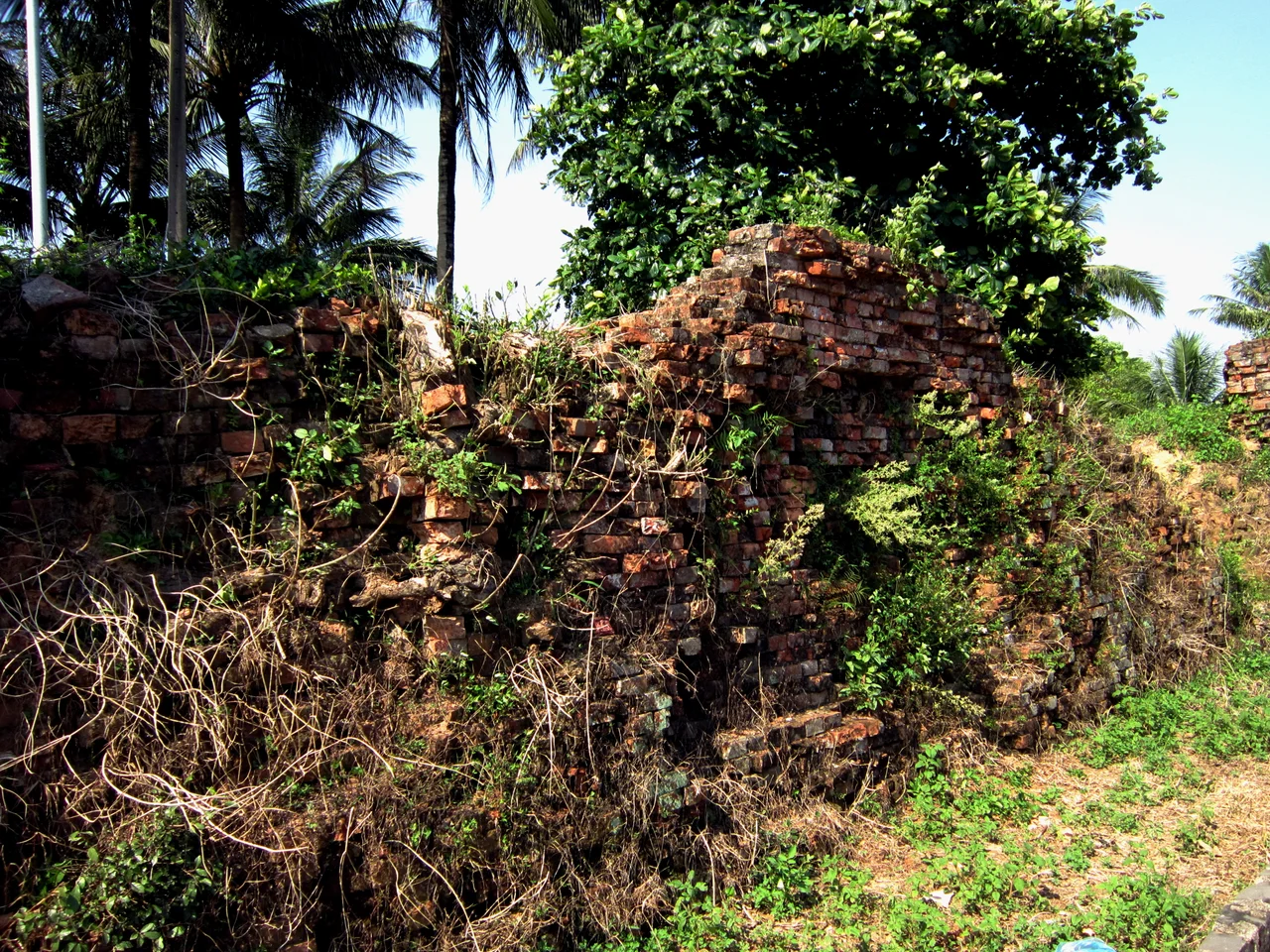

Quảng Trị Citadel
In the Museum of the Ancient Citadel of Quảng Trị, there is a collection of letters that were never sent. Young soldiers wrote them from inside the citadel's walls during the summer of 1972, addressed to mothers and girlfriends and younger brothers — letters folded, tucked away, and never posted because the soldiers who wrote them did not survive the siege. The museum keeps them. They are perhaps the most honest monument to what happened here: not the statistics of an 81-day battle, but the private words of people who knew they might be writing their last.
Built to Last
The citadel on the bank of the Thạch Hãn River was not built for the 20th century's wars — it was built for the 19th century's politics. Emperor Gia Long first ordered its construction at the beginning of his reign, and in 1809, wanting to secure the northern approaches to his capital at Phú Xuân (modern Huế), he had it moved to its current location along the river. The original walls were rammed earth; Emperor Minh Mạng later had them rebuilt in brick. The finished structure was formidable: a square plan with 2,160 meters of perimeter, walls four meters high and 13.5 meters thick at the base, a flooded defensive moat, and four protruding corner bastions. For over a century the citadel served successively as the administrative seat of the Nguyễn dynasty, a French colonial headquarters, and then a military base for the South Vietnamese government. Since 1929 it had also contained a prison, where the French confined political opponents.
Eighty-One Days
After North Vietnamese forces captured Quảng Trị town in May 1972 during the Easter Offensive, the citadel became the focal point of South Vietnam's effort to reclaim the province. The counteroffensive — Operation Lam Son 72 — began on June 28th, 1972, with ARVN forces pushing north along Highway 1 toward the city. The PAVN had fortified the citadel and the surrounding streets, and what followed was urban combat of appalling intensity. Airstrikes, artillery, and ground assaults churned the city repeatedly. Vietnamese and international estimates indicate that approximately 328,000 metric tonnes of ordnance were used across the province during the war years. The citadel changed hands multiple times. Fighting inside the walls was room by room, wall by wall. South Vietnamese Marines and airborne units pressed the assault; PAVN soldiers defended with equal ferocity. The battle ended on September 16th, 1972, when ARVN forces raised their flag over the citadel's ruins. Almost nothing inside the walls was left standing.
Spiritual Land
The Vietnamese have a phrase for what the citadel became after 1972: "đất thiêng" — sacred land, or spirit ground. The belief is not metaphorical. Every square meter of the citadel's 18.56 hectares is thought by local people to hold not only unexploded ordnance — which remains a literal fact, with clearance work ongoing — but the blood and bones of soldiers who died there without ever being recovered or identified. Vietnamese tradition holds that the spirits of the unrecovered dead cannot find rest, and the citadel's grounds are considered perpetually inhabited by them. Night ceremonies are held here; offerings are left. The memorial erected in the center in the 1990s commemorates "the 81 days and nights of 1972" in the language of both nations' losses, not only one side's sacrifice.
Restoration and Memory
In the 1990s, after decades of post-war poverty and international isolation, the People's Committee of Quảng Trị Province began restoring what remained of the citadel. The four main gates were rebuilt. Sections of the ancient wall were stabilized and in places reconstructed. The interior, once the scene of the most intense fighting, was converted into a park — the largest in Quảng Trị town. The Museum of the Ancient Citadel was established to hold the material record of the battle: weapons, photographs, military equipment, and those letters. Vietnam designated the citadel, together with seven associated historical sites, as one of the Special National Sites of the country — its highest category of historical protection. The citadel now draws visitors from across Vietnam and from abroad, including veterans and the descendants of veterans from both sides.
What the Walls Still Say
Walking the restored walls today, the thickness underfoot is unmistakable — 13.5 meters of brick and earth between the inside of the citadel and whatever lies beyond. The Thạch Hãn River moves quietly below the southern rampart; across it, papaya trees and banana palms grow in the gardens of ordinary houses. The citadel's grounds have the unusual quiet of a place that has absorbed enormous violence and is now being very deliberately peaceful. Families walk the main paths in the evening. Schoolchildren visit on field trips and stand in front of photographs of what the city looked like in September 1972. The gap between that and this is not comfortable — it is not meant to be. The citadel holds the memory of what was lost here, on all sides, and the people of Quảng Trị have not let the park's calm lawns become an excuse to forget it.
From the Air
The Quảng Trị Citadel sits at 16.7539°N, 107.1895°E on the south bank of the Thạch Hãn River in Quảng Trị town. From altitude, the citadel's square plan is clearly visible as the dominant geometric feature in the town's layout — approximately 540 meters on each side. The Thạch Hãn River runs along the citadel's northern edge. Highway 1 passes through the town approximately 1 km to the east. The landscape between the citadel and the DMZ (approximately 30 km north) is the coastal plain that was contested throughout 1972. Nearest airport: Phú Bài International (VVPB), Huế, approximately 55 km south-southeast. Recommended viewing altitude: 3,000–5,000 feet to appreciate the citadel's geometry and its relationship to the river and town.
Nearby Stories
- Diệu Đế Temple 5.2 km away
- Battle of Fire Support Base Ripcord 17 km away
- Tam Giang–Cau Hai Lagoon 26 km away
- Lệ Thủy 32 km away
- Ban Karai Pass: The Gap They Could Not Close 46 km away
- Grès supérieurs Formation 61 km away
- Southern Laos 63 km away
- Bach Long Vi Island 343 km away