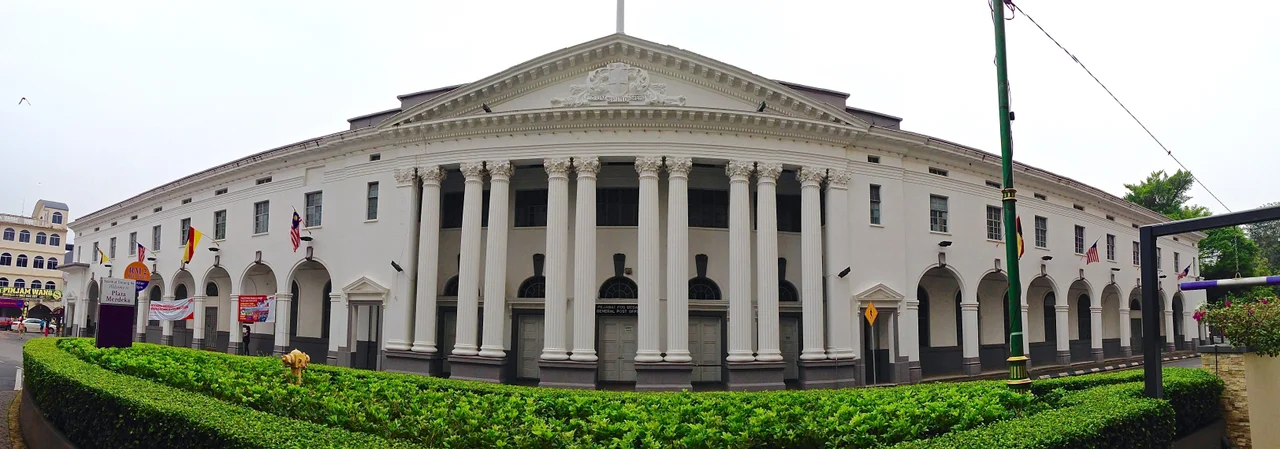

The White Rajahs of Sarawak
In 1835, a young Englishman named James Brooke inherited thirty thousand pounds from his father and did something extraordinary with it: he bought a schooner called the Royalist, recruited a crew, and sailed for the Asiatic Archipelago with no plan beyond adventure. Four years later, he anchored on the banks of the Sarawak River in northwestern Borneo and stumbled into a rebellion. The local ruler needed help putting it down. Brooke obliged, and in return he received something no other private citizen of his era would manage: an entire kingdom. On 24 September 1841, Brooke was granted sovereignty over Sarawak, beginning a dynasty of three English rajahs who would govern this corner of Borneo for over a century.
A Soldier's Unlikely Second Act
James Brooke was not born to rule. He was a soldier in the East India Company's army who took a musket ball during the First Anglo-Burmese War so severe it ended his military career. While convalescing, he overstayed his leave, forfeiting his commission. The army gave him a pension and sent him on his way. Restless and inspired by Stamford Raffles's exploits across the Malay Archipelago, Brooke decided to become an adventurer-trader. He trained his crew in the Mediterranean in late 1836 and set sail for the Far East in October 1838. By July 1839 he had reached Singapore, where he learned of a Brunei prince named Raja Muda Hashim who had helped some shipwrecked British sailors. The British governor asked Brooke to deliver a thank-you message. That errand changed the course of Borneo's history.
A Kingdom Won at Anchor
When Brooke arrived in Sarawak on 14 August 1839, Hashim was embroiled in a rebellion fueled by years of oppressive antimony mining policies. The indigenous Dayak had been forced to work the mines for a decade, and local Malays were losing income to Brunei's monopoly. Brooke saw an opportunity. He returned in August 1840, joined the suppression campaign, and by December the rebels had surrendered -- on the condition Brooke, not Brunei, guarantee their lives. Hashim resisted at first but relented. Then came the reward: Hashim granted Brooke sovereignty over Sarawak in September 1841. The new rajah immediately banned slavery, headhunting, and piracy. By July 1842, the Sultan of Brunei himself confirmed the appointment. An Englishman with no governmental experience now ruled a stretch of tropical rainforest larger than some European nations.
The Price of Empire
Ruling proved harder than conquering. Three major rebellions shook Brooke's administration: Rentap in 1853, the Chinese uprising led by Liu Shan Bang in 1857, and Syarif Masahor's revolt in 1860. The costs of suppression plunged the raj into crippling debt. Brooke considered selling Sarawak to Belgium, France, even Russia -- anyone but the Dutch, who were poised to retake it. Britain's Prime Minister Lord Derby rejected annexation, fearing that British taxation would shock the population more than the rajahs' own lighter-touch system. Meanwhile, Brooke expanded his territory at Brunei's expense, acquiring the Rajang River basin in 1861. In 1864, the United Kingdom finally recognized the raj as an independent state. British warships entering Kuching harbor saluted the Sarawak flag with twenty-one guns -- a full sovereign salute for a kingdom founded by a cashiered soldier.
The Builder Rajah
James Brooke died in 1868. His nephew, Charles Brooke, inherited a territory rich in potential but burdened by debt. Where James had been the romantic adventurer, Charles was the pragmatist. He stabilized the economy by encouraging Chinese immigration, particularly pepper and gambier growers from Singapore. By the early twentieth century Sarawak had become one of the world's major producers of black pepper. Charles was cautious about rubber speculation; in 1910 he turned down five foreign companies seeking to establish large plantations, calling rubber speculation "a mania which did not suit the quiet non-speculative spirit of the country." He built forts, installed telephone lines across the interior, and in 1888 secured protected-state status from Britain without ceding sovereignty. When Sarawak's first power station went online in Kuching in June 1923, it stood on a road that locals still call Power Street.
Twilight of the White Rajahs
Charles Vyner Brooke, the third and final rajah, faced a threat his predecessors never imagined. On 16 December 1941, a Japanese naval detachment arrived at Miri from Cam Ranh Bay. Three days later, Japanese planes bombed Kuching's airfield and machine-gunned civilians in the streets. With Britain's forces stretched across Europe, Sarawak's defense rested on a single Indian infantry battalion and a handful of local troops. The Brooke government's oil refineries at Miri and Lutong were torched under a scorched-earth policy before they could fall to the Japanese. Vyner fled to Australia while captured Allied soldiers endured captivity at Batu Lintang camp. When the war ended and the Allies liberated Borneo, Vyner returned to find a kingdom in ruins. Lacking the resources to rebuild, he ceded Sarawak to the British Crown on 1 July 1946. The dynasty that began with a schooner and a handshake ended with a stroke of a pen, and Sarawak became the last territory Britain ever acquired as a Crown Colony.
From the Air
Coordinates: 1.55N, 110.35E (Kuching, historical capital of the Raj). The Sarawak River is visible winding through the city below. Nearby airports: WBGG (Kuching International Airport). The coastline of northwestern Borneo stretches north toward Brunei, tracing the territorial expansion of the three rajahs. Best viewed at 5,000-10,000 ft for river detail, or at cruising altitude for the full sweep of Sarawak's coastline.
Nearby Stories
- Battle of Plaman Mapu 46 km away
- Fort Alice 85 km away
- Pontianak Sultanate 144 km away
- Jami Mosque of Pontianak 173 km away
- Fort Sylvia 246 km away
- Betung Kerihun National Park 290 km away
- Crown Colony of Sarawak 382 km away
- Zahro Express Disaster 577 km away