
Réunion's Coral Reef
From the air it looks like a brushstroke of pale jade laid against deep blue ink. A thin band of living coral hugs Réunion's western shore, holding back the open Indian Ocean and cupping a lagoon so shallow and clear that snorkelers drift over it in water barely deeper than a bathtub. The reef runs for more than nine kilometers between Saint-Leu and Saint-Gilles, narrowing to fifty meters at its northern tip and swelling to six hundred in the south. It is the only true coral reef on an island otherwise ringed by sheer volcanic drop-offs - and that sharp line between calm lagoon and plunging deep is the key to everything that happens here, from the abundance of fish to the danger lurking just past the foam.
A Wall Built by Animals
A coral reef is not rock but a city of animals, each polyp a soft creature no larger than a pinhead that builds a limestone skeleton around itself and catches drifting plankton with tiny tentacles. Generation by generation, those skeletons pile into a barrier strong enough to break ocean swells. The work is slow. Réunion's corals add only about ten centimeters of growth a year, which means the reef you swim over took centuries to rise. Because the island sits far from any continental shelf, the seabed falls away into deep water just past the coral - and the cool, nutrient-rich currents welling up from those depths feed an unusually rich community of soft and hard corals, reef fish, and shellfish packed into a startlingly small space.
The Lagoon and Its Reserve
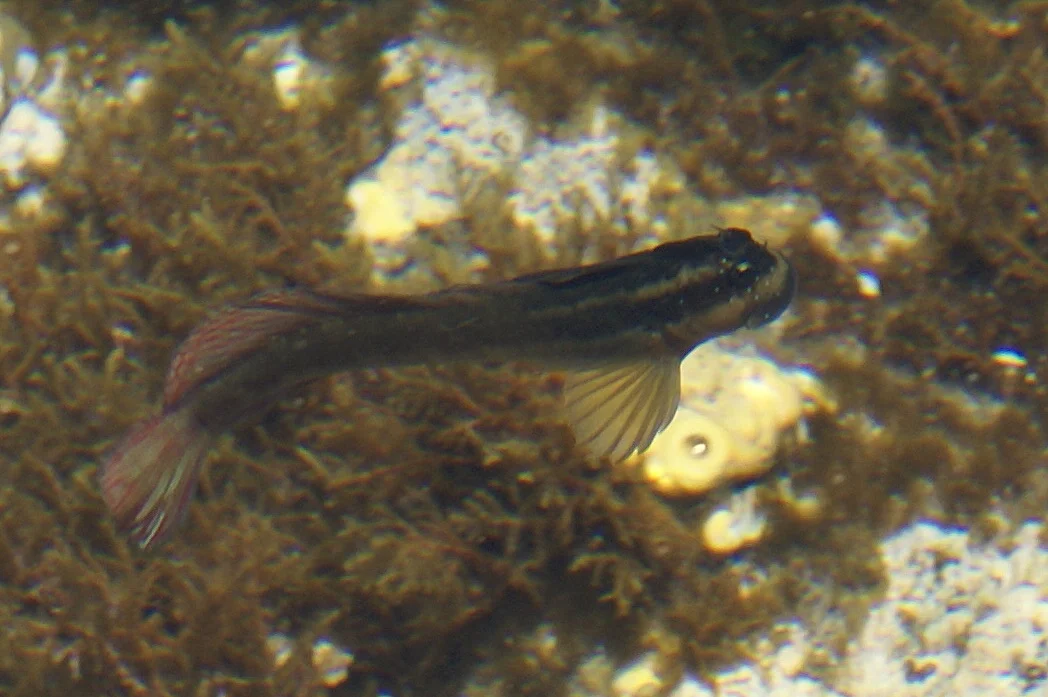
For generations the lagoon has been Réunion's playground, the one stretch of Indian Ocean gentle enough for children. Snorkelers follow a marked underwater trail off L'Hermitage, gliding past parrotfish and surgeonfish among the branching Acropora. In 2007 France drew a protective line around it: the Réserve naturelle marine de La Réunion, thirty-five square kilometers of lagoon and reef strung along forty kilometers of coast. Inside its boundaries swim more than 1,200 species of fish and over 170 kinds of hard coral. Rangers patrol against poaching, and signs at every beach entrance ask visitors to keep off the coral. The reserve has nudged parts of the reef back toward health - but it is fighting currents far larger than poaching.
A Reef Under Pressure
Coral is exquisitely sensitive. It thrives only in a narrow band between roughly 23 and 28 degrees Celsius, and when the water warms past that, the polyps expel the algae that color and feed them, turning ghost-white in the process known as bleaching - already visible on Réunion's reef. Runoff from the urbanizing coast carries pollution and nutrients that choke the water and trigger algal blooms, while beach erosion and unplanned construction grind away at the shoreline that shelters the corals. The reef is both victim and protector: it absorbs the punch of cyclones and shields the coast from storm waves, yet every road and rooftop crowding the catchment above it makes its own survival harder.
The Shadow Beyond the Breakers
Beyond the reef crest, where the lagoon spills into open ocean, the water turns suddenly dangerous. Between 2011 and 2019, Réunion endured one of the most concentrated runs of shark attacks anywhere on Earth - around thirty, eleven of them fatal, a toll that accounted for nearly a fifth of the world's shark deaths in those years. The victims were mostly surfers and swimmers, some taken only meters from shore. Scientists came to suspect that human hands had tilted the balance: an irrigation system carrying water across the island lowered the salinity off the west coast, creating conditions that bull sharks favor. In 2013 the authorities banned surfing and swimming across most of the island. The attacks stopped, mysteriously, after 2019. Families have edged back into the lagoon - but the reef now marks a border between two worlds, the safe and the wild, more starkly than any line on a map.
From the Air
Réunion's coral reef fringes the island's leeward west coast, centered near 21.09°S, 55.22°E, running roughly 9 km between Saint-Leu and Saint-Gilles-les-Bains. From altitude the lagoon reads as a luminous pale-turquoise band sharply bounded by the dark open ocean - clearest in the morning before the trade-wind clouds build over the central peaks. The reef sits just southwest of Saint-Denis. Roland Garros Airport (ICAO: FMEE) lies on the north coast about 40 km away; Pierrefonds Airport (ICAO: FMEP) is near Saint-Pierre on the south coast. Best viewing is mid-morning under the clear, dry conditions of the austral winter (May-October), when the leeward coast escapes the windward cloud.
Nearby Stories
- Tromelin Island: The Forgotten Enslaved People of the Isle of Sand 540 km away
- Battle of Tamatave 644 km away
- Toamasina 688 km away
- Canal des Pangalanes 742 km away
- Fianarantsoa 858 km away
- Siege of Galle (1640) 3989 km away
- Galle Fort 4010 km away
- French Western Australia 5783 km away