
Rising Star Cave
The hardest part was a crack in the rock called the Chute. To reach the chamber where the bones lay, a person had to wriggle down a vertical slot that narrows in places to about eighteen centimeters - roughly the width of a laptop. In September 2013, two recreational cavers, Rick Hunter and Steven Tucker, forced themselves through it and surfaced in a chamber whose floor was scattered with fossil bones. When they showed the photographs to paleoanthropologist Lee Berger, he realized he had a problem most scientists would envy: an extraordinary trove of human-relative fossils, locked behind a passage almost no adult could fit through.
The Underground Astronauts
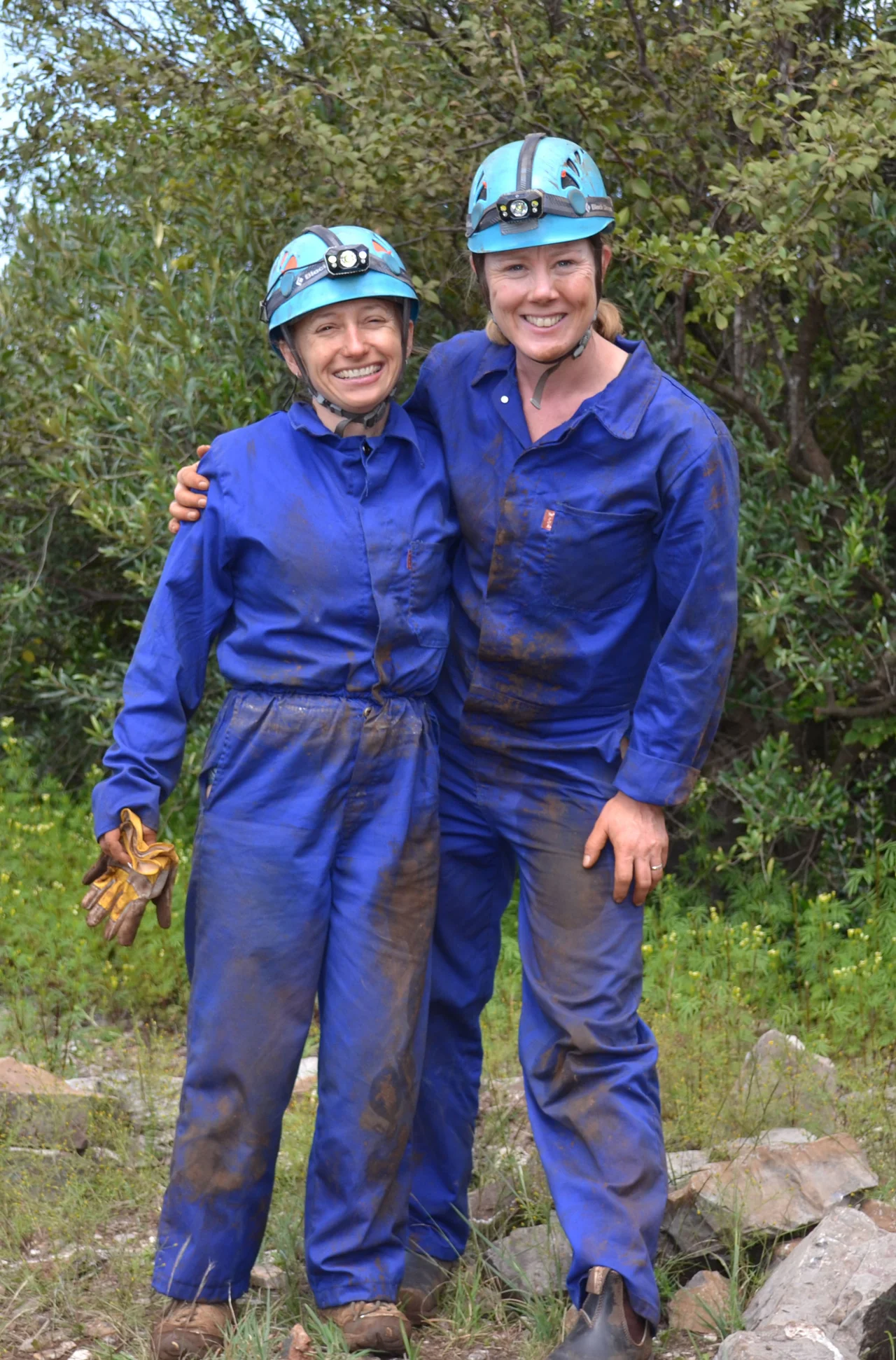
Berger needed excavators with rare qualifications: trained in paleontology, experienced in caving, and small enough to thread the Chute. He posted the call on Facebook. Within ten days, nearly sixty people applied, and Berger chose six - all of them women, all slight of build. They named themselves the 'underground astronauts,' because reaching the chamber felt like venturing somewhere humans were never meant to go. Marina Elliott, Becca Peixotto, Hannah Morris, Alia Gurtov, Elen Feuerriegel, and K. Lindsay Hunter descended thirty meters into the earth, working in shifts by lamplight while colleagues monitored them from the surface. The fossils they brought up would rewrite a chapter of the human story.
A Face No One Expected
The bones belonged to a species never seen before. In 2015, the team named it Homo naledi - naledi means 'star' in Sesotho, after the cave - and gave the chamber the name Dinaledi, 'place of stars.' The species was a contradiction. It stood under five feet tall, with humanlike hands and feet built for walking and toolmaking, yet its brain was tiny - only about a third the size of ours, no bigger than an orange. Here was a creature that walked upright on familiar legs but looked out at the world through a far smaller mind. It belonged unmistakably to our own genus, Homo, and yet to nothing anyone had described.
How Old, and How They Died
Early guesses ran into millions of years, on the assumption that so primitive a brain must be ancient. The rock said otherwise. In 2017, direct dating placed the fossils between 236,000 and 335,000 years old - astonishingly recent, overlapping with the dawn of our own species. That timing deepened the central mystery. The chamber has no other large animals, no evidence of a flood or a predator's den. So how did the remains of at least fifteen individuals, from infants to the elderly, come to rest in a chamber reachable only through that brutal squeeze?
The Burial Question
Berger's team offered a startling answer: that Homo naledi carried its dead into the dark on purpose. In 2023 they reported what they interpreted as deliberate burials and faint engravings scratched into the cave walls - behaviors long thought to require a large, symbolic-thinking brain. The claim is fiercely contested. Many scientists argue the evidence is not yet conclusive, and the debate runs hot through the field's journals. But the possibility alone is profound. If true, it would mean that the impulse to honor the dead - to mark a life as worth remembering - may be far older and far less tied to brain size than anyone assumed.
A Place Few Will Ever See
Rising Star lies in the Bloubank River valley, deep within the Cradle of Humankind, a short distance from the more famous Sterkfontein caves. Its passages wind through ancient dolomite for hundreds of meters. Fewer than fifty people have ever stood in the Dinaledi Chamber; the Chute keeps it that way. From the surface, there is little to see - just grassland and a modest cave entrance among the hills. But beneath that ordinary ground lies one of the most consequential and contested fossil sites on the planet, where small explorers reached a place of stars and brought back the bones of a stranger in the human family.
From the Air
The Rising Star cave system sits at approximately 26.02 degrees south, 27.71 degrees east, in the Bloubank River valley within the Cradle of Humankind, about 2 km west of the Sterkfontein Caves and roughly 40 km northwest of Johannesburg, South Africa. The terrain is open highveld grassland over dolomite ridges at about 1,500 meters (4,900 feet) elevation, with no large surface structure marking the cave. Nearest airports are Lanseria International (FALA) about 20 km southeast and OR Tambo International (FAOR) about 60 km east. Dry winter months (May to August) bring the clearest skies over the valley.
Nearby Stories
- Voortrekker Monument 8.7 km away
- Rand Refinery 13 km away
- Kweneng' Ruins 15 km away
- Mponeng Gold Mine 18 km away
- Marikana Massacre 20 km away
- Vaal Reefs Mining Disaster 70 km away
- 2014 Orkney Earthquake 103 km away
- Matsieng Footprints 167 km away