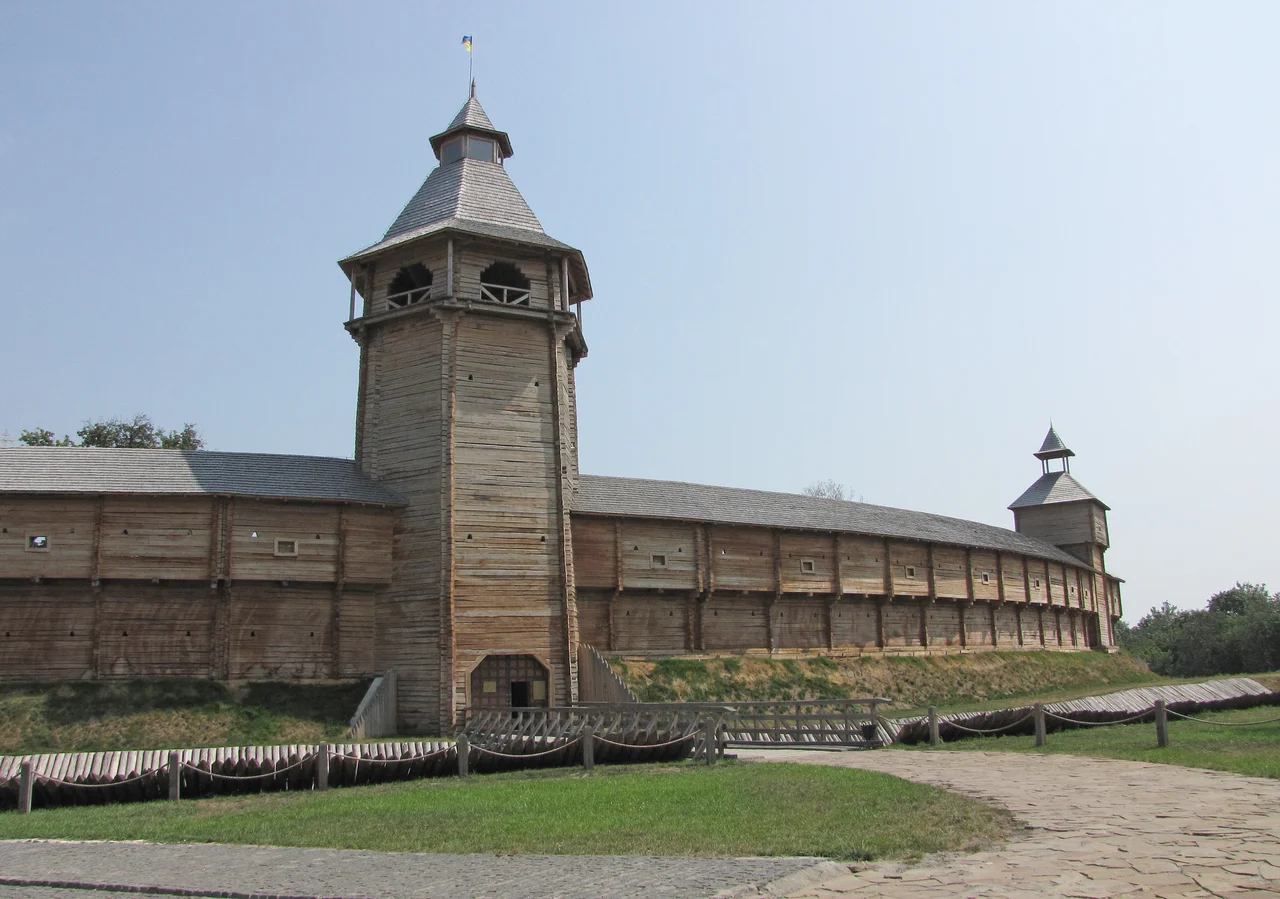

Sack of Baturyn
It took two hours. On the morning of 2 November 1708, Russian troops finally broke into the fortress at Baturyn, and by the time the fighting stopped, the capital of the Cossack Hetmanate had ceased to exist as a living town. Estimates of the dead range from nine to fifteen thousand, and among them, the graves would later reveal, were women, children, and the elderly buried without coffins or rites. For most of three centuries this was a memory the town was not permitted to keep. Today the fields above the Seym River are a place of pilgrimage and remembrance, and 2 November is marked across Ukraine.
A War That Reached Baturyn
The catastrophe grew out of the Great Northern War between Russia and Sweden. In late October 1708, King Charles XII of Sweden was deep inside Ukraine, far from his winter quarters, his army short of food and ammunition after Russian forces had seized a Swedish supply convoy at the Battle of Lesnaya. At that moment Hetman Ivan Mazepa, long the loyal servant of Tsar Peter I, made his fateful decision and joined the Swedish side, bringing some three thousand Cossacks with him. He proposed Baturyn as the place for Charles to resupply, for the fortress held ample stores. When Peter I learned of the desertion, he ordered his general, Alexander Menshikov, to destroy the Hetmanate's capital before the Swedes could reach it. The tsar's reasons were plain: deny the enemy the stores, terrify the population out of following Mazepa, and punish the betrayal.
The Morning the City Fell
Menshikov reached Baturyn commanding twenty dragoon regiments, perhaps fifteen to twenty thousand men, and offered the defenders a chance to surrender. They refused, and answered his demand with cannon fire from the walls. For a time the fortress held; the Russian assault could not carry the fortifications by force. Then attackers found a way inside through a secret passage, and the far larger force poured in. At six in the morning they entered the town, and despite fierce resistance from the garrison, the killing was over within two hours. What followed the fall has come down through many documentary accounts. When Mazepa himself later learned what had happened to Baturyn, one contemporary wrote, the news struck him to the heart, and he wept for the town he had helped doom.
Refusing to Forget
For generations the tragedy went formally unmourned. That changed with the shovel. Ukrainian archaeologists began excavating Baturyn in 1995, joined by Canadian scholars in 2001, and between 1996 and 2007 they uncovered 138 burials from Mazepa's era, sixty-five of them of people killed in the sack, most of them women, children, and the aged. Their remains were treated with the care long denied them. Reburials in the crypt of the Resurrection Church, beginning on the tragedy's anniversary in 2008, have laid more than five hundred defenders and townspeople to rest in seventy-four coffins. In 2008 the government made "the Baturyn Tragedy" the official name of the events, and since 2018 Ukraine has commemorated the Day of Remembrance each 2 November, when the country pauses for those who died here.
From the Air
The site lies at 51.33°N, 32.87°E on the bluffs above the Seym River at Baturyn, Chernihiv Oblast. From about 3,000 feet the reconstructed fortress citadel and the Resurrection Church, which holds the reburied remains, mark the ground where the town fell; the river's wooded meander frames the reserve. Nearest major airports are Boryspil (UKBB) and Kyiv-Zhuliany (UKKK), roughly 200 km southwest.
Nearby Stories
- Kruty Heroes Memorial 15 km away
- Mezine 20 km away
- Principality of Chernigov 26 km away
- Siege of Hlukhiv 36 km away
- Kachanivka Palace 38 km away
- Hlukhiv 46 km away
- Battle of Listven 59 km away
- Treaty of Hadiach 97 km away