
San Cosme y Damián
In the bell tower of a mission church near the Paraná River, a Jesuit priest pointed a telescope of his own making at the night sky and watched the moons of Jupiter swing around their planet. The instrument was cobbled from a metal tube, two convex lenses, and quartz he had gathered along the river. The year was the early 1700s, the place a frontier reduction in what is now southern Paraguay, and the man, Buenaventura Suárez, is remembered today as the first astronomer of South America. San Cosme y Damián has never quite let that go - and the church he watched from still stands.
The Healing Saints on the Border
The Jesuits named the mission for Saints Cosmas and Damian, twin brothers of the third century who practiced medicine and, by tradition, took no payment for it. It was a fitting patronage for a place built on care and craft. San Cosme y Damián sits in the Itapúa Department about 80 km west of Encarnación, hard against the Paraná River where Paraguay meets Argentina, a district of some 800 square kilometers and around 10,000 people. The reduction grew from the same Jesuit effort that spread out from San Ignacio Guazú in the early seventeenth century, gathering Guaraní families into a community organized around faith, farming, and skilled work - the pattern repeated all along this stretch of river country.
A Telescope in the Bell Tower
Suárez was born in 1679 and arrived at the mission as a young man, where he turned a remote outpost into a working observatory. With the help of the Guaraní, he ground lenses and built telescopes, a pendulum clock, an astronomical dial, and a sundial - rudimentary by European standards, yet accurate enough to do real science. He used quartz drawn mostly from the Paraná and a tube he could raise on a wooden frame with harnesses and pulleys. From the church tower he recorded eclipses of the sun and moon, the satellites of Jupiter, and the rings of Saturn, then sent his notes back to Europe, where scientists hungry for observations from the southern sky took notice. This was not a hobbyist. It was the southern hemisphere joining the scientific conversation, from a mission on the edge of the map.
A Century of Eclipses, Foretold
Suárez's masterwork was a book with an audacious title: Lunario de un Siglo, a "lunar almanac of a century." Published in the 1740s, it predicted, with remarkable accuracy, the eclipses that would fall between 1740 and 1841 - a full century of celestial events calculated by hand at a Paraguayan mission - and folded in geographical data for some seventy cities besides. Almost all of his instruments have since been lost. Only the sundial survives, still standing in the old schoolyard where the mission's children once learned. It is a small, weathered thing to carry such a large legacy, but it marks the spot precisely: here, a man and his Guaraní collaborators measured the heavens and got the answers right.
The Church That Never Closed
Most Jesuit missions in Paraguay are ruins you visit. San Cosme y Damián is different - it holds the only mission church in the country still in continuous use, a place of worship and a community center without interruption to this day. Inside are original wood carvings, some keeping their first coats of paint, and among them figures of Jesus rendered with indigenous features - the Guaraní artists shaping the sacred in their own image. The painted ceiling and the stone ornaments the inhabitants made are still there to see, as are the well-preserved school and priests' rooms; as recently as 2022 part of the mission remained unexcavated, its story not yet fully told. Today the district lives by farming, livestock, and fishing, and like many rural towns it watches its young people leave for Encarnación, Asunción, or across the border. But the church endures, and so does the memory of the priest who looked up.
From the Air
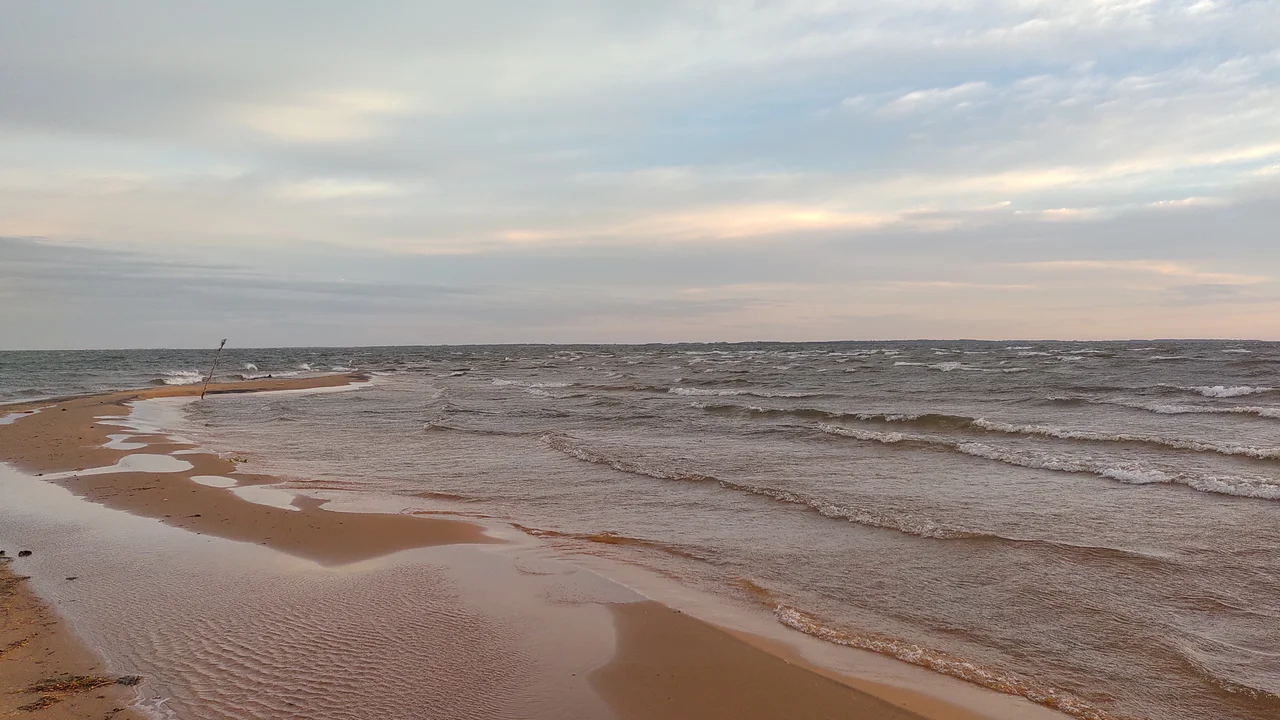
San Cosme y Damián lies in the Itapúa Department of southern Paraguay at 27.32°S, 56.35°W, on the north bank of the Paraná River about 80 km west of Encarnación and directly on the Argentina-Paraguay border. From the air the broad Paraná is the dominant feature, with the mission town and its still-active church set back on the Paraguayan side amid farmland and river islands such as Isla Apipé. Best viewed from 2,000-3,500 ft AGL; the river border and its sandbars make unmistakable navigation references. Nearest major airport is Encarnación's Teniente Amín Ayub González (ICAO SGEN), roughly 80 km east; Asunción's Silvio Pettirossi International (ICAO SGAS) lies far to the northwest. Given the river setting, expect morning mist over the water and afternoon haze in the October-April wet season; cool, clear winter mornings (June-August) offer the best visibility and, fittingly for Suárez's town, the darkest skies after dusk.
Nearby Stories
- Trinidad and Jesús: Paraguay's Unfinished Cathedrals in the Forest 15 km away
- San Ignacio, Paraguay 22 km away
- San Ignacio Miní 37 km away
- Santa Rosa, Paraguay 48 km away
- Ibera National Park 67 km away
- Fortress of Humaita 84 km away
- Battle of Mbororé: The Day the Guaraní Turned the Tide 98 km away
- João Goulart's House 125 km away