.jpg)
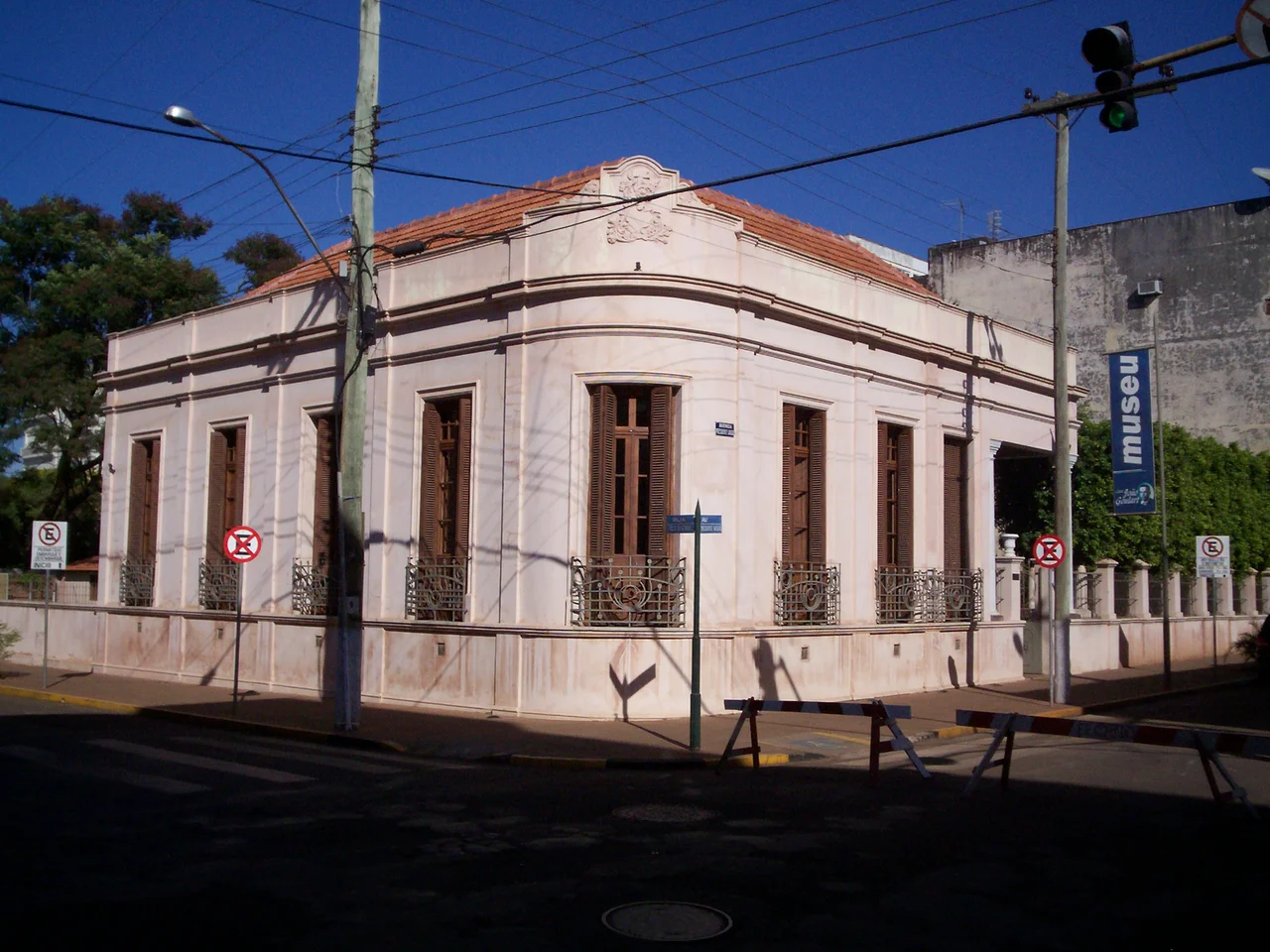
João Goulart's House
The boy who grew up in this house would one day be president of Brazil, and then, abruptly, be forced from the country he led. Built in 1927 in the border town of Sao Borja, the rambling house sheltered Joao Goulart, known affectionately as Jango, through his childhood and youth. Today it stands restored and quiet, a memorial to a man whose story bends with the turbulent arc of twentieth-century Brazil. Walk its rooms and you walk through the early chapters of a life that ended in exile.
The Making of Jango
Joao Goulart was born on 1 March 1919 on a family farm in the Sao Borja district, into a world of cattle, frontier politics, and the wide horizons of the gaucho south. His childhood nickname was Janguinho, little Jango, a name that shrank to Jango as he grew into public life. This house, built when he was a boy, was where that life took root. Sao Borja was a small place far from the capitals where his future would be decided, yet it produced a remarkable lineage of national leaders, and the young Goulart absorbed its blend of rural confidence and political ambition from the start.
President and Exile
Goulart rose through Brazilian politics under the wing of fellow Sao Borja native Getulio Vargas, serving as labor minister and then as vice president before becoming president in the early 1960s. His push for sweeping social reforms alarmed the military and conservative landowners. Between 31 March and 2 April 1964, a coup deposed him, and Brazil entered twenty-one years of military dictatorship. Goulart went into exile and died abroad in 1976, never to govern his country again. The house in Sao Borja remembers him not as a fallen figure but as a son of the soil, a man whose ideals outlived his presidency and whose memory the town has chosen to keep close.
From Ruin to Remembrance
For years the house stood abandoned, its rooms emptying and its plaster cracking. Then, between 2008 and 2009, careful restoration brought it back to life. It reopened on 2 October 2009 as the Memorial Casa Joao Goulart, a cultural space holding the former president's collection of documents, texts, images, and personal objects. Inside are period furnishings, exhibition rooms, and a screening room where his story plays out for visitors. The Brazilian state recognized its value early, listing it as protected heritage in February 1994. What had nearly been lost became a place of memory.
A House That Works
The memorial is no static museum frozen behind ropes. The house has been given new life as a working civic hub: a handicraft workshop hums in one corner, the office of the Joao Goulart Institute occupies another, and the municipal culture office of Sao Borja keeps its desks here too. There is even a coffee shop, so that the place where a president spent his youth now also offers a quiet cup and a moment to reflect. In a town that wears its presidential heritage with pride, this house is where the abstraction of history becomes something you can stand inside and feel.
From the Air
Joao Goulart's House sits at roughly 28.66 degrees south, 56.00 degrees west, within the city of Sao Borja on the far western frontier of Rio Grande do Sul. The town hugs the east bank of the Uruguay River, which marks the international border with Argentina; the Argentine city of Santo Tome lies directly across the water, joined to Sao Borja by the Integration Bridge. The nearest airport is Sao Borja (ICAO: SSSB), a small field on the edge of town. Santa Maria (ICAO: SBSM) lies about 230 km to the east-southeast, and Porto Alegre (ICAO: SBPA) roughly 480 km to the southeast. From 2,000 to 3,500 feet above ground the river's broad meanders and the twin border cities make obvious landmarks. The surrounding country is flat pampas grassland and cattle ranches; clear, calm days give long views across the frontier into Argentina.
Nearby Stories
- Battle of Yatay 17 km away
- Ibera National Park 78 km away
- São Lourenço Mártir Archaeological Site 82 km away
- Yapeyú, Corrientes 84 km away
- Ruins of São Miguel das Missões 99 km away
- Siege of Uruguaiana 129 km away
- San Cosme y Damián 131 km away
- Paleontological and Archaeological Museum Walter Ilha 141 km away