
Sanaa International Airport
On May 25, 2025, the first plane carrying Yemeni pilgrims since the start of the civil war departed Sanaa International Airport bound for Jeddah. Three days later, an Israeli airstrike destroyed the last Yemenia aircraft operating from the field - a plane that had been chartered for another Hajj flight, on the ground, before anyone could board. The pilgrims eventually found other routes. The airport kept operating in whatever reduced form it could. The story of Sanaa International since 2015 is the story of an aviation facility that has been bombed, reopened, blockaded, struck again, reopened again, and struck again - ten times or more, by multiple air forces, over a decade.
Before the War
In 2007, Sanaa International handled about 1.7 million passengers - 80 percent of all air traffic in Yemen and 87 percent of all international passengers. There were 38 flights a day on average. The airport has one 3,200-meter runway, shared with the adjacent Al-Dailami Air Base. An apron with 27 parking spaces served a mix of Yemenia, Felix Airways, and international carriers. Yemenia, the national flag carrier, keeps its head office in Sanaa. The passenger terminal, built in the 1970s, was small but functional. For a country with limited overland infrastructure, the airport was the vital connection to the outside world - to Cairo, Amman, Jeddah, Dubai, and further afield to East Africa and South Asia.
The 2015 Bombardment
On March 26, 2015, the Royal Saudi Air Force began airstrikes on Houthi-held positions in response to the Houthi takeover of the capital. Sanaa airport was among the early targets. By April 29, the facility had been severely bombarded - the sole runway damaged, the passenger terminal deemed unusable. Foreign militaries evacuated their citizens - India through Operation Raahat, Pakistan through a parallel operation - flying out whoever could reach the airport before commercial service ended. On August 9, 2016, the airport closed again after Yemenia's brief attempt to resume services was blocked by the Saudi-led coalition. On November 6, 2017, after a Houthi missile landed in Saudi Arabia, the airport closed again. On November 14, it was bombed again. On November 25, four aid planes finally landed - the first aircraft to reach Sanaa since the total blockade.
The Aid Flights
For three years, Sanaa airport handled almost no commercial traffic at all. A trickle of humanitarian flights came in under negotiated access - the UN, the World Food Programme, Medecins Sans Frontieres. A February 2020 medical evacuation flight was widely reported as a symbolic crack in the blockade. In December 2021, Saudi airstrikes hit the airport again. Civilians were reportedly evacuated before the strikes, but the physical damage was heavy. Then came the April 2022 truce. On May 16, 2022, the first commercial flight in six years departed Sanaa for Amman with 151 passengers aboard. For a population that had been cut off from legal exit, these seats were life-altering - family reunification, medical treatment abroad, the simple return of civilian travel.
The Israeli Strikes
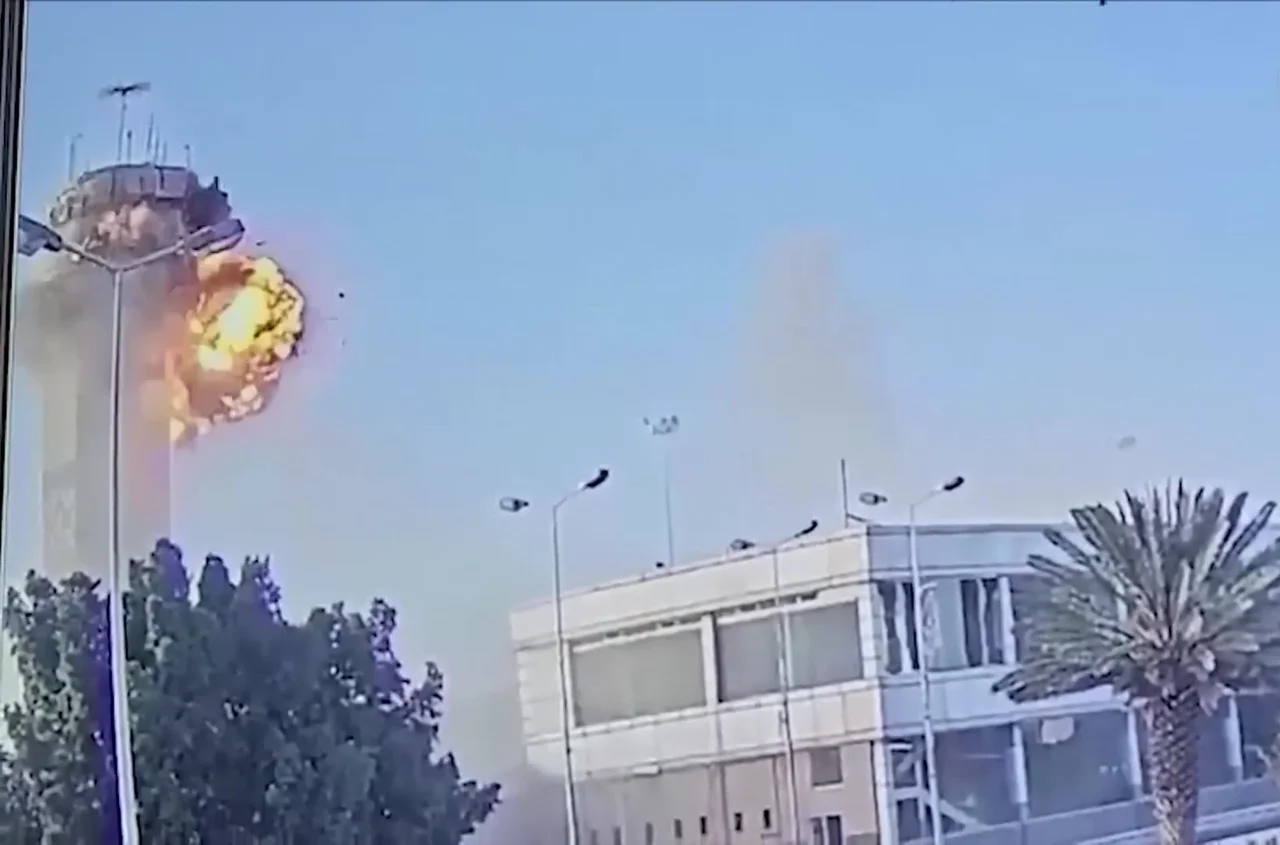
The Houthi decision to launch missile and drone attacks on Israel after October 2023 changed the airport's threat environment again. On December 26, 2024, the Israeli Air Force struck the airport during a speech by Houthi leader Abdul-Malik al-Houthi. On May 6, 2025, following an IDF warning, extensive Israeli strikes destroyed the airport's control tower along with multiple aircraft - three Yemenia planes reportedly destroyed on the ground. The strikes came less than 24 hours after Israeli forces had bombed Hodeidah International following Houthi strikes on Ben Gurion. Prime Minister Netanyahu stated, "we attacked in the past, we will attack in the future." The airport took its first flight from Queen Alia in Amman eleven days later. On May 28, another Israeli strike took out the chartered Hajj plane that had been about to fly pilgrims to Mecca. Yemenia's operating fleet at the airport was, at that point, effectively gone.
The People at the Gates
Khaled Al-Shaif, the Director of Sanaa International Airport, spoke in May 2025 about the roughly 2,000 pilgrims who would fly directly from the airport to the holy sites that season - the first such direct pilgrimage flights since 2015. That kind of statement, in the middle of a war, carries weight that has nothing to do with tonnage or aircraft movements. It is the simple fact that people kept needing to fly, and airport staff kept showing up to make it happen despite bombed runways and destroyed terminal buildings. The ground crews at Sanaa airport worked in conditions that would have closed an airfield in almost any other country on earth. They did not, because their work was one of the few remaining connections between a capital under siege and the rest of the world.
From the Air
Located at 15.48°N, 44.22°E at approximately 2,200 meters elevation. ICAO: OYSN; IATA: SAH. Active conflict zone - no general aviation or commercial access for non-designated operators. Runway shared with Al-Dailami Air Base (military). Has been repeatedly struck by airstrikes from 2015-2025. Current operational status variable; coordinate with Yemenia for any civilian access. Recommended viewing altitude FL300+ for geographic reference only. The airport sits in the Sanaa basin surrounded by mountainous terrain.
Nearby Stories
- Marib Dam 66 km away
- Battle of Port Midi 79 km away
- 2013 Radda airstrike 85 km away
- 2025 Israeli attacks in Yemen 87 km away
- 20 July 2024 Israeli attack on Yemen 107 km away
- Zafar, Yemen 124 km away
- Siege of Dammaj 124 km away
- Mundafan 313 km away